

 59 minutes ago
6
59 minutes ago
6
ARTICLE AD BOX
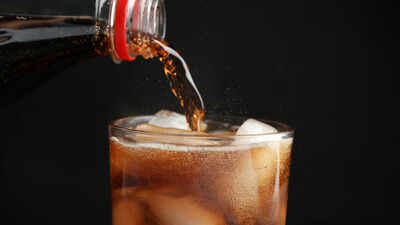
A 63-year-old woman thought she was dealing with the usual stomach trouble from her weight-loss medication, but her story took a strange turn. After weeks of nausea, vomiting, and sharp abdominal pain, doctors found a large, stubborn mass in her stomach — a gastric bezoar — that was likely tied to her semaglutide (the same active ingredient that’s in Ozempic and Wegovy).Instead of surgery, her doctors treated it with something you’d never expect: 1.5 liters of Diet Coke, which dissolved the mass in a matter of days!Published in the New England Journal of Medicine, this unusual case has people not only talking about the rare but serious stomach risks that come with certain weight-loss drugs, but also about how something like Diet Coke, which is considered “unhealthy” for many reasons, can become a “saviour” in certain situations.
What exactly happened?
Per Live Science, the patient, from Massachusetts, has type 2 diabetes and obesity. She started taking semaglutide about a year ago and lost over 40 pounds (nearly 18 kilos), which she expected. But then came the unforeseen symptoms — she started having relentless nausea, kept throwing up, didn’t want to eat, and started feeling burning pain across her upper belly and into her back. She gave over-the-counter acid blockers a try, but nothing made a dent.
Finally, after almost a month, she headed to the ER.Scans showed her stomach was full of “semisolid material,” and her bile ducts looked a little bigger than normal. To figure out more, doctors ran an endoscopy (with a camera on a tube down the throat), and there it was: a gastric bezoar.Now, what is a gastric bezoar?Basically, it’s a tight ball of undigested stuff, usually made of plant fiber (think: persimmons, celery, raisins, pineapple).
It’s rare, as only seen in about 0.5% of these exams. But when you do get one, it can make you nauseous, ruin your appetite, cause bloating, stomach pain, and, if things get stuck, mess up your whole digestive tract.In this woman’s case, doctors figured the semaglutide was to blame. These GLP-1 drugs work by copying a natural hormone that helps control blood sugar, curb hunger, and slow your stomach from emptying.Now, that’s great for weight loss, because it keeps you feeling full.
But in rare cases, the slowdown lasts too long, and food just sits there. And sometimes, it hardens and forms a bezoar.
How did the treatment go?
As for the first step, the semaglutide was stopped. Next, doctors reached for an old but weirdly reliable treatment — cola. Call it a “fizzy fix”!This is where the irony lies. For years, these fizzy drinks have been labelled “unhealthy” for the added sugars, artificial sweeteners, and acidic components in them.
In fact, these additives are heavily linked to weight gain, an increased risk of type 2 diabetes, dental enamel erosion, and digestive discomfort like bloating or acid reflux.That said, carbonated cola (even diet versions) has worked wonders in breaking down bezoars in certain cases — thanks to its acidity and bubbles.And because the patient had diabetes, instead of regular soda, they used Diet Coke — 1.5 liters over a short period.And that 1.5 liters of cola did the trick here.By the second day, the woman felt a strange tugging in her gut, then her nausea nearly vanished. Follow-up scans showed the bezoar was gone. She bounced back to normal eating, didn’t have any more stomach pain, and left the hospital soon after (they kept her off semaglutide this time and switched to an acid-reducer). Months later, she felt fine, though she had gained back a little of the lost weight.The doctors noted in a report of the case, "Existing evidence, largely from case series and anecdotal experiences, supports the administration of 3 liters [0.8 gallons] of cola, either orally or through a nasogastric tube, within a 12-hour window," adding, "It is not well understood whether acidity, carbonation, or another mechanism accounts for dissolution of the bezoar."They added: “Bezoars formed from food material may be initially managed with oral administration of cola in patients in a clinically stable condition.
This intervention is generally cost-effective and is associated with a lower risk of complications than invasive procedures.”
Is Diet Coke the unusual ‘savior’ at the end of the day?
This isn’t the first time researchers have had a moment of bewilderment regarding Diet Coke. Earlier, studies have found that the chemicals in Coca-Cola can break down gastric bezoars. Medical research, including systematic reviews, indicates that Coca-Cola dissolves bezoars completely in about 50% of cases, and in up to 91.3% of cases when combined with complementary endoscopic fragmentation techniques.
In this study from Athens University, scientists tracked 46 patients with bezoars who were treated with Coca-Cola in hospitals over ten years. Here’s what happened: in half of those cases, the Coke dissolved the blockage completely. Another 19 patients only needed simple, non-invasive procedures afterward.
So, basically, the drink did most of the heavy lifting.Turns out, the soda’s ingredients mimic what stomach acid does, and the fizz speeds things up.And you don’t need the sugary kind. Diet Coke and Coke Zero work too, since they share most of the same ingredients.
What about semaglutide awareness, then?
Although this case serves yet another reminder of semaglutide’s possible side effects, researchers want to emphasize that this shouldn’t scare people off meds like Ozempic if your healthcare provider recommends them. They’re hugely effective for diabetes and weight loss, and most side effects (like some nausea, constipation, and less appetite) are mild or get better over time.
Bezoars are rare.However, it’s important to remember that one should only sign up for these drugs after thorough consultation with their doctors. And in case they encounter symptoms like weeks of vomiting, loss of appetite, severe stomach pain, or chronic fatigue, it’s advisable to seek professional help without any delay.And most importantly, don’t try the “Diet Coke cure” on your own. Doctors only did this after confirming the diagnosis with imaging and an endoscopy. Moreover, not all stomach problems are bezoars. And in the case of some bezoars, the patient needs surgery or other treatments, depending on their size or what they’re made of.






 English (US) ·