

 4 days ago
6
4 days ago
6
ARTICLE AD BOX
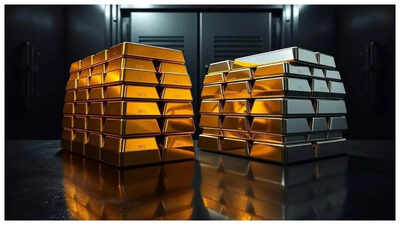
At Rajkot’s Pedak Road, often referred to as the silver artery of the Gujarat city because of the dense concentration of silver traders and manufacturers, Arvind Limbasiya, secretary of the Silver Gold Bullion Association, Rajkot, is sitting at his office.
“There is just no work,” he says. “A bullion trader who was earlier selling 25-30 tonnes of silver each month is now selling barely one tonne.”The slowdown has spilled into livelihoods. “We open our office, sit for a few hours and by 1pm everyone goes home,” Limbasiya says. “It’s a struggle to pay workers. Most wholesalers have let go of contractual staff and are only managing salaried employees. Nearly 1.5 lakh workers have been affected by this volatility,” he says.Rajkot is one of Asia’s largest silver trading hubs, renowned for its intricate craftsmanship of bracelets, earrings and necklaces that travel to markets across India — from Kolhapur in Maharashtra and Agra to Chennai. But the town is now at the epicentre of an unprecedented upheaval in India’s precious metals trade.Silver prices, after rising nearly 160% through 2025, have begun swinging violently. The rally was driven by demand from AI-linked industries, solar energy and EV manufacturers and compounded by global supply anxieties after China placed silver under rare-metal export restrictions and the US designated it a critical mineral.
For traders, the metal’s industrial promise has translated into financial whiplash.According to local reports, 44 trading firms in Rajkot have declared insolvency, with settlement differences estimated at Rs 3,500 crore. Manufacturers are struggling to settle accounts, and delays are cascading through a supply chain built on trust and long credit cycles.Under normal conditions, bullion traders sell pure silver bars to manufacturers, who convert them into jewellery.
Wholesalers then buy the ornaments in bulk and distribute them to retailers nationwide. Payment often follows delivery, with modest price movements absorbed over weeks.This system has broken down, thanks to the massive rise in silver prices — when prices jump by Rs 30,000 in a single day, the gap between delivery and payment becomes an unmanageable risk.Wholesalers have stopped placing new orders because, with sales dropping, they are unable to pay manufacturers for old orders.
Manufacturers have faced a bit of a triple whammy. First, they are unable to buy silver because of the rise in prices. Secondly, they have incurred losses on orders they had accepted from retailers without anticipating that prices of raw silver would rise so rapidly. And, finally, new orders have dried up because retailers have no buyers.
Silver jewellery and articles are suddenly out of reach of a very large part of India’s population.“One tonne of silver would earlier cost Rs 10 crore; the same quantity was costing Rs 36 crore two weeks ago, and is now about Rs 26 crore. How can one do business in such a volatile market?” says Kunal Jagani, a bullion trader in Rajkot (figures are as of Monday, Feb 9).“Earlier, a weekly fluctuation of Rs 4,000-Rs 5,000 was manageable,” Jagani says. “Now, the daily fluctuation is around Rs 15,000. No business can absorb that kind of shock.
In a year, silver prices usually increased by Rs 10,000. But last Dec, it increased by over Rs 60,000.”
Assurance to anxiety
For generations, gold and silver have been India’s most dependable constants — bought quietly in good years, leaned on in bad ones, and passed down as both security and sentiment. But, thanks to the volatility over the past year, that certainty has turned into a source of anxiety rather than assurance.In early 2025, gold was trading below Rs 1 lakh per 10g and silver under Rs 1.1 lakh per kilo — levels that allowed the trade to function within familiar rhythms.
Then came the rally. By Jan 2026, silver had raced to nearly Rs 4 lakh per kilo, while gold touched Rs 1.83 lakh per 10g, pushed up by global safe-haven demand, geopolitical unease and a flood of investor money into bullion.What followed was just as dramatic: Silver suffered one of its sharpest singleday falls in years, plunging over 25%, while gold corrected sharply amid profittaking and a stronger dollar on Jan 31.The volatility has since become structural, unsettling a trade built on incremental price movement and predictable demand.
As on Monday (Feb 9), gold prices were Rs 1.59 lakh/10g and silver was retailing at Rs 2.61 lakh/kg.The rally also altered the balance between buying for adornment and buying for safety. Investment demand soared even as physical consumption fell.In value terms, gold investment demand in India rose to Rs 2.97 lakh crore in 2025, up 73% from the previous year. According to the World Gold Council, total gold demand in India fell 11% by volume to 710.9 tonnes, but its value surged 30% to a record Rs 7.51 lakh crore.
Jewellery demand told a similar story: volumes dropped 24%, but higher prices pushed up the overall value of purchases.
Uncertainty in Zaveri Bazaar
In Mumbai’s Zaveri Bazaar, India’s iconic jewellery market, the impact is equally unsettling. Footfall has thinned, negotiations have lengthened, and purchases that once felt routine are now being postponed.“People come in, check the rate, and step back,” says Mithil Jodawat, a jeweller near Dagina Bazaar.
“Even wedding buyers are downsizing. Heavy sets are being replaced with lighter, minimalist pieces or, in many cases, purchase is postponed entirely. Compared to gold, silver is still in demand because of the affordability, but if you see in terms of volumes, that has dropped by 50% as well.”Silver, long considered the affordable alternative, has lost that role. “If one couldn’t afford gold, people would at least buy silver.
Now, even that is unaffordable to many,” he added.Kumar Jain, president of the India Bullion Jewellers’ Association, says volatility has become the biggest challenge. “You quote a price in the morning and by next day it has changed. Holding inventory feels like a gamble now.”Although prices have crashed over the last few days, they are yet to stabilise, Jain adds. “Buying has improved a bit because of the price drop, but because the unpredictability around these metals remains high, it’s still keeping buyers away.”For consumers, aspiration has turned into hesitation.“When I got engaged in Oct, gold was Rs 1.27 lakh per 10g,” says Divya Munot, a buyer who’d visited Zaveri Bazaar last month. “My parents had planned to buy two necklaces, four bangles and two rings. At current prices, we have no choice but to reduce our purchases by half.”A group of office colleagues who walked into a shop in Dagina Bazaar looking for anklets as a wedding gift quickly decided to downgrade their purchase to silver.
“We planned a lightweight gold ring or small earrings with our Rs 10,000 budget,” says Sabrina Sheikh, one of the group. “Now, Rs 10,000 buys you nothing. So, we’re shifting to silver.”Many buyers have decided to wait.“I had saved Rs 80,000 to invest in a gold coin, but I don’t know when is the right time,” says Vishal Singh, an IT professional. “I’ve been holding on for over two months now.”
You bought it, can you sell it?
Another problem that has hit retailers as well as customers is the lack of liquidity in the market.
Customers who had bought silver or gold coins earlier and want to sell them are not finding buyers, as retailers have no money.“I had a 500g bar of silver, which I had purchased as an investment a few years ago and went to sell it in Zaveri Bazaar last week. I visited four shops — no one was buying, and I finally managed to sell it to a trader at a much lower price than what I was expecting. What is the point of buying metal as an investment, when no one will buy it back when the rates go up?” said Nitin Patel.Jewellers say that many women have been part of a small monthly deposit scheme with them. Under these schemes, colloquially referred to as ‘bhishi’, a customer deposits a fixed amount every month with the jeweller for 11 months. The jeweller adds from his pocket the 12th instalment and the customer gets to buy gold worth the year’s deposit at the prevailing rate.“These deposits are small monthly savings. Now, the lower middle class or even middle-class women are not getting a half-decent pair of earnings at the end of 12 months,” says Kumar Jain. Across India’s bullion markets — from Rajkot to Mumbai — the question is no longer how high prices will go, but whether stability will return. And when it does, at what level?








 English (US) ·