

 1 hour ago
6
1 hour ago
6
ARTICLE AD BOX
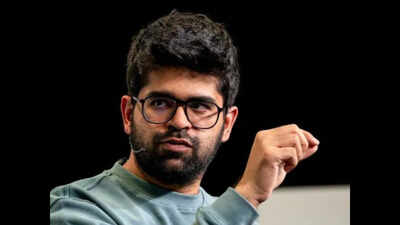
Aravind Srinivas, Perplexity co-founder and CEO, on the founder habit he had to learn and then unlearn.
Aravind Srinivas spent years in research labs learning to prize the big idea worked out carefully on paper. Then he built Perplexity, the AI search engine now reportedly valued at around 20 billion dollars, and discovered that the habit he had trained hardest was the one he needed to drop.
The Perplexity co-founder and CEO says his biggest founder lesson was unlearning the belief that thinking always precedes building. His new rule is blunter—action produces information.
Perplexity CEO shares the 'Beautiful Mind' trap that fools smart founders
Srinivas describes the trap with some specificity. People want to come up with a grand idea on a whiteboard, run it once, and watch everything click into place. He blames the movies for this. You write the paper because that is how invention looks in "A Beautiful Mind" or the Stephen Hawking biopic—a flash of insight scrawled across glass, then the problem is solved.
Real work, he says, is far less cinematic.The pull toward planning is really a pull toward safety. A plan feels controllable. It can be polished endlessly without ever meeting a single user. But a plan does not generate information. A live experiment does. Many companies, Srinivas notes, do exactly the wrong thing—they keep refining the document because the document feels safer than contact with reality.
Why Aravind Srinivas says shipping fast beats perfecting the plan
His replacement habit is simple to state and harder to practice: small-scale experiments, repeated fast.
Ship something. Put it in real hands. Watch what people actually do, not what they say they will do. Update the hypothesis and run it again. That iterative loop, not the whiteboard, is what shaped Perplexity in its early days.The principle travels well beyond AI. Consider wildfire insurance, where property owners make the same error in another vocabulary. They do the work—clear defensible space, harden buildings, improve roofs, vents and access—and then assume the market will reward the effort. It usually will not. Insurance does not pay out for effort. It pays for proof.That is Srinivas's underlying point. Effort that stays hidden inside a plan changes nothing. Effort exposed to reality, fast and often, is the only kind that teaches you anything.








 English (US) ·