

 1 hour ago
5
1 hour ago
5
ARTICLE AD BOX
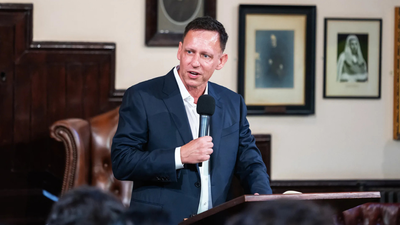
Peter Thiel's secret club for the powerful, exposed online
A private network of some of the world's most powerful people has spent two decades keeping its membership a secret. That wall came down this week. A data leak has exposed the names behind Dialog, the invitation-only society co-founded by billionaire investor Peter Thiel in 2006, revealing a roster that stretches from NATO's top commander in Europe to sitting US senators, Silicon Valley founders and a Stanford University president.
The records, first surfaced by Swiss hacktivist maia arson crimew and independently verified by Wired, also lay bare an off-the-record world the group had carefully kept hidden.According to Wired, a registration list for Dialog's 2026 retreat names 222 people set to gather near Dublin, Ireland, this August. The directory had been sitting in plain sight, embedded in the code of the group's website and served to anyone who viewed the page's source.
From NATO's top general to Elon Musk: The names on the Dialog list
The names cut across politics, finance, defence and tech. Wired reported that General Alexus Grynkewich, NATO's supreme allied commander Europe, has attended since 2021. Treasury secretary Scott Bessent, Senator Ted Cruz and Palantir co-founder Joe Lonsdale also appear. A separately published list of 113 affiliates, posted by crimew, named Stanford president Jonathan Levin, Senator Cory Booker, Elon Musk and journalist Ezra Klein, as reported by The Stanford Daily.
What ties the group together, Wired noted, is a shared fixation on artificial inteligence, longevity and what the near future holds.
WWIII, cults and a dating app: What the leak actually reveals
The agenda is where Dialog gets strange. Leaked records describe off-the-record sessions with titles like "Navigating WWIII," "Build-a-Cult" and "How's Your Sex Life?" The society even plays matchmaker, asking members if they are "looking for love" and running a dating app pitched as "meaningful connections for exceptional people."There's an irony in the breach. The form collected each member's "political leaning" with a promise it would never be shared. That data leaked anyway, along with private access tokens that work as login credentials. Wired said it chose not to publish those tokens.Notably, none of the 222 registrants used a government email address. All signed up with personal or corporate accounts, placing their attendance outside the reach of public-records laws.The crackdown on secrecy clearly didn't extend to basic web security. crimew, who previously exposed the US government's No-Fly List, found the directory through what she described as an anonymous tip. None of the named individuals responded to Wired's request for comment. The group, often likened to a tech-world version of Bilderberg, has yet to publicly address the leak.






 English (US) ·