

 1 hour ago
5
1 hour ago
5
ARTICLE AD BOX
Last Updated:July 08, 2026, 18:00 IST
The message is loud and clear -- India, under PM Modi's leadership, will reinforce its role as a global centre promoting peace, wisdom and its shared civilisational heritage


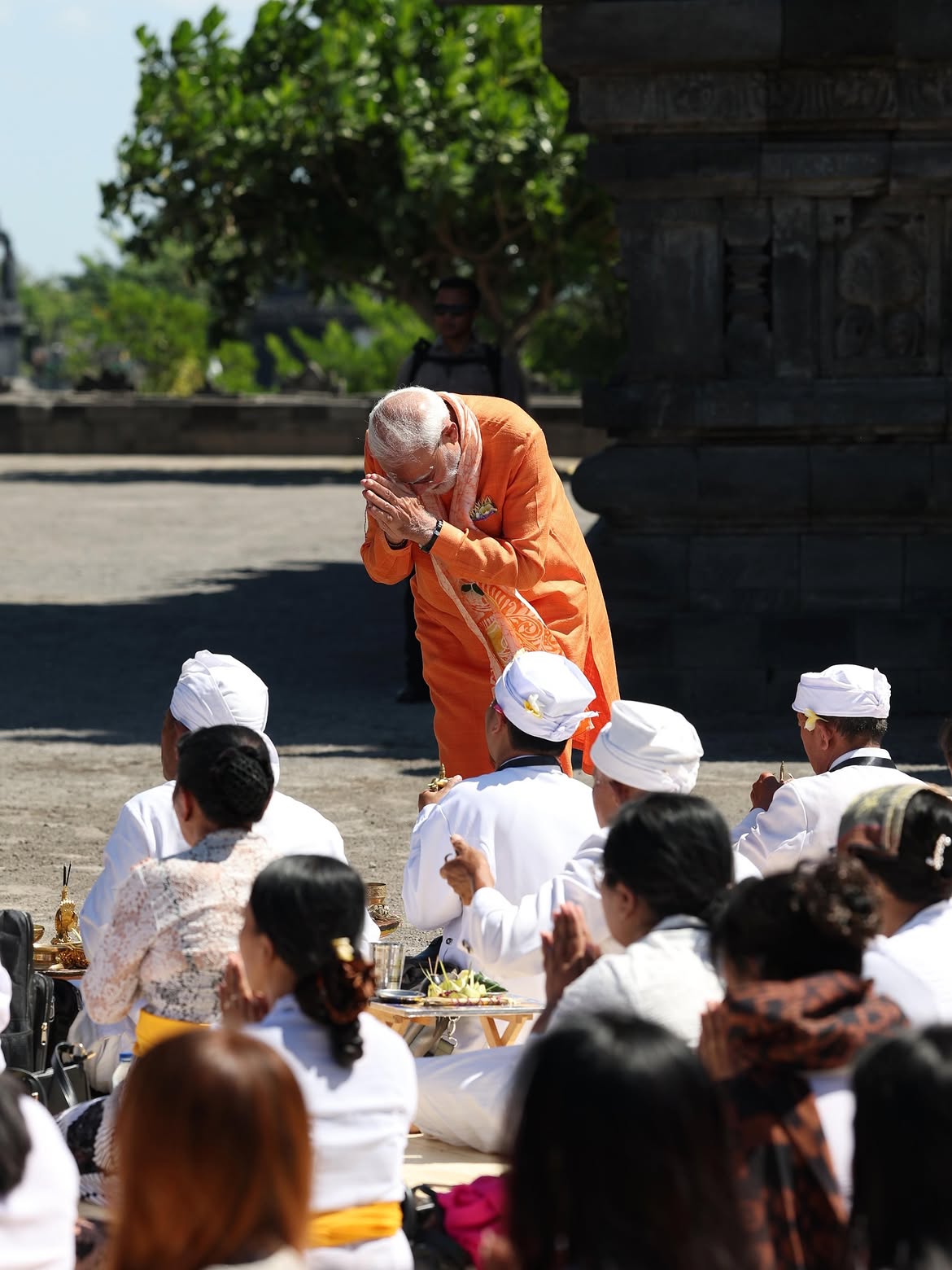
PM Modi at the temple.
PM Narendra Modi’s mission is to position India as a global spiritual leader. This vision draws on the legacy of India’s ancient civilisation and its civilisational links with countries across the world.
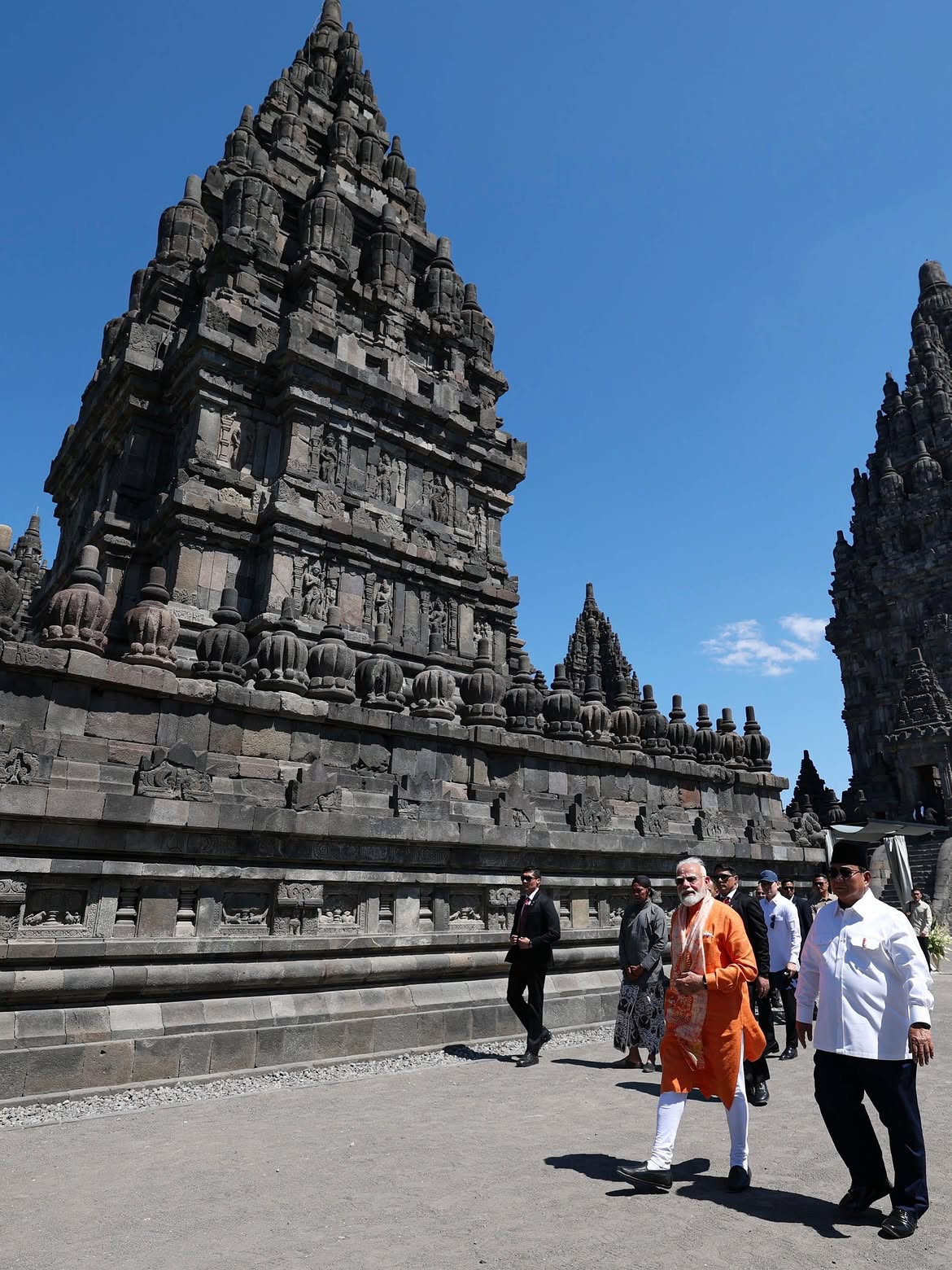
In a special gesture, President Subianto accompanied PM Modi during his visit to the iconic UNESCO World Heritage Site, the Prambanan Temple Complex in Yogyakarta. The two leaders unveiled a plaque marking the commencement of the Archaeological Survey of India’s conservation and restoration project at the temple complex. Built in the 9th century, the temple complex is dedicated to the Trimurti—Lord Brahma, Lord Shiva and Lord Vishnu—and stands as an enduring symbol of the shared civilisational and cultural heritage between India and Indonesia.
The joint inauguration by PM Modi and President Subianto of the 1,000-year-old Prambanan Temple, one of the world’s largest Hindu temples, underscores the deep cultural and civilisational links between the two countries. PM Modi’s announcement that India will partner in the preservation of this ancient Hindu temple reflects India’s dedication to cultural and spiritual leadership and underscores its commitment to peace, harmony and shared cultural values.
Prime Minister Modi, since taking office in 2014, has left no stone unturned to deepen ties with countries sharing civilisational links while revitalising India’s own heritage. The conservation project at the Prambanan Temple follows the understanding reached between the two leaders when President Prabowo visited India in 2025 to explore Indian assistance in the restoration of the temple complex. India has a successful track record of heritage restoration and conservation, and the Prambanan Temple Complex reflects its enduring commitment to preserving shared civilisational heritage.
This is interesting as we look into some of the major restoration projects initiated by PM Modi.
In 2014, an MoU was signed with Vietnam for the restoration of the Mỹ Sơn Sanctuary. The Modi government restored the UNESCO-listed Mỹ Sơn Sanctuary, one of Southeast Asia’s most significant Shaivite temple complexes and the religious centre of the ancient Champa Kingdom. Following the revival of the project by the Government of India, India signed an MoU in July 2015 to provide LKR 326 million in grant assistance for the restoration of the historic Thiruketheeswaram Temple, one of Sri Lanka’s five ancient Pancha Ishwarams dedicated to Lord Shiva.
In 2017, India signed an MoU to restore earthquake-damaged monuments in the UNESCO-listed Bagan Archaeological Heritage Zone and undertook the restoration of 12 historic pagodas through the ASI. India also completed the restoration of the historic Ananda Temple. In the same year, under India’s US$50 million post-earthquake reconstruction assistance to Nepal, the Modi government launched the restoration and conservation of 28 cultural heritage sites, including the historic Seto Machhindranath Temple and Budhanilkantha Temple Dharamshala.
During his visit to Bahrain in 2019, PM Narendra Modi inaugurated the US$4.2 million redevelopment project of the 200-year-old Shreenathji (Shri Krishna) Temple in Manama, preserving one of the oldest Hindu temples in the Gulf region.
In 2020, India financed the reconstruction of the nearly 300-year-old Joy Kali Mata Temple in Natore through Government of India grant assistance. The government also supported the restoration of the Anandomoyee Kali Mata Mandir and the Ramakrishna Temple, preserving important centres of Hindu faith in Bangladesh.
In 2021, the Modi government announced India’s assistance for the reconstruction of the historic Ramna Kali Temple, destroyed during Pakistan’s Operation Searchlight in 1971. The temple was inaugurated in 2021, restoring a major Hindu shrine in Bangladesh and reinforcing the shared civilisational ties between the two countries.
Since 2022, India has restored and conserved key sections of the Angkor heritage complex, including Ta Prohm, Angkor Wat and Preah Vihear, reaffirming India’s commitment to preserving the architectural legacy of one of the greatest centres of Hindu civilisation outside India. In 2024, India restored key structures of the UNESCO-listed Vat Phou Temple, a nearly 1,000-year-old Shiva temple regarded as one of Southeast Asia’s oldest surviving symbols of Sanatan civilisation.
A UNESCO study conducted four decades ago showed that the Ramayana was the most common civilisational thread connecting the heritage of many countries. In 2024, PM Modi released six postal stamps depicting episodes from the life of Lord Ram. The themes included Maa Shabri, Kevat Raj, Lord Hanuman, Ganesha and the Ram Temple. He also released a 48-page book containing postal stamps from over 20 countries featuring Bhagwan Ram, including the US and the UN.
This was the message to the world that Bhagwan Ram is worshipped not only in India but is also revered in many parts of the world, and that his ideals of humanity are a unifying force. The message is loud and clear that India, under PM Modi’s leadership, continues to reinforce its role as a global centre promoting peace, wisdom and its shared civilisational heritage.
Handpicked stories, in your inbox
A newsletter with the best of our journalism
News india PM Modi’s Indonesia’s Prambanan Temple Visit Part Of His Mission To Revive Civilisational Heritage
Disclaimer: Comments reflect users’ views, not News18’s. Please keep discussions respectful and constructive. Abusive, defamatory, or illegal comments will be removed. News18 may disable any comment at its discretion. By posting, you agree to our Terms of Use and Privacy Policy.
Read More








 English (US) ·