

 2 hours ago
4
2 hours ago
4
ARTICLE AD BOX
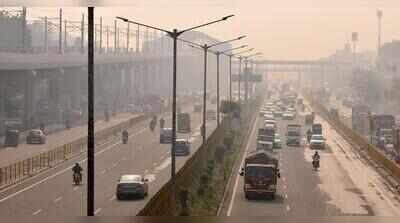
The city’s strategy has focused primarily on road dust because industrial emissions have reduced over the years, says an MCF employee
Gurgaon: Faridabad’s air quality has deteriorated after showing signs of improvement. The city’s annual PM10 concentration rose by 15% in 2025-26 even as nearly Rs 55 crore released under the National Clean Air Programme (NCAP) remained unspent.Pollution levels remain nearly three times higher than the national annual standard of 60 µg/m³ as the annual PM10 levels rose to 176 µg/m³ in 2025-26 from 153 µg/m³ in 2024-25, reversing the gains recorded over the previous few years — although the city’s annual PM10 concentration has declined by around 23% compared with 2020-21, when it stood at 229 µg/m³.According to govt data, accessed by TOI, the city has utilised Rs 84.3 crore of the Rs 138.9 crore released under the Centre’s flagship clean air programme, leaving Rs 54.6 crore — or about 39% of the allocation — unspent.
Experts said that it is important to assess how these funds contributed to reductions in PM10 levels and identify the measures that delivered the most impact. This can help strengthen future implementation by ensuring resources are directed towards interventions that provide long-term improvements in air quality.Faridabad has remained a non-attainment city under NCAP since the programme was launched, having consistently failed to meet the National Ambient Air Quality Standards (NAAQS).
The city’s annual PM10 trend has remained uneven over the past six years. Concentrations declined from 229 µg/m³ in 2020-21 to 209 µg/m³ in 2021-22 before increasing marginally to 212 µg/m³ in 2022-23. Pollution levels then dropped to 190 µg/m³ in 2023-24 and reached a five-year low of 153 µg/m³ in 2024-25, only to rise again in the latest assessment.Against the backdrop of the spike in the annual PM10, experts say the focus must shift from short-term dust suppression to sustained reduction of emissions from major pollution sources such as transport, construction, industries and waste burning.
Previous analyses have shown that a large share of NCAP expenditure in Faridabad has gone towards dust mitigation measures such as mechanised road sweeping, water sprinkling, black-topping and paving of roads.
An RTI-based study by the Centre for Science and Environment found that less than 1% of NCAP expenditure was directed towards tackling industrial emissions, with the bulk of spending focused on controlling road dust.A senior Municipal Corporation of Faridabad official said the city’s strategy has focused primarily on road dust because industrial emissions have reduced over the years. “Most industries in Faridabad have already shifted out of the NCR. That is why spending has been higher on traffic management and preventing dust resuspension. NCAP funds have also been used for EV charging infrastructure, capacity building of officials, public awareness campaigns and afforestation,” the official said.Centre for Research on Energy and Clean Air analyst Manoj Kumar told TOI, “Faridabad’s experience shows that clean air efforts need to focus on results. Cities should identify their biggest sources of pollution, target them with the right measures, and regularly assess whether those actions are improving air quality.”The latest increase suggests that Faridabad’s air quality gains remain fragile despite years of investment under NCAP.
While the city has reduced its PM10 levels over the longer term, the reversal indicates that existing interventions may not be sufficient to sustain improvements. Experts said that the latest increase in PM10 highlights the need to move beyond short-term mitigation measures.Air quality experts said the latest rise in PM10 serves as a reminder that improvements achieved over a few years can quickly be reversed unless pollution sources are addressed comprehensively. They stressed that sustained reductions will require greater investment in source-specific interventions, stronger enforcement and timely utilisation of available funds rather than relying predominantly on dust-control measures.





 English (US) ·