

 1 hour ago
3
1 hour ago
3
ARTICLE AD BOX
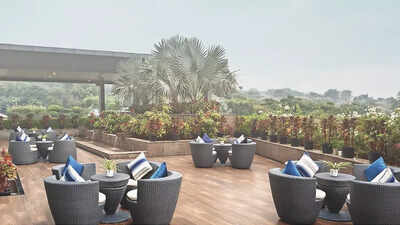
What used to be the best time to be outdoors in Delhi, with the winter sun and chilly nights, has now been reduced to months spent in sealed indoor spaces with air purifiers, rue Delhiites
Winters were once Delhi’s favourite season. Families spread chatais at Nehru Park, India Gate lawns or Lodhi Gardens and lingered over homemade food.Today, acrid air has blurred those memories. Masks and air purifiers have become essential.
Delhi no longer wakes to morning dew. It wakes coughing, with smoke and a strange chemical tang in the air.
Last November and December saw the worst levels of pollution in years, with about 90% of days recording an AQI above 300, according to Bloomberg calculations based on official data.“Air pollution is quietly but decisively reshaping how public spaces, markets, cafés and high streets are used in NCR,” says clean air activist Bhavreen.
“Outdoor public life has become conditional. Parks, markets and streets still function, but people spend less time there, avoid peak pollution hours and minimise lingering.”That shift is now reflected in business numbers. Large retailers and restaurant chains are citing poor air quality as a factor weighing on December-quarter earnings in North India.Outdoor dining is losing relevanceAs the capital’s AQI stayed above 300 for days, diners began rethinking about outdoor seating.
Across cafés and five-star hotels, patios and lawns emptied out as people moved indoors in search of filtered air. “Air pollution is a huge downer. It’s very hard to get excited about stepping out,” says entrepreneur and clean air activist Jai Dhar. Nirali Vashisht, 35, adds, “What used to be the best time to be outdoors in Delhi, with the winter sun and chilly nights, has now turned into finding sealed shut indoor restaurants and hunting for air purifiers.”For hospitality businesses, the impact has been direct. “Hotels would open patios and lawns for outdoor dining so visitors could enjoy Delhi’s winters. Unfortunately, we’ve lost both the charm and the business,” says Meena Bhatia, Vice President and General Manager, The Le Meridien, “These were the only few good months meant for outdoor dining and events.”What was once seasonal joy has, over the past few years, turned into a predictable pattern between September and December.
Rooftop tables that once filled up on sunny winter afternoons now sit unused.“It happens every year, every three or four months in a row. People can’t tell anymore which day is safe,” says Divij of Kwality Restaurant, Connaught Place. A self-confessed lover of outdoor winter seating, he now says he is “compelled to sit indoors.”AD Singh, MD and Founder of the Olive Group of Restaurants, says worsening air quality has reshaped diners’ behaviour.
“Visitors have either reduced their visits or stopped coming. Diners are increasingly eating at home in purified conditions. All this has affected the eating-out business this season.” While Olive’s Mehrauli outlet did not see a decline due to its green surroundings, Singh notes, “At Khan Market, we saw a substantial decline in visitors.
”
Hotels would open patios and lawns for outdoor dining during winters. Unfortunately, we’ve lost both the charm and the business
Meena Bhatia, VP & GM, The Le Meridien
‘We have lost business’Air pollution has had a tangible impact on business. International travellers shortened their stays or skipped Delhi NCR altogether after advisories from countries including Singapore, the UK and Canada.“The rising pollution has created anxiety among travellers,” says Meena. “While business hasn’t stopped, sentiment has taken a hit. Delhi’s winters were once a major draw for both domestic and international visitors. Now we’re seeing reduced preference and shorter stays.”Large retailers report similar trends. Bloomberg cited Shoppers Stop as saying, “Elevated pollution levels in northern India reduced consumer mobility and discretionary spending.
The impact highlights the vulnerability of consumption to environmental disruptions.”At the same time, operational costs are climbing. “Maintaining good indoor air quality requires multi-layered filtration, upgraded HVAC systems and careful ventilation management, apart from government-mandated measures,” Meena explains. Divij adds, “In newer restaurants, air purification is integrated with the air-conditioning system.
In older spaces, we’ve added Dyson purifiers, but they aren’t as effective.
All of this pushes up costs.”
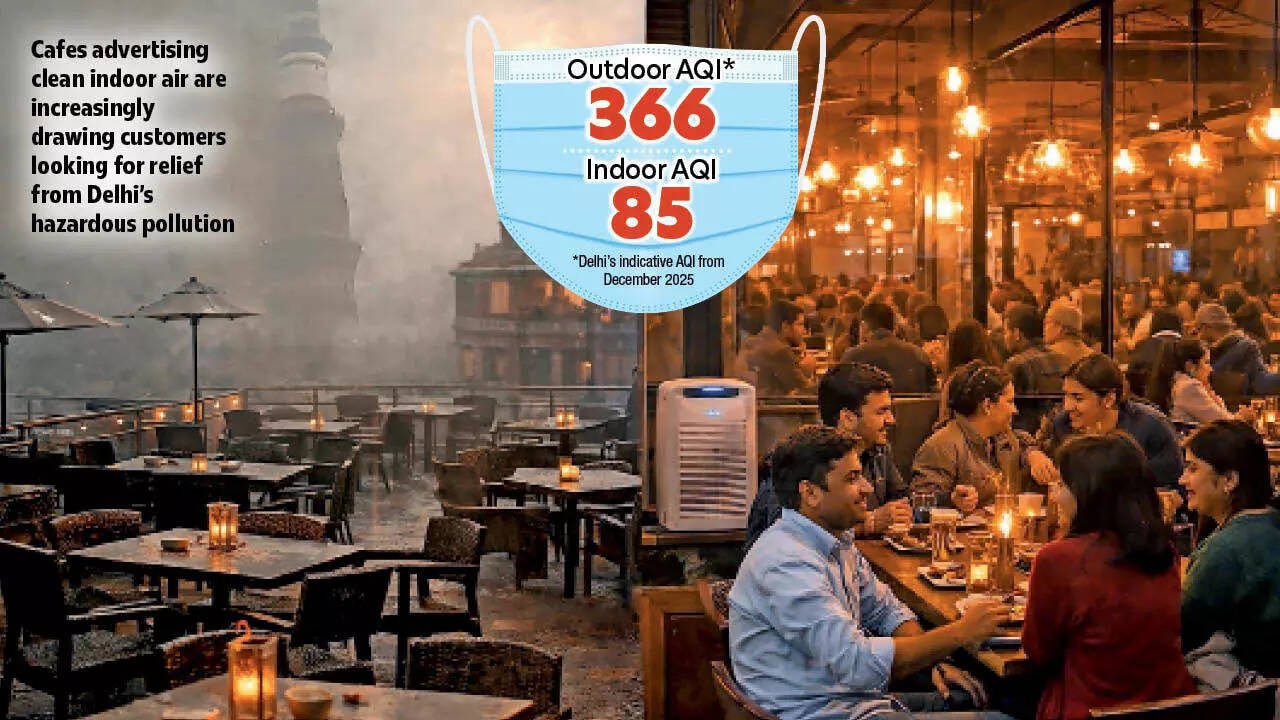
Tired of the grey haze and unsure of what they are breathing in, many Delhi residents are reconsidering whether they need to step out at all.
Shopping is also affectedAir pollution is starting to affect shopping behaviour too. Speaking at the WEF in Davos, Former IMF chief economist Gita Gopinath said, “If you look at the impact of pollution on the Indian economy, it is far more consequential than any impact of any tariffs that have been put on India so far.” Retailers are already feeling the effect. Shoppers Stop Ltd. reported a 69% drop in consolidated net profit to `16.12 crore in the October–December quarter, down from `52.23 crore a year earlier. The retailer told Bloomberg that elevated pollution levels in northern India reduced consumer mobility and discretionary spending. Ishica Saini, a designer in Shahpur Jat, says shoppers from outside Delhi are more cautious.
“Shoppers from hilly regions are used to cleaner air,” she says, adding that footfall drops on high AQI days.But not everywhereNot every business has felt the full impact. Markets like Sarojini Nagar and Lajpat Nagar report steady footfall despite poor air quality. “Pehle pollution badhne par log kam aate the. Ab pollution badhta bhi hai, phir bhi business par zyada asar nahi padta. Log bina mask ke bhi aa rahe hain,” says Devendra Kumar, who works at a jewellery shop in Lajpat Nagar.
There is growing demand for air purifiers from hotels, offices & shared spaces as businesses respond to shift in public behaviour
Nikhil Rajpal, Founder and CEO of Qubo
Clean air is now a commodityTired of the grey haze and unsure of what they are breathing in, many Delhi residents are reconsidering whether they need to step out at all, often preferring the safer confines of homes with air purifiers. When they do step out, they gravitate towards spaces with treated air, for work, dining, shopping or even working out, says Nikhil Rajpal, Founder and CEO of Qubo. He says, “There is growing demand for air purifiers from hotels, offices & shared spaces as businesses respond to this shift.”“If I’m going to a cinema, I’ll go to a Director’s Cut. I changed my gym too,” says entrepreneur Jai. “Every place I visit now has real-time air quality monitoring. My restaurant and hotel choices are the same. I’ll go to an Oberoi or a JW Marriott because there’s no reason to sit in bad air.” He has also moved his child to a school with air purifiers. “You make these decisions because you want to live,” he emphasises.Businesses are responding to this anxiety. “More and more establishments are moving in this direction,” Dhar adds.
“Someone at McDonald’s told me they are incorporating air purification in all new outlets. This is the reality now.”At a cafe in Greater Kailash, a screen flashes two numbers: the AQI outside and the AQI indoors. “The moment I see it, my shoulders and my entire body just relax, it's like I have found a bunker in a war zone,” he smiles. Delhi’s air, he adds, cannot be described as merely polluted. “It feels like chemical and biological warfare.”Clean air, however, has become a privilege. “Enclosed spaces with treated air are accessible mainly to those who can afford them,” Bhavreen notes. “Street vendors, informal workers, and outdoor-facing businesses continue to operate in the most polluted micro-environments. Over time, pollution normalises a city where public space is something to pass through quickly rather than inhabit, hollowing out Delhi’s street life without ever formally closing it.
”








 English (US) ·