

 1 week ago
7
1 week ago
7
ARTICLE AD BOX
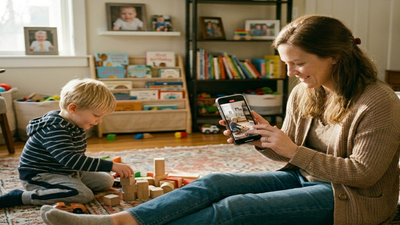
A cozy living room where a mother is sitting on the floor, using her smartphone to video record her young son as he plays with wooden blocks. Image Credit: Gemini
If you’ve ever seen parents pull out their phones the minute a child takes a first step, loses their first tooth, or walks into school for the first time, then chances are you've probably heard the same criticism: "Just enjoy the moment.
"But psychology suggests there may be more to this habit than simple sentimentality.Behind the snapshot of the first birthday cake, complete with a sticky toddler smile, or video capturing that first faltering bicycle ride, there might be more going on than sentimentality. For many parents, the impulse to photograph, video, and record milestones isn’t just about creating keepsakes.It’s also about navigating one of the most heart-wrenching yet precious realities of parenthood: children simply grow up way too fast.Why do parents feel compelled to capture everything?Parenthood is a parade of precious moments, some fleeting. For a period of time, your child’s life may revolve around wanting to be held close and carried everywhere, until one day, with little warning, they are strutting out the front door for school, beaming in a new uniform.Researchers have long studied how we use memories to find our place through times of transition. According to research published in Social and Personality Psychology Compass, nostalgia acts as a psychological resource, supporting feelings of meaningfulness, social connection, and continuity at times of psychological challenge or threat.
This is to say that revisiting the past can help us move into the future, and this may help explain why parents feel an intuitive urge to grab a camera when it feels as though a cherished moment is about to fly away.Memories help families build a shared storyTalking with children about their past experiences not only helps them to develop autobiographical memories but can also contribute to language, social-emotional development, and help children learn to reason.In a review published in the journal Current Directions in Psychological Science, the authors explain how, when parents talk with children about past experiences, detailing shared events and people involved, they enhance the child’s development of autobiographical memories.For many parents, capturing a first birthday or a school event on video may become part of this collaborative construction of family history.Recording moments may help parents process changeFor much of your experience as a parent, your child’s life is an ever-accelerating series of major transitions. There is a before (babyhood) and an after (toddlerhood), a first step into babyhood and a last step out of it, and those moments signal much more than simple development.Research published in the American Journal of Psychology, indexed in PubMed, found that nostalgia can function as a coping resource during difficult periods.For parents who are already working through huge shifts as their child grows, taking photos or videos may help them reflect on those changes and regulate their emotional response to them.
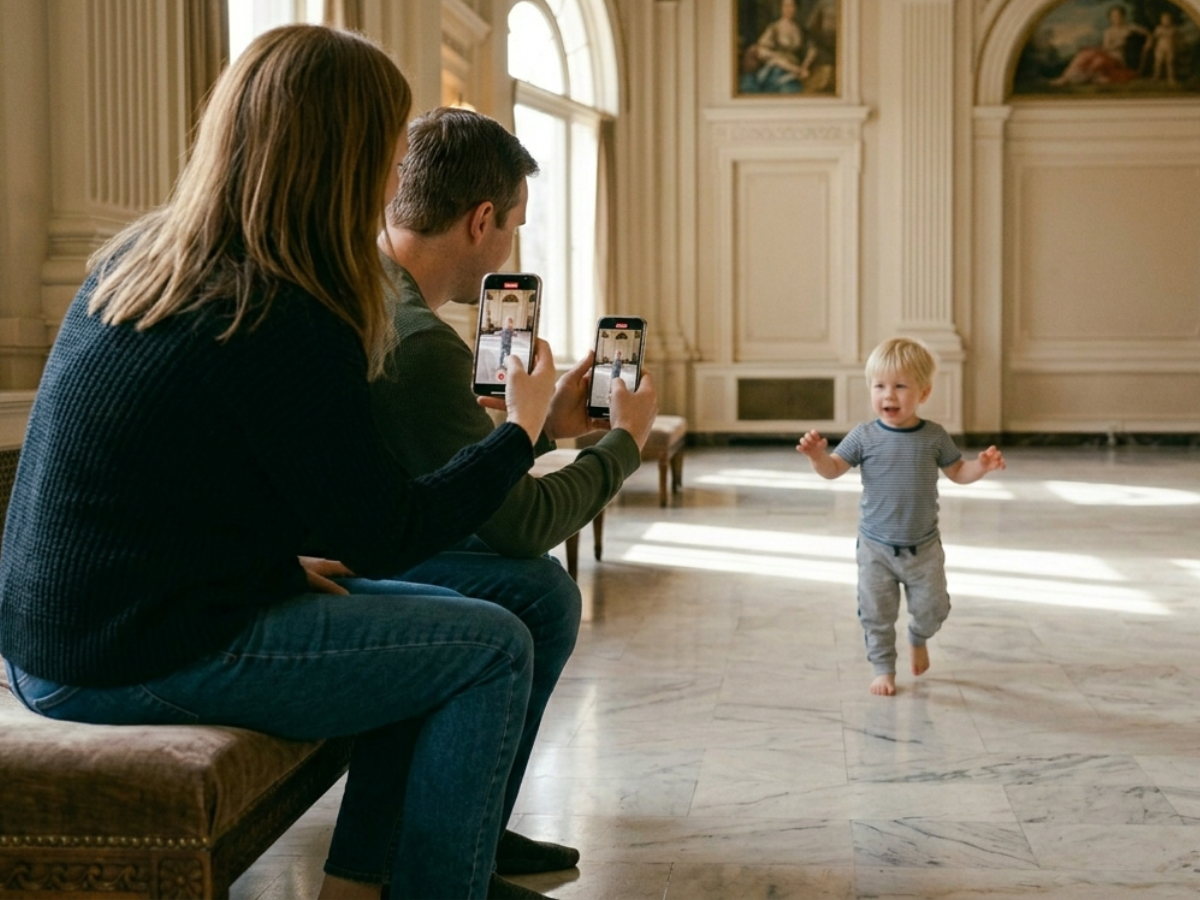
The parents holding smartphones are clearly positioned to record the baby's walking motion. Image Credit: Gemini
The benefits may extend to children, tooMemory keeping is not only meaningful for parents.Research by psychologist Robyn Fivush, available through Springer Nature, found that children whose mothers recalled past events with detail and emotion tended to demonstrate stronger autobiographical memory skills and a richer understanding of their emotions and sense of self.Research suggests that parental reminiscing can be associated with enhanced autobiographical memory, greater social adjustment, better language skills, and enhanced social understanding.Remember to experience big moments tooMany parents get caught up in the memory taking at the expense of memory making, but perhaps a better course is to embrace both. Some argue that the act of documenting a moment can even detract from the experience of it. Ultimately, you want to aim for a healthy balance.The memory-keeping goal is not necessarily about holding on to the past, but rather about using those captured experiences to look at and understand how we’ve arrived at the present.And according to psychologists, this is a fundamentally human, and quite helpful, pursuit.








 English (US) ·