

 2 hours ago
7
2 hours ago
7
ARTICLE AD BOX
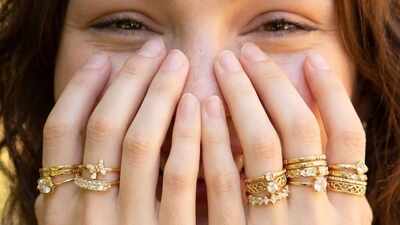
Ask someone with five rings on one hand why they wear them. You will rarely get the ‘just for the look’ answer. Most often it's a grandmother’s ring, another bought after a rough breakup, next to one that feels just like them.
Psychologists think this obsession with stacking rings is seldom about standing out.
When the ring becomes an extension of self
Consumer psychologist Russell Belk uses Extended Self Theory to explain it. He explains that certain possessions stop being possessions at all and start functioning as pieces of a person's identity. For example, a ring passed down through a family, or bought to mark a milestone, works the same way a photograph or an old journal does.
It holds a version of the person's story that would otherwise live only in memory.
Those stacks are symbolic
Psychologists Robert Wicklund and Peter Gollwitzer argue that rings may also carry a symbolic meaning. They sought the help of Symbolic Self-Completion Theory to explain it. People reach for visible symbols when they want to reinforce a part of themselves, whether that's independence, faith, creativity, or a career they're proud of.
A sculptor wearing hand-forged rings isn't necessarily decorating. That’s a small yet constant reminder of what they value.
Familiarity and emotional attachment
Not every ring carries deep symbolism, and that's fine too. Robert Zajonc's Mere Exposure Effect suggests people grow attached to objects or things simply through using them often. When you wear the same ring every morning for a year, it stops being an accessory. It becomes part of the hand itself.
Take it off, and something feels off, even if no one else would ever notice the difference.
Memory encapsulated in a small ring
Another mechanism at work is memory. For instance, a ring that your partner gifted, or given at a graduation. At this point, the ring starts to become a portal to walk down memory lane. Every time it catches the light, you think of the person or memory attached to it. Neuroscience has long shown that physical objects tied to specific moments can bring those moments back faster and more vividly than trying to remember them cold.
The ring isn't the memory. It's the door to it.Now you know that not everyone is trying to show off their ring stack. There could be a psychological program that switches on every time they wear it. But one cannot deny the fact that some people just like how jewelry looks, and that's a complete explanation on its own. However, for most, it's not a bid for attention.








 English (US) ·