

 2 hours ago
4
2 hours ago
4
ARTICLE AD BOX
4 min readUpdated: Apr 25, 2026 10:05 PM IST
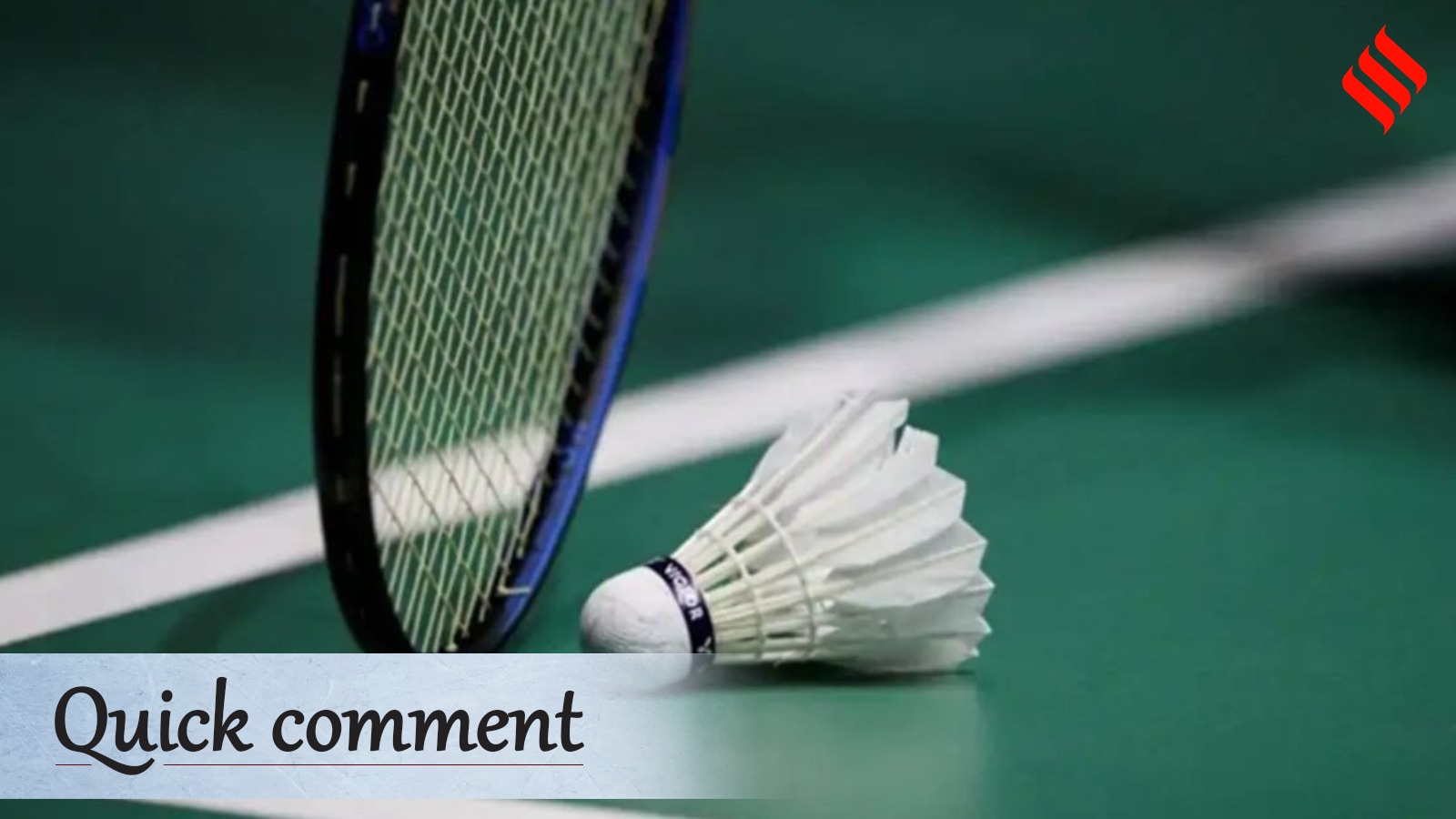 Broadcasters who love packaging more than the package itself, decided that they wanted to wrap up 5 matches - men's and women's singles and doubles and mixed doubles - into 3 hours. (File)
Badminton continues to be callous with tradition, and keeps changing its scoring system – the 15×3 is the fourth such flip in the last 50 years. Some might say it’s far too much a stickler for tradition – 15×3 was used at its inception in 1873. On Saturday, the format was voted back overwhelmingly by a margin of 198-43, keeping in mind broadcast considerations and players’ health.
The 21×3 will go out screaming and shouting, albeit after having prevailed through the golden generation of women’s singles, GOATs in men’s singles and the era of immense popularity for men’s doubles. 21×3 will also plead innocent to charges of causing injury an misery to shuttlers, and point the finger at badminton’s hectic schedule of mandatory tournaments for top players.
At any rate, this itch to keep changing a scoring format is a sign of confusion, more than any evolved, coherent thinking. Because its many iterations have not brought out any significant changes to popularity, prize money or professionalism in the sport. Scoring systems change, players adapt and prolong rallies anyway, the game barely makes headway outside Asia and the World Championships still don’t offer prize money.
Broadcasters who love packaging more than the package itself, decided that they wanted to wrap up 5 matches – men’s and women’s singles and doubles and mixed doubles – into 3 hours. And they got their desired product. Except, this is not the Oscars, where an orchestra in the pit will cut short your speech. So good luck, trying to keep rallies short, given the prominent playing styles of top players – they all run tirelessly. The younger ones are even more defensive and hell-bent on retrieving endlessly. BWF really doesn’t know its Gen Z.
But having caved in to market forces – with the biggest powerhouses rumoured to having voted an Aye to the 21×3 system – badminton faces the non-utterable risk: that nothing might change as a result. To that extent, nobody would dub this ‘revolutionary’, though it has tints of ‘One Battle After Another’, and the scalding realisation that even revolutions bring forth the ‘same old’ and no material gains.
Injuries could’ve been reduced by cutting down on number of tournaments, but BWF refuses to shorten the calendar and elevate the Super 1000s to something really special.
For Indians, the 15×3 isn’t particularly bad or ominous. They will need to read the drift conditions, the slower-faster side quicker, and get a move on without using up first few points to read shuttle flight patterns. It’s something that ails most Indian singles players – they take too long to get going, and that can push them into a confidence crisis if it becomes a pattern.
Story continues below this ad
The 15×3 is not particularly joyous news for Lakshya Sen or Ayush Shetty, though it can resuscitate careers of Sindhu, Srikanth, Satwik-Chirag. However, given the generally low endurance levels of the upcoming bunch, it has arrived at the right time for the likes of Tanvi Sharma or Unnati Hooda. The format, however, punishes errors and inaccuracy, and it won’t be surprising if players contrive to turn even this into hour-long battles.

Shivani Naik is a senior sports journalist and Assistant Editor at The Indian Express. She is widely considered one of the leading voices in Indian Olympic sports journalism, particularly known for her deep expertise in badminton, wrestling, and basketball. Professional Profile Role: Assistant Editor and Columnist at The Indian Express. Specialization: While she covers a variety of sports, she is the primary authority on badminton for the publication. She also writes extensively about tennis, track and field, wrestling, and gymnastics. Writing Style: Her work is characterized by "technical storytelling"—breaking down the biomechanics, tactics, and psychological grit of athletes. She often provides "long reads" that explore the personal journeys of athletes beyond the podium. Key Topics & Recent Coverage (Late 2025) Shivani Naik’s recent articles (as of December 2025) focus on the evolving landscape of Indian sports as athletes prepare for the 2026 Asian Games and beyond: Indian Badminton's "Hulks": She has recently written about a new generation of Indian shuttlers characterized by power and physicality, such as Ayush Shetty and Sathish Karunakaran, marking a shift from the traditionally finesse-based Indian style. PV Sindhu’s Resurgence: A significant portion of her late-2025 work tracks PV Sindhu’s tactical shifts under new coaching, focusing on her "sparkle" and technical tweaks to break out of career slumps. The "Group of Death": In December 2025, she provided detailed tactical previews for Satwiksairaj Rankireddy and Chirag Shetty’s campaign in the BWF World Tour Finals. Tactical Deep Dives: She frequently explores technical trends, such as the rise of "backhand deception" in modern badminton and the importance of court drift management in international arenas. Legacy and History: She often revisits the careers of legends like Saina Nehwal and Syed Modi, providing historical context to current Indian successes. Notable Recent Articles BWF World Tour Finals: Satwik-Chirag have it all to do to get through proverbial Group of Death. (Dec 2025) The age of Hulks in Indian badminton is here. (Dec 2025) Treadmill, Yoganidra and building endurance: The themes that defined the resurgence of Gayatri and Treesa. (Dec 2025) Ayush Shetty beats Kodai Naraoka: Will 20-year-old be the headline act in 2026? (Nov 2025) Modern Cinderella tale – featuring An Se-young and a shoe that fits snugly. (Nov 2025) Other Sports Interests Beyond the court, Shivani is a passionate follower of South African cricket, sometimes writing emotional columns about her irrational support for the Proteas, which started because of love for Graeme Smith's dour and doughty Test playing style despite being a left-hander, and sustained over curiosity over their heartbreaking habit of losing ICC knockouts. You can follow her detailed analysis and columns on her official Indian Express profile page. ... Read More
© The Indian Express Pvt Ltd







 English (US) ·