

 19 hours ago
4
19 hours ago
4
ARTICLE AD BOX
The number 175 has an aura in Indian cricket. It’s the most romanticised knock in the country’s white-ball history, essayed by Kapil Dev in Tunbridge Wells in a crucial game (though not quite a must-win as it’s often misconstrued) against Zimbabwe in the 1983 World Cup final. It remains as a metaphor of India’s fighting spirit that ultimately ended up in the most romantic World Cup triumph in white-ball history, the first step India made to become the most powerful cricketing nation, three decades or so later.
Forty three years later, in Zimbabwe, another 175 was born, from the bat of 14-year-old Vaibhav Sooryavanshi, with a faint outline of a moustache. It consumed only 80 balls, 58 fewer than Kapil’s whirlwind. It contained 15 maximums and as many fours. One in less than every third ball was a hit to the fence or beyond. His knock, like Kapil’s, would be a metaphor in Indian cricket.
Kapil’s monumental effort threw a glimpse into the immense potential India could unlock, the sheer extent of natural talents it possessed, and most significantly, the point from which the Indians believed that anything was possible. Vaibhav’s captures the incredulity of talents India own, the days of supremacy that India could wield for generations to come. Kapil was 24 then, a star already and a one of a kind. His knock, walking into bat at 9/4 shocked the world, because no one imagined that an Indian could render a knock of this proposition.
FOLLOW | IND vs ENG, U19 World Cup Final Live
No one perhaps ever imagined that a 14-year-old could orchestrate a knock of this heightened assault. It’s the age when even the most talented cricketers (with the notable exception of Sachin Tendulkar) would be content making it to the junior school team, or the district side.
At his age, the great VVS Laxman was wondering whether to choose medicine, like his parents, or pursue the sport. MS Dhoni was palming off goal-bound shies from mean strikers in school. Jasprit Bumrah was aiming for the skirting boards at home and trying not to wake his sleeping mother.
Virat Kohli was but a glint in his coach Rajkumar Sharma’s academy in West Delhi. Vaibhav would remain an age-bender of his times, the teenager who assaulted the perceptions of age, who would thrust an inhuman burden of expectations on thousand 14-year-olds in the country. His knock is not the fastest hundred even in this edition, but it would be celebrated as one of the greatest ever in the youth World Cup. The gold standard, the benchmark, the game-changer, as Kapil’s continues to be.
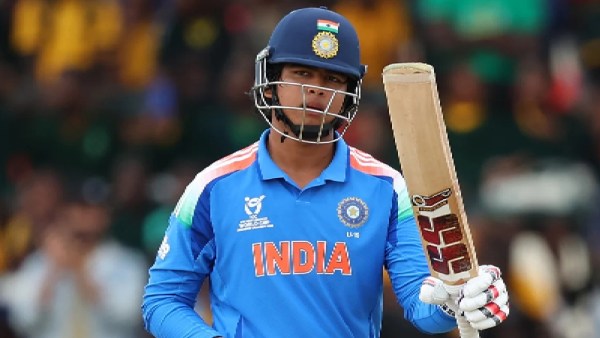 Vaibhav Sooryavanshi broke the U19 World Cup sixes record during the final against England in Harare. (ICC Media Zone)
It would instil faith in thousands of the youngsters from the country’s backyard to dare and dream. Dhoni’s rise from Ranchi saw an influx of cricketers from cricket’s backwaters thrusting to the forefront. Vaibhav’s emergence from an even remote corner of the country, is a sign that cricket in the country has a deeper network than the country’s railways. He hails from Tajpur, in Bihar’s Samastipur district. His village, in one of the most poverty-ridden parts of the country, had no cricket academy or a club or anyone who could guide him.
Story continues below this ad
ALSO READ | Vaibhav Sooryavanshi breaks U19 World Cup sixes record, becomes first man to hit 100 Youth ODI sixes
All he had was a cricket loving father, who was willing to move mountains for his fulfilling his son’s dream. He was nine only when his father, sensing his talent, put him at a club in Samastipur. The facilities were modest. So he would take him thrice a week to an academy in Patna, 90 kilometres away. He would take local bowlers too, so that he could practice. “My mother would sleep at 11 at night and wake up at 2 in the morning so that she could cook for me. My father quit his job, woke up early in the morning. My elder brother took over my father’s responsibilities. It was tough at home, but my father insisted, ‘You’ll make it,’” he once told this newspaper.
Not just the talent, it’s the mindset that sets him apart, his Rajasthan Royals coach and legendary Indian batsman, Rahul Dravid would say: “To someone like that, you are actually, the thing you’re trying to tell him is to just explore the edges of your talent. It is incredible. But I think the gift of mindset, that freedom, it’s special,” he said.
He then explained the other virtues that set him apart. “He’s obviously got a high back lift, that’s very obvious. A really good hand-eye coordination in terms of judgment of length. What you look for in a young batsman is how quick he is in picking length,” he said.
Story continues below this ad
He seizes on anything that’s fractionally short or full. “A combination of high back-lift and ability to pick length gives him the power and he seems to have a natural strength,” Dravid once said. All the traits shone through his whirlwind 175, a knock that is a metaphor, like Kapil’s 175 in the 1983 World Cup, 43 summers away.





 English (US) ·