

 28 minutes ago
3
28 minutes ago
3
ARTICLE AD BOX
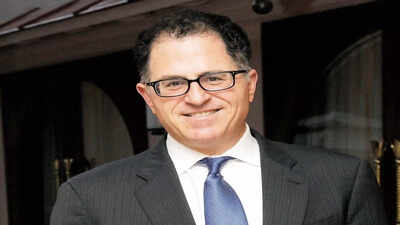
Success stories in business often highlight triumphs, but Michael Dell, founder and CEO of Dell Technologies, reminds us that the true measure of success lies in how we respond to setbacks.
His quote underscores that failure is not the opposite of success, but a critical part of the journey toward it. Dell’s own career illustrates this principle: from building computers in his college dorm room to leading one of the world’s largest technology companies, his path was marked by risks, missteps, and lessons learned along the way.His quote cuts to the heart of what distinguishes lasting success from fleeting achievement.
The quote is not a theory. It is a record of what actually happened.
Quote of the Day by Michael Dell
"How successful you are is really a function of how well you deal with failure and how much you learn from it."
What the quote actually means
On the surface, this sounds like conventional wisdom about bouncing back. However, when you read the quote more carefully, you will notice something sharper: a claim that the capacity to process failure is not a soft skill or a character bonus it is the primary variable in long-term success.
Not talent. Not resources. Not timing. How you deal with failure, and what you extract from it.The word "function" is doing important work here. Dell is not saying failure helps, or that recovery is admirable. He is saying success is mathematically downstream of failure-handling. The relationship is structural, not inspirational. That framing changes things, because it means someone who fails badly and learns nothing has not just had a setback they have actively degraded their prospects.
And conversely, someone who fails well, who interrogates the failure honestly and adjusts, has done something genuinely productive even in their worst moment.There is also a distinction embedded between dealing with failure and learning from it. Dell separates them deliberately. Dealing with failure is about the emotional and practical recovery — not collapsing, not catastrophising, keeping the work going.
Learning from failure is the cognitive work that follows — understanding why it happened, what assumptions were wrong, what would need to change. Both are required.
Resilience without reflection produces people who keep making the same mistakes cheerfully. Reflection without resilience produces people who understand exactly what went wrong but cannot bring themselves to try again.The quote is also quietly anti-perfectionist. In environments that stigmatise failure where a missed target, a failed launch, or a strategic misstep becomes a reputational event people stop taking the kinds of risks that might produce significant results.
Dell is arguing against that culture from first principles: if success is a function of how you handle failure, then organisations that hide failure or punish it transparently are not playing a safer game.
They are simply learning more slowly.
Why this message matters today
The pressure to appear consistently successful has never been higher. Social media rewards curated narratives of achievement. Professional networks are highlight reels.
Funding announcements, product launches, and career milestones travel widely; quiet failures, abandoned projects, and strategic reversals do not. The result is a widespread illusion that successful people fail less when the opposite is closer to the truth.Dell's quote challenges that illusion directly. The people and organisations moving fastest are not the ones avoiding failure; they are the ones processing it more efficiently.
In software development, the entire discipline of agile methodology is built on this insight short cycles, frequent small failures, fast learning. In science, the reproducibility of failure is how hypotheses get refined into knowledge.
In investing, the most durable portfolios are not the ones that never lose positions; they are the ones where losses are sized correctly and the lessons extracted quickly.For anyone navigating the complexity of 2025 and beyond founders trying to find product-market fit in constrained capital environments, leaders managing teams through organisational change, students deciding which direction to invest years of their lives Dell's framing offers something more useful than motivation.
It offers a diagnostic. When something goes wrong, the first question is not "how do I move on?" It is: "am I dealing with this, and am I learning from it?" Both.
In that order. Completely.
A simple takeaway
Dell Technologies was founded by Micheal Dell in 1984 from the his dorm room in the University of Texas at the age of 19. He started the company with one radical idea: sell personal computers directly to customers, built to order, cutting out the middleman.
When he reached in his twenties he was running a billion dollar company. In the year 2004, Dell stepped down from the post of CEO, handling the role to Kevin Rollins. The results of the company disappointed and then in 2007, Dell came back.
He oversaw a wrenching strategic transformation, took the company private in 2013 in a $24.4 billion buyout, navigated the acquisition of EMC, and returned Dell Technologies to public markets in 2018. Each of those chapters involved failure, recalibration, and return. He did not succeed despite that pattern. He succeeded because of how he moved through it. He aimed at something enormous. He failed at parts of it. He learned. That is the whole story.









 English (US) ·