

 47 minutes ago
7
47 minutes ago
7
ARTICLE AD BOX
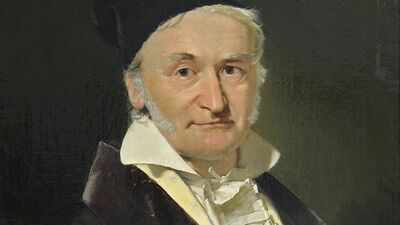
Carl Friedrich Gauss (Image: Wikipedia)
Most people assume that if an idea sounds complicated, it must also be profound. Carl Friedrich Gauss, one of the greatest mathematicians in history, was not convinced. "When a philosopher says something that is true then it is trivial," he observed.
"When he says something that is not trivial then it is false." It reads like a joke at philosophy's expense, and in a way it is one, but underneath the wit sits a serious point about how easily complicated language gets mistaken for genuine insight. Coming from a man who spent his life demanding proof rather than persuasive phrasing, the line carries more weight than a simple throwaway remark usually would, and it still holds up as a genuinely useful test today.
Quote of the day by Carl Friedrich Gauss
"When a philosopher says something that is true then it is trivial. When he says something that is not trivial then it is false"
What is the meaning behind the quote by Carl Friedrich Gauss
Gauss was not dismissing philosophy outright. He was pointing at a contrast between fields built on objective proof and fields that lean heavily on interpretation. His first claim, that true philosophical statements tend to be trivial, gets at something real. Ideas like honesty being important or curiosity helping people learn are true, but they rarely surprise anyone, because they already match ordinary human experience.
The sharper half of the quote is the second part. Gauss is arguing that when a philosophical claim sounds genuinely original or unusually complex, that very complexity should make you suspicious rather than impressed. Ideas do not deserve admiration simply because they sound sophisticated. They earn it by surviving actual scrutiny.
Why precision mattered more to Gauss than almost anything else
Gauss earned the nickname "Prince of Mathematicians" for contributions spanning number theory, geometry, statistics and astronomy, several of which are still taught and used today.
From a young age he showed the kind of ability that startled even experienced scholars around him.Mathematics, unlike open-ended philosophical debate, does not tolerate ambiguity. A proof either holds under every condition or it does not, and no amount of persuasive language changes that. That mindset shaped how Gauss judged ideas generally. He respected claims that could be demonstrated clearly and was openly sceptical of arguments that leaned on elaborate wording instead of actual demonstration.
His remark about philosophers reflects that same standard, applied outside his own field.
The difference between sounding clever and being correct
Modern life is full of confident opinions delivered with total certainty. Social media, podcasts and public debate all reward people who sound sure of themselves, and the most persuasive voice in the room is not always the one with the strongest evidence behind it.Gauss's line is a useful check against that. Rather than accepting an idea because it is expressed confidently or dressed up in impressive vocabulary, it is worth asking simpler questions instead.
Is the claim actually supported by evidence. Does it hold together logically. Would it survive someone genuinely trying to poke holes in it. That kind of scrutiny applies well beyond philosophy, to business decisions, journalism, and ordinary arguments between friends.
Why simplicity often signals real understanding
Einstein later made a similar point, arguing that everything should be made as simple as possible, but no simpler. The two men worked in different centuries, but they shared the same instinct.
The strongest scientific theories tend to reduce a mess of observations down to a small number of clear principles, Newton's gravity, Darwin's natural selection, both are simple ideas that explain an enormous amount.Gauss reached the same conclusion long before it became a common observation about good science. Truth rarely needs elaborate decoration. If an idea cannot be stated clearly, that is often a sign it has not actually been fully understood yet, rather than evidence of unusual depth.
Other famous quotes by Carl Friedrich Gauss
- "Mathematics is the queen of the sciences."
- "It is not knowledge, but the act of learning, not possession but the act of getting there, which grants the greatest enjoyment."
- "Few, but ripe."
- "Life stands before me like an eternal spring with new and brilliant clothes."
Why this quote still holds up
More than a century after Gauss's death, his observation still nudges people to think harder about the claims they encounter daily. The internet has made information easier to access than ever, but it has also multiplied the number of confident-sounding claims competing for attention.Gauss's point is that knowledge gets stronger through questioning, not through simply accepting whatever sounds impressive. An idea does not become more valuable because it is complicated, and complexity on its own has never been proof of truth. What actually holds up, in mathematics or anywhere else, is whatever survives being properly examined.









 English (US) ·