

 1 hour ago
7
1 hour ago
7
ARTICLE AD BOX
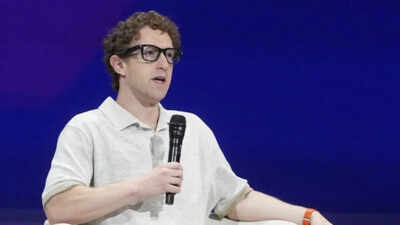
Most people are taught to avoid mistakes.From childhood onwards, good decisions are often associated with caution. Think carefully. Do not make unnecessary errors. Stay away from choices that could create problems.
There is obvious value in that advice, and in many situations it makes perfect sense.At the same time, life has a habit of presenting opportunities that come with uncertainty attached to them.A person considers changing careers. Someone thinks about starting a business. A student chooses a field of study without knowing exactly where it will lead. An employee volunteers for a role they have never handled before. None of these decisions come with guarantees.That is partly why a quote often linked to Mark Zuckerberg continues to attract attention. Rather than focusing on the dangers of taking risks, it focuses on the dangers of avoiding them completely.The idea feels particularly relevant today. The pace of change in modern life can be difficult to ignore. Technologies appear and disappear. Entire industries evolve. Skills that once seemed essential can become less valuable, while new opportunities emerge in unexpected places.
In such an environment, standing still may not provide the security people imagine it does.The quote is not really a celebration of reckless behaviour. It is more an observation about adaptation. The world changes whether people are ready for it or not. The challenge is deciding how to respond when it does.
Quote of the day by Mark Zuckerberg
“In a world that’s changing really quickly, the only strategy that is guaranteed to fail is not taking risks.”
What is the meaning behind the quote by Mark Zuckerberg
The meaning becomes clearer when the quote is viewed as a comment on change rather than risk.Most people hear the word "risk" and immediately think about possible failure.
Financial loss, disappointment or uncertainty often come to mind. Because of this, avoiding risk can feel sensible.The problem is that avoiding risk is also a decision.Choosing not to try something new has consequences just as choosing to act does. A person who refuses every opportunity because success is not guaranteed may protect themselves from certain failures, but they may also close the door on future possibilities.This is the point Zuckerberg appears to be making.In a rapidly changing environment, the biggest danger may not be making the wrong move. It may be refusing to move at all.The quote does not suggest that every risk is worthwhile. Some risks are poorly considered and unnecessary. Instead, it highlights the importance of accepting that uncertainty is often part of growth.People rarely receive complete certainty before making important decisions.
They move forward with limited information, make adjustments along the way and learn from experience.That process involves risk, but it also creates opportunity.
Change has become a normal part of life
There was a period when many careers followed a fairly predictable pattern.People entered a profession, gained experience and often remained within the same industry for decades. Change certainly existed, but it frequently arrived at a slower pace.Modern life often feels different.A profession that exists today may look very different ten years from now. New technologies reshape the way people communicate, shop, learn and work. Entire sectors can emerge within a relatively short period.This environment rewards flexibility.People who continue learning tend to adapt more easily when circumstances change. Those who depend entirely on familiar methods sometimes struggle when old approaches stop working.That does not mean change is always comfortable.In fact, many people find it unsettling. Familiar routines provide a sense of stability. New situations create uncertainty. Yet uncertainty has become an increasingly common feature of professional and personal life.The quote reflects this reality rather than resisting it.
The comfort zone can quietly become a trap
Most people enjoy feeling competent.There is satisfaction in knowing what to expect and understanding how things work.
Familiar environments allow people to operate with confidence.The difficulty is that comfort can become so familiar that people stop questioning it.Someone may remain in a role that no longer challenges them simply because it feels safe. A business may continue relying on outdated methods because those methods once produced success. An organisation may resist innovation because existing systems appear good enough.None of these decisions seem dramatic at the time.In fact, they often look sensible.Only later does the cost become visible.Opportunities pass. Competitors adapt. Circumstances change. What once felt safe gradually becomes restrictive.The quote points towards this possibility. The risk people avoid today may be smaller than the risk they create by refusing to evolve.
Success stories often hide the uncertainty
When people read about successful entrepreneurs, inventors or leaders, they usually encounter the finished version of the story.The uncertainty tends to disappear from view.A business that eventually became successful may have spent years facing setbacks. A new idea that later transformed an industry may once have looked doubtful. Many achievements seem obvious only after they have happened.At the beginning, things often look much less certain.The people involved do not know how events will unfold. They make decisions without having access to the future.
They take action despite the possibility of failure.This does not mean they ignore risk.More often, they accept that uncertainty is unavoidable.The difference is important. Successful people are not necessarily fearless. Many simply decide that the possibility of growth outweighs the comfort of remaining exactly where they are.
Failure is not always the worst outcome
One reason people hesitate to take risks is fear of failure.Nobody enjoys making mistakes. Failure can be embarrassing, expensive or emotionally difficult.
It is understandable that people try to avoid it.Yet experience often shows that failure is not always the end of a story.Sometimes it becomes part of the learning process.A project that does not succeed may reveal weaknesses that need attention. A business idea that struggles may teach valuable lessons about customers or markets. A career decision that turns out poorly may provide clarity about future goals.These lessons are rarely pleasant in the moment.They often become useful later.The quote touches on this reality indirectly. Failure remains a possibility when people take risks, but avoiding every risk can limit growth before it even begins.
Why the quote continues to resonate
The popularity of this quote probably comes from its practicality.It does not promise success. It does not claim that every bold decision will produce positive results. Instead, it acknowledges a simple reality about modern life.Change happens.Whether people welcome it or not, circumstances evolve. New opportunities appear. Old methods lose effectiveness. Unexpected challenges emerge.Under these conditions, complete safety becomes difficult to achieve.People still need to make decisions. They still need to adapt. They still need to move forward without knowing exactly how events will unfold.That is where the quote finds its relevance.The greatest mistake may not be choosing the wrong path. Sometimes the greater mistake is refusing to choose any path at all.In a world that continues changing, standing still can become a decision with consequences of its own.
Other famous quotes by Mark Zuckerberg
- “The biggest risk is not taking any risk.”
- “People influence people. Nothing influences people more than a recommendation from a trusted friend.”
- “Move fast and break things. Unless you are breaking stuff, you are not moving fast enough.”
- “The question isn't, ‘What do people want to know about you?’ It’s what you want to tell about yourself.”
- “The thing that motivates people is seeing progress and being part of something bigger than themselves.”

!['Bandar' box office collection Day 4 [LIVE]: Anurag Kashyap's Bobby Deol starrer crawls towards Rs 3 crore on first Monday](https://static.toiimg.com/thumb/msid-131583989,width-1280,height-720,resizemode-6,overlay-toi_sw,pt-32,y_pad-600/photo.jpg)


 English (US) ·