

 1 hour ago
2
1 hour ago
2
ARTICLE AD BOX
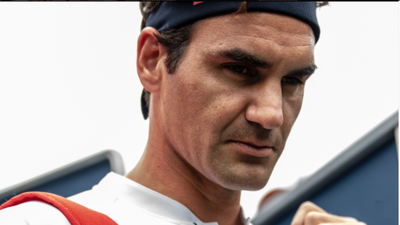
Roger Federe/image:Instagram
Quote of the day: 'I always believe if you're stuck in a hole and maybe things aren't going well… you will come out stronger. Everything in life is this way'Roger Federer, born in Basel, Switzerland, in 1981, and widely regarded as one of the greatest tennis players the sport has ever produced, spent more than two decades at the top of a game that has a particular talent for humbling even its finest practitioners.
He won 20 Grand Slam singles titles across his career, including a record eight Wimbledon championships, spent 310 weeks ranked as the world's number one player, and built rivalries with Rafael Nadal,
Novak Djokovic
and
Andy Murray
that defined what many consider the most competitive era in the history of the sport. He also, at various points across those two decades, found himself exactly where this quote describes, stuck, uncertain, and facing the very real possibility that the best of it was behind him.
The hole he climbed out of
In 2016, a severe knee injury forced Federer off the tour for months and prompted a wave of commentary suggesting his career had effectively run its course, that at thirty-five, with the physical demands of professional tennis having accumulated across two decades of elite competition, the sensible conclusion was retirement. Federer used the time differently. He overhauled his backhand, rested his mind, and returned to the tour in 2017 to win the Australian Open, his eighteenth Grand Slam title at the time, defeating Rafael Nadal in a five-set final that many observers still consider one of the finest matches of the modern era.
The hole had produced something, a re-engineered technique, a refreshed perspective, a version of his game that extended his career by several more years and added further titles to a record that already stood alone.
What the quote actually means
"I always believe if you're stuck in a hole and maybe things aren't going well you will come out stronger. Everything in life is this way."The quote moves in three distinct parts, each one building on the last. Being stuck in a hole and things not going well captures something more specific than dramatic failure, it describes the ordinary, grinding experience of a period where progress has stopped and the way forward is genuinely unclear, the kind of difficulty that accumulates quietly rather than arriving all at once. You will come out stronger carries the weight of someone who has actually been there, stated with the flat certainty of a man who overhauled his backhand during a forced absence at thirty-five and returned to win a Grand Slam. And everything in life is this way is where the quote earns its full reach, extending the observation beyond sport and beyond Federer's own experience into something he clearly believed applied universally, to anyone in any context who has ever found themselves at the bottom of something with no obvious way up.
How it applies beyond the court
The mechanism Federer is describing has a practical shape to it that is worth understanding clearly. When a professional finds themselves unexpectedly made redundant during a corporate restructuring, a situation that arrives with financial pressure, damaged confidence and the disorienting loss of a daily structure they had built their identity around, the instinct is to treat the experience as a verdict on their worth.
Federer's philosophy suggests a different response: stop spending energy on denial or blame, accept the current situation for what it is, and identify the smallest possible action available to you today. One updated page of a résumé. Fifteen minutes of studying a skill that the previous job had never required. The hole, approached with that kind of deliberate patience, has a way of forcing the development of capabilities that comfort never demanded, and the person who emerges from it is, almost by definition, better equipped than the one who fell in.
A professional who used a redundancy to learn data analytics from scratch and emerged six months later into a role paying considerably more than the one they lost did not succeed despite the hole.
They succeeded because of what the hole forced them to do with their time and attention. Federer retired in 2022, his body having finally reached its limit after more than two decades of professional competition. He left the sport having climbed out of more holes than most athletes are ever asked to navigate, and having demonstrated, repeatedly and in full view, that his own philosophy was not sentiment, it was method.






 English (US) ·