

 4 days ago
6
4 days ago
6
ARTICLE AD BOX
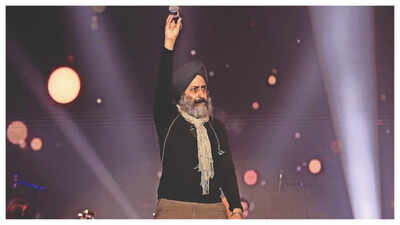
Rabbi Shergill brought the house down with his performance in Lucknow (BCCL/ Manas Mishra)
Singer-songwriter Rabbi Shergill, the voice behind Bullah Ki Jaana, Challa, and Tere Bin, recently performed in Lucknow, delivering a powerful set that left audiences inspired.
In an exclusive conversation, the artist known for his uncompromising approach reflected on the city’s cultural depth, the evolving landscape for independent musicians and Bollywood’s shifting music industry.“What I like about Lucknow is that it’s an ancient city. It has all the elements which can inspire an artist. It has authentic cuisine, rich authentic history and culture. Wajid Ali Shah was here. In Delhi as well, we had so many beautiful poets, and you guys have a glossary of literary giants here.” He further revealed that Lucknow’s vibe might inspire a new song. “Maybe my next song will be inspired by Lucknow. It has kind of become my muse.” Shergill sees promise in today’s music scene, with streaming, social media, and live concerts making it easier for independents to thrive. “It’s definitely a good time to be an independent artist, much better than for us when we were starting out, breaking through,” he says. Yet he laments a key shortfall, “I don’t see that many people speaking the truth of the moment.” He elaborated, “Because the economics of this thing have taken over so much, to the extent people just really want something quickly and do shows and earn fast.
”For Shergill, art’s true role runs deeper than virality. “The art’s job is to clear the path for a new politics to emerge, a politics that really has its ears to hear what the janta really wants.” He hesitated to urge others to tackle tough issues, admitting self-reflection first. “I can’t really exhort others to say their piece. I find myself that I may have lagged behind a little bit myself. I don’t think I’ve really spoken my piece over the last few years.
So I am in no place to tell anyone what to do.” Still, he stresses, “There are a lot of inconvenient truths people are not talking about And I think it needs to be said in a way.
”His move from Mumbai back to Delhi spoke volumes. “I lived in Mumbai and I went away to live in Delhi. That should pretty much tell you where my heart was. I didn’t want to be a film artist.” Lately, though, he’s nuanced that view. “Off late I think I’ve come to realize that films is the pop music of India.
And if you really want to reach out to people, you have to balance it. But the thing is that I say some inconvenient truths and then Bollywood runs away in the other direction.
So it’s very hard for me to say what I want to say and still be able to do some film work. I guess it’s up to the filmy janta. I’m here. If they want me to do something, great. But they gotta figure out what they want.”He reminisced about a lost Indian originality: “There was a neat little Indian trick, it was very unique to India.
You gave a guy and he created the songs and he created the background score. So there was a definite stamp of one person. Which is always nice to hear.”
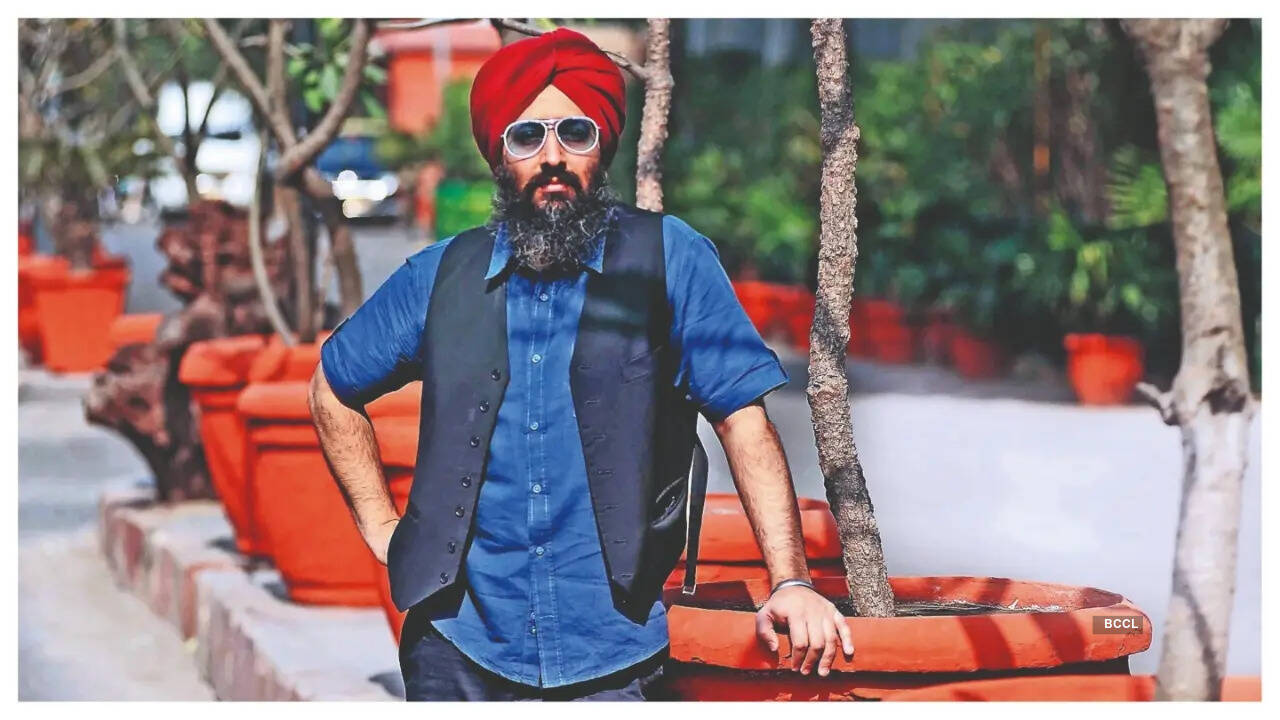
Rabbi Shergill (BCCL/ @rabbishergill)
Bollywood’s monopoly stifles fresh soundsOn Bollywood’s music today, Shergill stays detached but hears troubling trends from peers: “From what I gather when I talk to people, it’s like there are a few big monopolies like production houses. Earlier you’d have directors or production houses giving the entire film to one party and saying, ‘Okay, do it.’
Right now you have OST, so those people are just asking people to do one song or two songs and remixes. That means they’re pretty much trying to manipulate the IPR.
If somebody has an IPR, it stays with them. So those are some logistical things that are happening, some issues around IPR which are dictating what kind of music, and what is the sound design for a film. But largely you don’t really have filmmakers giving new music directors free rein and saying, ‘Okay, this is the film.’”-Manas Mishra







 English (US) ·