

 1 day ago
7
1 day ago
7
ARTICLE AD BOX
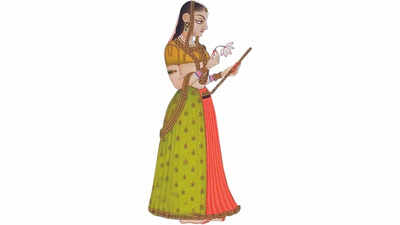
After Jayadev introduces Radha as Krishn’s beloved in his landmark poem Git Govind, Radha remains centre stage in the celebration of Krishn shringar. Through trackless dynasties, in several Rajput ateliers, and with poets from Vidyapati to Bhanudutta and theologians from Chaitanya to Rupa Goswami, Radha remains central to Krishn shringar, and Radha Krishn become the eternal romantic couple in popular imagination.
It is in 300 years of Ritikavya, mannered poetry inaugurated by Keshavdas of Orchha, and championed by countless poets such as Bihari and Matiram that Krishn shringar becomes courtly, and Krishn and Radha become consummate courtly nayak and nayika. This carries over into Bollywood and Radha becomes the artful beloved of Krishn and stands for the woman in love.While numerous poets and painters create prolific representations of this love, one cannot help but look back wistfully to the Bhagavat Puran and venerate gopis who are in a amorous relationship with Krishn, and we ask ‘Is Radha a gopi?’ It is here in the Bhagavat, that Krishn shringar gains for the first time a Puranic status.
In the dasham skand, it is in pristine and idyllic Vrindavan, that gopis and Krishn amorously come together.
It is here that Krishn plays the flute, dances in gay abandon, cows look longingly and peacocks dance, even as the Yamuna flows and whispers in dulcet tones. Krishn engages with gopis in many lilas and kridas and performs the nightly raas. Gopis are married milk maids and their relationship with Krishn is parakiya, understood not as adulterous, but outside strict dictates of dharm.
The parakiya relationship of gopis and Krishn is a metaphor of the relationship between jivatman and Paramatman. Parakiya love creates intense passion both in longing and belonging. Since gopis who indulge in it have nothing to gain but love, it is this love that leads to devotion, a love that is sensually charged but which incessantly points to spirituality; it is love that leads to atmajnan, knowledge of one’s true Self.
Krishn shringar is not a love story but a metaphor for the longing of man for God. Gopis are not Radha, who is a courtly nayika, a creation of poets and painters, who thrives in the artistic representation and courtly ethos of Vaishnav courts. Gopi and Radha are two sides of Krishn shringar.One seeks Brahmnjnan, the other pure rati krida. One celebrates Advaita, the other prefers Dvaita. One resides in Vrindavan, the other in courtly spaces.
Gopi’s world is full of metaphors, Radha’s of social realities. For gopi, Krishn is an archetype, for Radha, Krishn is a courtly nayak. For gopi, sensual pleasures are a doorway to knowledge. For Radha, romance is driven by sensual pleasures. A gopi is a jnani and virahini, Radha is a courtly nayika.
Gopi waits under the Kadamb tree, the other in a courtly pranay mandap. Gopi hears the bansuri, Radha courtly music. Gopis adorn idyllic Vrindavan, while Radha presides in pranay mandapas.The pivotal moment for Krishn shringar of gopis comes after the Ras lila, when after the heart throbbing circular dance, under the full moon of sharad, Krishn leaves Vrindavan, leaving gopis heartbroken. This is a poignant moment in Krishn shringar. The gopis have lost sakar Krishn, Krishn of madhurya and mellifluous love, of his sensuality and shimmering beauty, of the sonorous music and foot falls of dance. The gopis are in a state of viraha, of longing, of feeling abandoned.
But then, they discover the formless Krishn, in whisper of birds, song of the rain, dance of a peacock, colours of blossoms and rhythmic dance of waves of the Yamuna. They have rediscovered Krishn, and Krishn shringar has moved from Dvaita to Advaita, from form to the formless, from sensual to the spiritual, from material to the metaphysical. Gopis have found what they were longing for — their true selves, their innermost Self, their atman.Knowledge has become knowing, their two eyes have yielded to their third eye, they have become Krishnamaya. Krishn shringar of the Bhagavat is celebrated through poetry and painting, where gopis are metaphors of the questing mind in search for the atman, and as paintings evolve through 500 years of Rajput ateliers, we associate ourselves with gopis and find ourselves too. Radha remains a consummate nayika and in the hands of Chaitanya even becomes a consort of Krishn.
Mathura resounds with bells of Radha Krishn temples, and as we walk the bylanes of Vrindavan, people hail each other with chants of Radhe Radhe. We become sakhis of Radha rani, and can reach Krishn only through her. How can we forget simple but heart throbbing gopis who touch our heart, and we become gopis of the Bhagavat, and whisper, ‘Jai Shri Krishn.’ Authored by: Harsh V Dehejia







 English (US) ·