

 1 hour ago
8
1 hour ago
8
ARTICLE AD BOX
The Congress has begun a major organisational overhaul ahead of the 2029 Lok Sabha elections, appointing leaders like Rajendra Pal Gautam, BV Srinivas and Manickam Tagore to strengthen its Dalit outreach, grassroots cadre and street-level mobilisation under Rahul Gandhi's leadership.
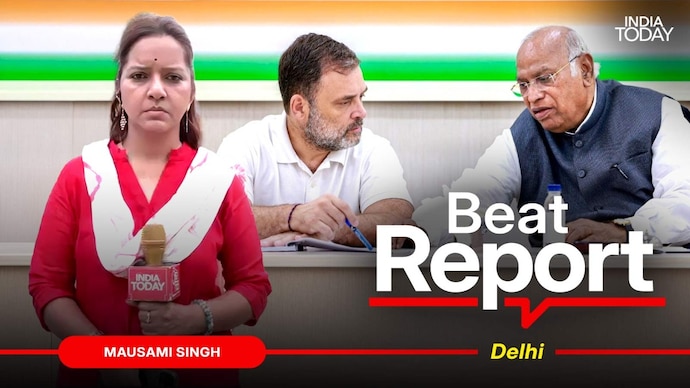
The Congress has begun a major organisational overhaul ahead of the 2029 Lok Sabha elections
The Congress party has recently begun an organisational rejig that is just the beginning of a larger plan to overhaul the party structure, keeping the 2029 Lok Sabha battle in mind.
Known street fighters like Manickam Tagore and BV Srinivas have been brought into key organisational roles to boost worker morale. On the other hand, former Delhi AAP minister and Dalit leader Rajendra Pal Gautam, who joined the Congress two-and-a-half years ago, has been appointed in charge of the crucial state of Uttar Pradesh, replacing Brahmin face Avinash Pande.
THE DALIT PITCH
Just weeks ago, Rajendra Pal Gautam, then chairman of the Congress SC/ST Department, made headlines after he stopped by BSP chief Mayawati’s Lucknow residence as a courtesy call. The BSP supremo did not meet him, fuelling speculation that Rahul Gandhi’s outreach had been rebuffed.
However, the overture indicated that the Congress is keen to keep the possibility of a BSP-SP-Congress understanding alive.
A lawyer and activist hailing from dalit community , Rajendra Pal Gautam has a strong social network. Through this move, the party wants to send a clear message that Rahul Gandhi’s pitch of social justice will now be pursued more aggressively.
Asked whether the doors for the BSP were still open, Gautam said:
“We invite all parties who believe in the Constitution to join hands. Over the next few months, you will see an intensive exercise in Uttar Pradesh, where we will reach out to the poorest of the poor. Rahul Gandhi has consistently raised the issue of social justice, and increasingly Dalits are looking towards the Congress to stand up for them.”
Interestingly, Rajendra Pal Gautam won on an AAP ticket in 2014, went on to become an MLA and later a minister, handling nearly 18 portfolios at one point. However, he eventually fell out with Arvind Kejriwal and left the party barely eight months before completing his tenure in 2024.
“I formed the Mission Jai Bhim Morcha in 2020 and continuously raised Dalit issues. In fact, my differences with Kejriwal over reservation in appointments for backward communities, particularly in bureaucratic appointments and Mohalla Clinics, kept increasing, eventually leading to my resignation,”he said.
Gautam joined the Congress after a one-on-one meeting with Rahul Gandhi in 2024 .
“I was surprised by Rahul Gandhi’s honesty. He told me that he came from a family where he had seen his loved ones become Prime Ministers and then brutally assassinated. He has lived much of his life under police protection. During the Bharat Jodo Yatra, after interacting with people every day, he realised that so many had become voiceless and were seeking justice. That was the day he decided he would stand up for the downtrodden, irrespective of the consequences,” Gautam recalled.
THE ‘BABBAR SHER’ FOR SEVA DAL
The other release that was much discussed amongst congress circles was the appointment of former Youth Congress president BV Srinivas as chief organiser of one of its frontal organisations , the Seva Dal .
Known as the “oxygen man” during the Covid pandemic, Srinivas also helped build the Youth Congress’ street-fighting image between 2019 and 2024 through protests against price rise, unemployment, inflation, the farm laws, NRC-CAA and several other issues.
The portfolio came as a surprise because Srinivas is known for his aggressive style and hands-on approach. He is often seen leading protests, facing water cannons and scaling police barricades.
The Seva Dal today is only a shadow of what was once the formidable Hindustani Seva Dal, with Jawaharlal Nehru serving as its first president in 1923.
“As I begin this new journey as the Chief Organiser of the 102-year-old Congress Seva Dal, an organisation once led by Jawaharlal Nehru as its first president, I am deeply conscious of the immense responsibility that comes with this role,” Srinivas said.
Interestingly, during the Belgaum Congress session in 1924, Mahatma Gandhi had praised the Hindustani Seva Dal for its discipline, cleanliness and security arrangements.
Perhaps Srinivas has been brought in to infuse fresh energy into the organisation.
“I will strive to transform the Congress Seva Dal into a force that combines the energy of youth with the wisdom of experience, while building a fearless, disciplined and ideologically committed cadre, always ready to hit the streets to defend the Constitution, democracy and the voice of the people, as the true Babbar Shers of Rahul Gandhi,” he quipped.
THE BIGGER MISSION FOR THE TROUBLESHOOTER
Manickam Tagore has long been the Congress party’s troubleshooter in Parliament.
From floor management and coordinating MPs to leading protests and taking on the government, Tagore has consistently been on the frontlines, and his role has not gone unnoticed.
More often than not, Tagore has also been among the strongest Congress voices questioning the DMK over issues related to seat-sharing and the treatment meted out to the Congress ahead of the Tamil Nadu Assembly elections, frequently trading barbs with DMK leaders.
With the changed political dynamics in Tamil Nadu after the elections and the visible camaraderie between Rahul Gandhi and Chief Minister Vijay, Tagore is expected to strike the right notes.
Speaking to India Today, Manickam Tagore said:
“This is not a post but a responsibility. We may be participating in the government today, but our mission is 2029. We will reach out to the people and urge them to unite and work together to wrest the governance of India back for the people and make our leader Rahul Gandhi the Prime Minister of India. This is going to be a movement. We will begin building it today and lay the foundation for victory in 2029.”
The senior leader is widely regarded as one of Rahul Gandhi’s most trusted lieutenants.
RAHUL’S MORE DECISIVE PHASE?
Some appointments have also been necessitated by changes in the power structure in different states.
For instance, veteran Congress leader B.K. Hariprasad, who has become Karnataka Congress president, has been relieved of his responsibility as Haryana in-charge. In his place, former Maharashtra MLA and AICC secretary Sanjay Dutt has been appointed Haryana in-charge.
“It is our dream to make Rahul Gandhi, who has consistently championed the cause of the poor, the Prime Minister of the country. Whatever he has said and predicted has come true, and we will work towards strengthening Mission 2029,” the leader added.
Notably, former Seva Dal chief Lalji Desai has been appointed Odisha in-charge, replacing Ajay Lallu, who is likely to focus on the upcoming Uttar Pradesh Assembly elections as the party’s prominent OBC face.
Arguably, the reshuffle has been long awaited and delayed for months. Rahul Gandhi has often been accused of dragging his feet on appointments and organisational decisions.
However, a senior party insider offered a different perspective.
“That may have been true in the past. But if you look at the last few months, Rahul Gandhi has been making far more decisive calls and there is fresh vigour in the party. Whether it is Kerala, Tamil Nadu or Karnataka, the party has been in action mode. Rahul Gandhi has raised students’ issues and has emerged as perhaps the strongest and most genuine voice for them,” the leader said.
RUBBER STAMP APPOINTMENTS?
More organisational changes are expected in Punjab, Chhattisgarh, Rajasthan, Uttarakhand and even Jharkhand in the coming weeks.
The biggest challenge before the Congress is reviving its ground cadre.
Too often, organisational appointments have been reduced to rubber-stamp positions, with leaders controlled from Delhi and little accountability for poor electoral performance. Take the examples of drubbing in assembly elections in Haryana, Maharashtra or Bihar.
With a highly centralised command structure, state units have largely depended on the central leadership to fight their battles.
Whether that changes through this organisational overhaul remains to be seen. The first test may come sooner rather than later.
- Ends
Published By:
Akshat Trivedi
Published On:
Jun 29, 2026 23:53 IST


 English (US) ·