

 1 hour ago
3
1 hour ago
3
ARTICLE AD BOX
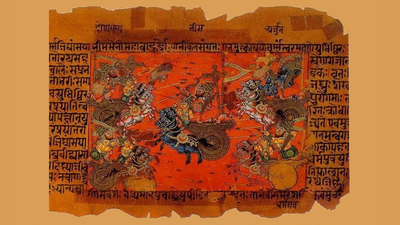
Ramayana and Mahabharata in Indian Art and Literature, Neeru Misra, ed., published by Shubhi Publications, Delhi, 216 + xiv pp., Rs. 2795There are texts that age, and there are texts that breathe. The Ramayana and the Mahabharata belong emphatically to the second category. For over two millennia they have travelled across tongues and territories, been performed on village greens and palace stages, carved into temple walls and embroidered into household textiles, reinterpreted by Buddhists, Jains, and Christians alike, and debated by philosophers, feminists, and political theorists across centuries.
Any scholarly enterprise that attempts to capture this living vitality must therefore be ambitious in scope and courageous in pluralism. The volume under review, Ramayana and Mahabharata in Indian Art and Literature, edited by Neeru Misra, is precisely such an enterprise — and it succeeds, in the main, with impressive distinction.Bringing together fourteen essays by scholars drawn from museums, universities, and centres of cultural research, the volume maps the epics across an extraordinarily wide terrain: decorative arts, miniature paintings, Buddhist and Jain retellings, Southeast Asian adaptations, regional theatre, sacred geography, gender politics, and the moral psychology of individual characters.
Misra's editorial introduction sets the tone admirably, positioning the twin epics not as frozen monuments but as "polyphonic texts" — open, ever-renewing, accommodating the voices of the celebrated and the forgotten alike.
It is a premise that the essays, taken together, vindicate with conviction. The world in the textThe volume opens its geographical imagination wide. Geetanjali Barua's essay, Ramayana, Mahabharata and Northeast India, makes a compelling case that the Northeast was never a peripheral presence in India's epic imagination — it was an integral and vibrant participant. Barua traces the epic footprint from the warrior-kingdom of Pragjyotisha (ancient Assam), whose king Bhagadatta fought formidably on the Kaurava side at Kurukshetra, to the legend of Arjuna's marriage to Chitrangada in Manipur, from the Idu Mishmi of Arunachal Pradesh (who trace descent from Rukmini, Krishna's principal consort) to the Karbi community's own regional Ramayana called the Sabin Alun. The essay is a salutary corrective to any assumption that civilizational unity in ancient India was a top-down political project; the evidence here points instead to an organic, storytelling-based integration that reached every corner of the subcontinent.
Mandira Ghosh's essay on the Ramakien — Thailand's royal epic derived from the Ramayana — traces an equally arresting cultural journey. When King Rama I, founder of the Chakri dynasty, composed the most celebrated Thai version of the epic in 1807 — even as his reign was beset by Burmese invasions — the transformation was so thorough that, as Ghosh notes, "no Thai thinks of it as a thing of foreign origin." Rama becomes Phra Ram, Sita becomes Nang Sida, Ravana becomes Thotsakan, and the 178 outer mural panels of Bangkok's Temple of the Emerald Buddha narrate the Ramakien in visual splendour.
The Khon classical masked dance-drama and Nang Yai shadow puppetry carry the epic into performance. That Sanskrit scholar Prof. Satya Vrat Shastri rendered the Ramakien back into Sanskrit in 1989 as the Ramakirtimahakavyam — a 25-canto composition of approximately 1,200 stanzas — is perhaps the most evocative symbol of this circular, transnational vitality. A companion essay on Echoes of the Kurukshetra: Mahabharata Themes in the Art and Literature of Southeast Asia by Neeru Misra extends this argument, examining how the Mahabharata was creatively indigenised across Java, Cambodia, Myanmar, Thailand, and Vietnam. The wayang kulit shadow puppet theatre — a UNESCO Intangible Cultural Heritage — and its entirely indigenous characters like Semar (who has no Sanskrit counterpart) are offered as vivid proof that creative adaptation, rather than passive reception, was the governing logic of the epic's spread across Asia. Art that prays and enduresSome of the volume's richest contributions come from scholars rooted in museum practice. Anamika Pathak, former Curator of Decorative Arts at the National Museum, New Delhi, demonstrates how skilled artisans across the subcontinent — working within prescribed shilpashastra norms — transformed epic narratives into functional and devotional objects of aesthetic significance: engraved brass-silver shields, embroidered temple hangings, ceramic pots, ivory carvings, and mordant-dyed cotton panels. Her documentation of a globular vase crafted by Jaipur metalsmith Ganga Baksh for the 1883 Jaipur Exhibition — drawing on both the Ramayana and the Bhishma Parva of the Mahabharata — is particularly evocative, as is her observation that colonial-era industrial exhibitions catalysed Indian craftsmen to assert their artistic identity on a global stage. Meenakshi Khemka's essay, The Weave of Devotion: Pictorial Tales of the Ramkatha, examines miniature paintings from the State Museum, Lucknow, spanning the seventeenth to the twentieth century. Seven key episodes of the Ramkatha are traced through the distinct visual grammars of the Mewar, Kangra, Banaras, Jaipur, and Madhubani schools. The essay's most penetrating insight is that the Banaras style integrates Tulsidas's Ramcharitmanas textually on the painted folio itself, creating an intertextual dialogue between image and literary tradition, while Madhubani folk paintings by artists such as Tara Devi strip the narrative to its emotional essence, making the Ramkatha accessible to the broadest cross-section of society. Priyanka Chandra's close analysis of a silver repoussé plaque (10.2 × 5 cm) from the Bharat Kala Bhavan collection at BHU is a masterclass in how small objects carry large meanings. Depicting the slaying of Tadka from the Bala Kanda, the plaque — attributed to a North Indian workshop of the late eighteenth or early nineteenth century — freezes a pivotal rite of passage in silver: Rama in the classical pratyalidha stance, bow drawn; Lakshmana in loyal attendance; the sage Vishvamitra conferring divine sanction.
The essay exemplifies the volume's most compelling methodological ambition: to show that the epics' cultural life extends far beyond literary transmission into the devotional practices of everyday material culture. Rohini Arora's essay on Pahari Narratives of Epics traces the Ramayan and Mahabharat across murals, miniature paintings, and the celebrated double-sided Chamba rumals (embroidered textiles) of northwestern India from the fifteenth to the early twentieth centuries.
A contemporary project that recreated the 17-day Kurukshetra battle as a 21-foot embroidered scroll stands as a living testament to this tradition's endurance — and to the volume's governing conviction that the epics are never finished. Voices at the margins and the centreThe essay by Kritika Punia and Rekha Pande, Voices Veiled and Unveiled, undertakes a sustained feminist re-reading of medieval Ramayanas, foregrounding women's agency, embodiment, and voice. Sita, Kaikeyi, Surpanakha, Mandodari, Urmila, and Ahalya are read not as passive moral exemplars but as thinkers, critics, lovers, ascetics, and warriors. In the Adbhut Ramayana, Sita's transformation into Kali who slays Sahasra-Ravana is read as a radical reinscription of female power. Using feminist theory and historiographic metafiction, the authors argue persuasively that any "authoritative" Ramkatha is itself a product of ideological positioning — a point that applies equally, one might add, to every generation of interpreters. The essay on the Jain Ramayana by Neeru Misra, tradition traces a sophisticated theological rewriting across fifteen centuries — from Vimalasuri's Paumachariya, the oldest extant epic in Maharashtri Prakrit, through Hemachandra's magisterial twelfth-century synthesis. Jain thinkers repositioned Rama as the eighth Baladeva within a cosmological framework and had Lakshmana — not Rama — kill Ravana, to preserve Rama's karmic purity under the supreme principle of ahimsa. Most remarkably, Ravana is recast not as a demon of irredeemable evil but as a learned and morally complex figure brought down by karmic attachment to Sita across lifetimes.
This is not marginal commentary; it is independent creative philosophy of the highest order. The mirror of the selfAmong the most psychologically penetrating contributions is Sangeeta Bahadur's essay, Mahabharat: The Ego of Self-Respect, which examines Bhishma, Dhritarashtra, Karna, Yudhishthir, Draupadi, and Amba/Shikhandi through the lens of ego masquerading as principle. Bhishma's unbending oath, legitimate in origin, is shown to have calcified into a rigidity that made him complicit in Draupadi's humiliation and Hastinapur's destruction; Karna's bruised pride hardened into a consuming ego that prevented him from standing on the side of dharma; even Draupadi's celebrated mockery of Duryodhan at Indraprastha is identified as a spark that ignited a catastrophic war.
Written with intellectual candour and wit, the essay invites readers to see themselves in these immortal characters and to ask where self-respect ends and ego truly begins. Conversations across faiths and centuriesC. Rajendran's essay on Āścaryacūḍāmaṇi — the Sanskrit drama by Śaktibhadra staged continuously as part of Kerala's UNESCO-recognized Kūṭiyāṭṭam theatre for over a millennium — establishes how the Rāmāyaṇa was transformed by local theatrical genius. The audacious staging of three Rāmas, two Sītās, and two Lakṣmaṇas simultaneously in Act III, and the torchlit theatrical horror of the demoness Śūrpaṇakhā entering the audience space wounded and bleeding, speak to a tradition of extraordinary daring. Arputharani Sengupta's chapter on the Dasaratha Jatakam (No. 461 of the Pali Canon) takes the reader into the Buddhist Ramayana of Banaras — where Sita is Rama's sister, not his wife, and Rama's serene acceptance of his father's death becomes a teaching on Anicca (impermanence). The chapter's tracing of the narrative's journey "from Banaras to Ramtek" — linking the Jatakam with Kalidasa's Meghadutam and the sacred landscape of Ramagiri — is a compelling literary and topographical synthesis that broadens the epic's intellectual horizons immeasurably. The volume closes with a remarkable socio-religious study by Prof. Venus Jain of Thanjavur glass paintings, in which Tamil artists who had converted to Christianity in the nineteenth century continued to paint the Sita Swayamvara for Hindu patrons, subtly weaving Christian colour symbolism, luminous halo effects, and Gothic architectural motifs into Dravidian compositional frames. The essay challenges essentialist notions of religious conversion as cultural rupture and positions the Ramayana as enduring cultural capital — sustaining identity, economic survival, and artistic heritage even in contexts of radical religious change.
A word on the editorial visionNeeru Misra has assembled this collection with genuine curatorial intelligence. The volume does not seek artificial coherence; it is enriched by its contradictions and its plurality. Essays focused on the monumental — Angkor Wat, the Ramanathaswamy Temple, Hampi's Hazara Rama Temple with its 108 relief panels — sit comfortably alongside close studies of a single silver plaque no larger than a palm. Character psychology, feminist theory, Buddhist philosophy, material culture, and sacred geography are given equal hospitality.
If one minor caveat is in order, it is that a volume of such ambition would benefit from a concluding essay drawing the threads into a more explicit synthesis; the editor's introduction admirably sets the stage, but the curtain descends a touch abruptly. These, however, are the reservations of a reader hungry for more. Eternal Epics, Enduring Conversations is, in sum, a work of rare scholarly depth and cultural generosity. It illuminates what India's two great epics have always been: not a canon to be guarded but a conversation to be continued — across faiths, geographies, centuries, and disciplines. For general readers, scholars, and anyone who wishes to understand why these ancient stories retain so fierce a grip on so vast a civilization, this book is essential, illuminating reading.The reviewer is a scholar based in New Delhi




 English (US) ·