

 1 week ago
12
1 week ago
12
ARTICLE AD BOX

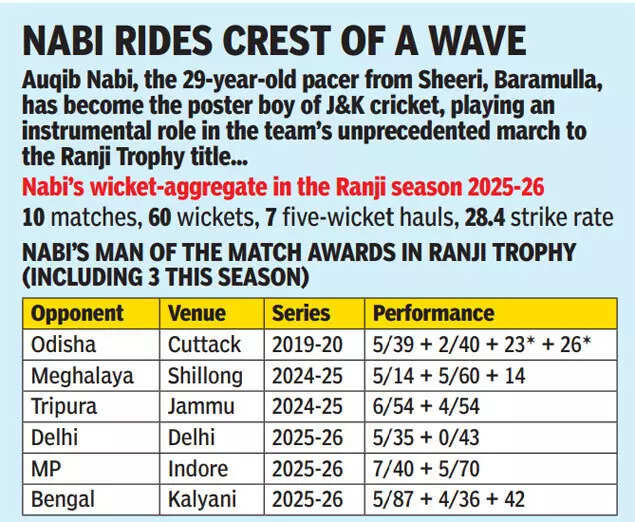
BENGALURU: Jammu and Kashmir cricket embraced the philosophy long before the ‘vocal for local’ initiative came into existence in 2024. The freshly-crowned Ranji Trophy champions have long trusted homegrown talent in red-ball cricket, choosing to invest in local players rather than relying on professionals from other states.
Saturday’s title-winning skipper Paras Dogra, who hails from Himachal Pradesh, is among the rare exceptions in a squad overwhelmingly built around local cricketers.From Baramulla, Srinagar and Pulwama in the north of the Valley to Jammu in the southwest and Doda in the east, the team reflects the breadth of talent spread across the region. Former J&K allrounder Samiullah Beigh believes the state has always had a rich supply of cricketers.
“We’ve always had the belief that we are good enough to compete. There was never a shortage of talent. What we didn’t have was infrastructure,” Beigh told TOI.
T20 World Cup 2026: Sourav Ganguly backs a batting spectacle at Eden Gardens
While those within the system believed in their potential, the same confidence was not always shared outside the state. “A decade ago, when I spoke about how J&K’s fortunes would change if our infrastructure improved, people thought I was bragging. But our belief came from what we saw every day.
Watching thousands of youngsters playing cricket at a ground is normal for us,” said the Srinagar-born cricketer.“At Eidgah maidaan in Srinagar, for instance, you will find at least a thousand players practicing every morning. We always believed we could go the distance because our progress has been steady.”
Former India spinner
Sunil Joshi
, one of the architects of J&K’s resurgence during his tenure as coach, said the region’s strength lay in its talent pool. “They didn’t need outside talent. What they needed was technical expertise, mentorship and guidance to channelise that hunger,” Joshi said.




 English (US) ·