

 1 hour ago
5
1 hour ago
5
ARTICLE AD BOX
On a day primed for disruption over war and an LPG crisis, the Lok Sabha delivered an unexpected script: silence over slogans. As Prime Minister Narendra Modi made his first statement, an unusually restrained Opposition, led by Priyanka Gandhi Vadra, chose to listen.
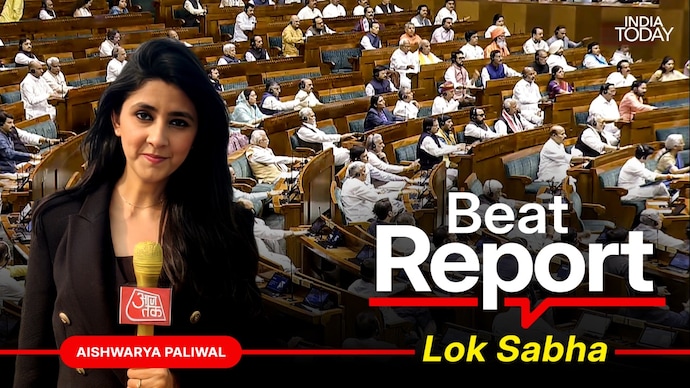
On a day when disruption seemed inevitable in Lok Sabha, the ruling alliance and the Opposition chose restraint.
New Delhi,UPDATED: Mar 23, 2026 21:24 IST
It was the 24th day of the Iran-US-Israel war, and in Delhi, the political temperature was expected to mirror the geopolitical one. The Opposition had been pressing the government to respond to the LPG crisis gripping the country, and as someone tracking both Parliament and the BJP beat, I walked into the day bracing for disruption.
Congress MP Manickam Tagore had already submitted a notice. The script I anticipated was: noisy protests, adjournments, sharp exchanges. But around noon, everything shifted. Word came in that Prime Minister Narendra Modi would make his first statement in the Lok Sabha on the war at 2 pm.
By 1.50 pm, I was in the press gallery, expecting a packed house and charged atmosphere. Instead, the room felt unusually sparse. A few reporters filtered in. Then, at 1.56 pm, four minutes ahead of schedule, the Prime Minister walked in, dressed in a crisp white kurta paired with a grey jacket.
As the doors opened and he made his way to his seat, BJP MPs broke into chants of “Bharat Mata ki Jai.” Senior ministers Amit Shah, Rajnath Singh and Kiren Rijiju were already in place.
Instinctively, I looked across at the Opposition benches for a reaction. Priyanka Gandhi Vadra was there. So was Manickam Tagore. But key faces — Rahul Gandhi and KC Venugopal — were missing. Around 1.59 pm, Asaduddin Owaisi walked in.
What caught my attention next was subtle but significant. Tagore leaned over to speak briefly with Priyanka Gandhi Vadra. It looked like a quick huddle — one that would quietly shape what followed.
At exactly 2 pm, PM Modi rose to speak. He began by acknowledging that India had indeed felt the impact of the ongoing war. A few TMC MPs walked in a couple of minutes later, but prominent disruptors like Mahua Moitra and Kalyan Banerjee were absent. On the treasury benches, BJP MPs continued to trickle in, filling seats by around 2.05 pm.
As the Prime Minister spoke about India importing nearly 60% of its LPG and highlighted the government’s push towards energy diversification over the past decade, something unusual unfolded: the Opposition stayed silent.
Priyanka Gandhi Vadra listened intently. Deepender Hooda, seated just ahead of her, occasionally turned back to exchange brief remarks. Around 2.06 pm, Samajwadi Party MP Dharmendra Yadav walked over to Tagore — another quick exchange, another quiet coordination.
The message was clear. The Opposition had decided: no disruptions, just listen.
For a House accustomed to interruptions, slogan-shouting and frequent adjournments, the restraint stood out. NDA MPs — from JD(U), TDP and Shiv Sena — were present in strength, but on the Opposition side, it was a smaller, composed group holding the line.
The Prime Minister spoke for exactly 24 minutes, concluding at 2.24 pm. He sat down, took a sip of water, exchanged a few words with Rajnath Singh and Amit Shah, bowed to the Speaker, and exited.
In my five years of covering Parliament and the BJP, this was a rare moment. Not because of what was said — but because of how it was received.
On a day when disruption seemed inevitable, both sides chose restraint. And for once, in the middle of a war-driven political moment, listening prevailed over noise.
- Ends
Published On:
Mar 23, 2026 21:24 IST
Tune In



 English (US) ·