

 1 hour ago
7
1 hour ago
7
ARTICLE AD BOX
In the space of half an hour, Lionel Messi showed he is mortal yet immortal. Like Diego Maradona 40 years ago on the same day, with a goal scored by his hand and another with his imagination. Messi missed a spot kick, before he scored a belter and added one more late in the game in Argentina’s 2-0 win.
In the ninth minute of the game, against Austria, an upgrade on Algeria, the team Messi eviscerated, he fluffed a penalty. Anticipation buzzed, the cameras converged to not Messi, but his priceless left leg. He measured his steps, kissed the ball and set off, the run-up intentionally stuttered. The world waited breathlessly for the historic moment when he could become the highest goal-scorer in the World Cup, another entry into his album of consummate greatness.
The next moment, the arena shook in silence. The infallible failed to burst the nets, his shot weak and wayward. The audience might have rubbed their eyes to fathom if it were real or imagined. It was just the 33rd spot kick he had missed in his entire career (out of 111) attempts. The curse of the Nelson they say. Messi rubbed his eyes in disappointment. But he didn’t grieve, because he knows the vicissitudes of the game, the imperfections and the mortality of even the immortals.
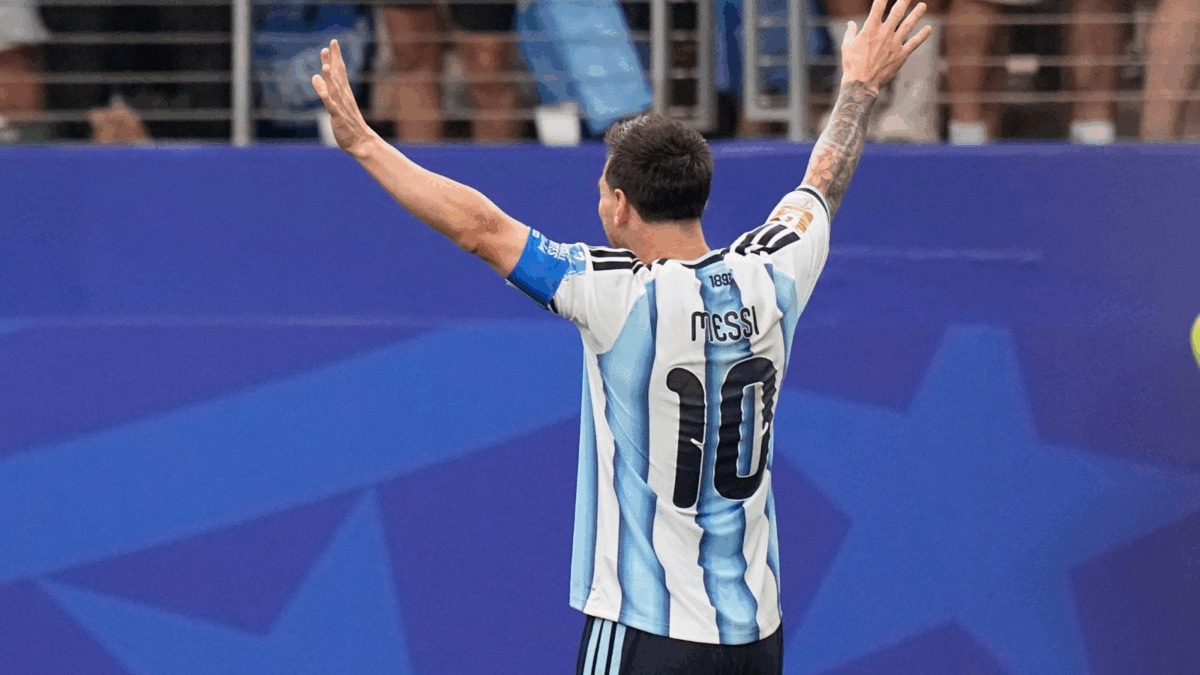
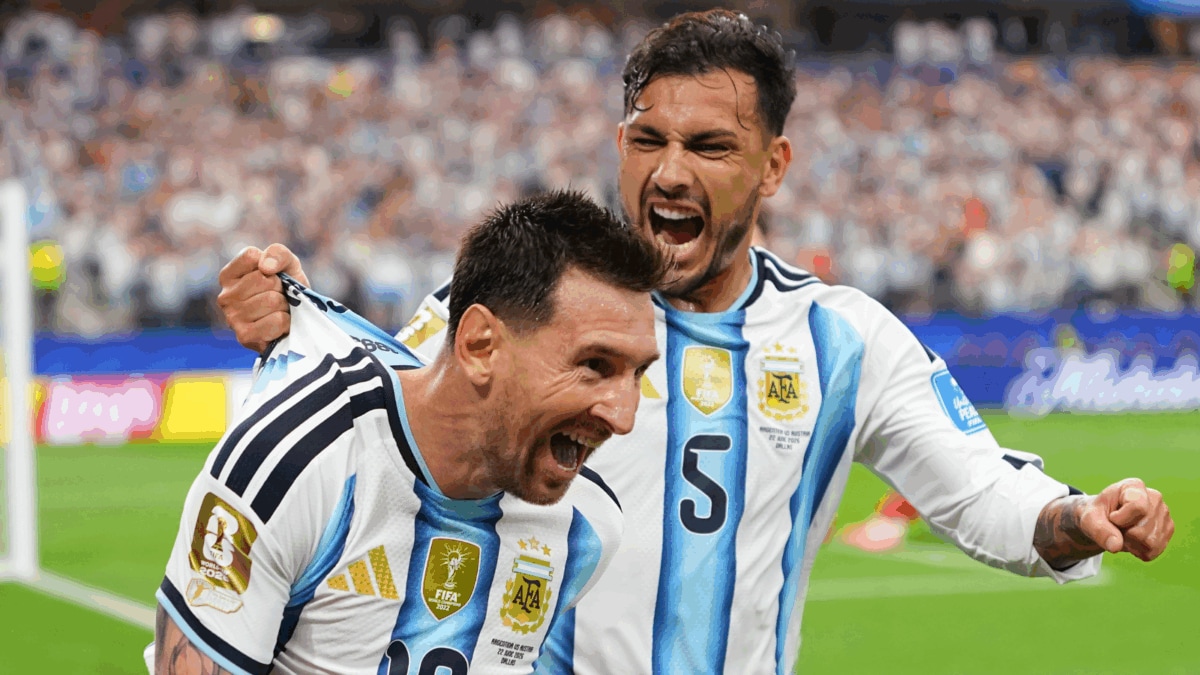
Thirty interminable minutes later, he atoned in a more fitting way to break the record of Miroslav Klose than a soft penalty, in a manner that would gloriously sum up his career. A left-footed whip that blasted into the nets. Thiago Almada raced with the ball to the left, passed to Facundo Medina, who lashed a cut back into the box. The target was Medina, but he stepped over it while dragging all the defenders into him. Messi, galloping like a pony, pinged it with the precious left foot of himself. He ran towards the corner flag, gazed at the sparkling blue skies, both hands aloft in his signature pose, before the teammates swarmed him. Messi’s response was mild, a smile that contained all the devilish genius about him.
The goal made him the highest goal scorer in the World Cups with 18 to his name. In this number, he could watch his entire career, the years he reeled under the burden of Diego Maradona, the elusive World Cups, the near retirement, the wrath of his countrymen, the redemption and the glory in Qatar. Stunningly, 12 of those 18 goals have come in the last two editions.
Many layers of Messi are embedded in the number. A scorer of great goals and great scorer of goals, an insatiable trier that kept coming back to fulfil his dream of winning the World Cup, a totem for his country and a joy to the world, a testament of longevity, of adaptability and of sustained evolutions.
Longevity
The most understated part is perhaps his longevity, of how he has defied the inevitable physical decline, the niggles and sores that hit him more often, the injuries that take longer to heal and easier to recur. Making adjustments should not be difficult for a man of his intelligence and intuitions. But readying his mind would be the tougher part. It is easy to say Messi continues playing football to fill the void that football leaves him if he retires. But to motivate the mind, after all he has achieved could be the most difficult part.
Story continues below this ad
The 38-year-old gleans inspiration from Rafael Nadal, the retired tennis gladiator. “We’re watching a Rafa Nadal series right now and I feel like him, in that sense, giving everything and enjoying what you do,” he said after the last game, when he scored a hat-trick. “I felt good. I prepared myself as best I could physically to be on a par with my teammates. My seventh World Cup? No, I don’t know… Right now I’m just enjoying myself on the pitch. I like competing, being up to the task. I love playing football; it has been my passion since I was a little kid. When I am in good form, I give everything I have on the field,” he added.
Great players often have the ability to slow the clock on their signature moments, lending them a frictionless epic quality. Like when Messi finds the ball on his left foot, a moment of perfect stillness that also carries an implication of irresistible power. The leg should be weary of so many goals, wears and tears, the stamp of boots, the mind would be weary of the pressure of international football, but now its pure instinct, the winding-up, the connection, the recoil, and the landing. It seems like he can find the target with his eyes blindfolded.
It’s his enduring genius, too. The world around him has changed; the game and tactics have, he himself has, yet not his undiluted passion for the game. Perhaps, no one has achieved Messi kind of greatness in football, because no one has loved the game as much as he has. And to no one has football reciprocated the love as much as it has to Messi.


 English (US) ·