

 1 hour ago
5
1 hour ago
5
ARTICLE AD BOX
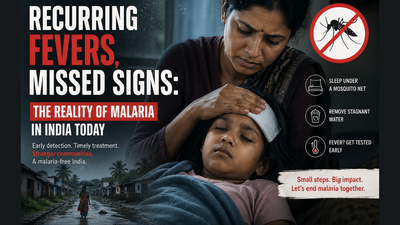
Every year around World Malaria Day, the conversation around malaria comes back into focus. And yet, for many people in India, it’s not just a headline or a seasonal concern, it’s a very real, recurring threat that shows up with the rains.
Cases have dropped over the years, which sounds reassuring. But step into certain regions during the monsoon, and you’ll realise the fight is far from over.So what’s really going on? Why does a disease that’s both preventable and treatable still manage to slip through the cracks? Part of it is awareness. Part of it is access. And sometimes, it’s just how easy it is to ignore early symptoms, brushing them off as a passing fever.To understand where India stands today, and what still needs fixing, we spoke to Dr. Girish Chandra Vaishnava. In this conversation, he breaks down the reality on the ground, from gaps in prevention to simple things families can actually do at home. Because when it comes to malaria, the difference between staying safe and getting sick often comes down to the small, everyday choices we make.
1. Where does India currently stand in the fight against malaria—are we winning or plateauing?
Dr. Girish Chandra Vaishnava: Due to improved surveillance and control programmes, India has undergone considerable advancement in its fight against malaria.
Cases and deaths from malaria have decreased significantly in India over the last ten years; nevertheless, we have not yet reached our goal of a malaria-free country. Some parts of India continue to experience outbreaks of malaria. Some challenges still hinder our ability to rid ourselves of malaria, including global climate change and urbanization.
2. Malaria is both preventable and treatable, yet it still claims lives—what are the biggest gaps in prevention and access to care?
Dr. Girish Chandra Vaishnava: Malaria continues to thrive due to inadequate awareness of the disease, too much time taken to diagnose it and healthcare access is unequal in remote or isolated areas of the world.
Many individuals will manifest the earliest signs of malaria but fail to seek medical attention for them or treat themselves with non-traditional methods. Stagnant water and a lack of sanitation also contribute to an increased risk of contracting malaria.
Furthermore, not having access to timely diagnostics and subsequent treatment, will continue to represent a major obstacle towards fully eradicating the disease in rural locations around the world.
3. What are the most effective malaria prevention strategies today?
Dr. Girish Chandra Vaishnava: The most efficient prevention methods are the use of insecticide-treated bed nets , indoor residual spraying and the removal of stagnant water sources. In addition, persons can wear suitable clothing like long sleeves and pants and apply mosquito repellent vigorously, especially to the feet and lower body. Community awareness, along with early diagnosis, are also very important in this regard.
An effective defense against mosquito bites and reduced risk of transmission can be accomplished through a combination of these strategies.
4. What early symptoms should people watch for, especially during peak transmission seasons like the monsoon?
Dr. Girish Chandra Vaishnava: The early manifestations of malaria include symptoms such as fever, chills, sweating, headache and another symptom of malaise. Some people may have additional symptoms including nausea and fatigue, however, these are often confused with the flu.
Because of similarities between the flu and malaria these symptoms often lead to a delay diagnosing the infection. For this reason, make sure that any recurring fever that occurs during the rainy season is treated seriously and tested immediately.
5. What simple steps can families take at home to reduce mosquito breeding and protect themselves effectively?
Dr. Girish Chandra Vaishnava: You can stop mosquitoes from laying eggs in your home by keeping water from sitting around in coolers, flower pots, or drains. Cleaning the area around your house regularly helps as well as sleeping inside a mosquito net, putting screens on windows and keeping any containers that have water in them covered with a lid.
Using a repellent will also help keep mosquitoes away. A few small things done every day while at home can help keep you protected from getting bitten by mosquitoes.
6. If you had to give one urgent call to action, what should individuals, communities, and policymakers prioritize right now?
Dr. Girish Chandra Vaishnava: The urgent call to action for World Malaria Day is now, more than ever, to promote the early detection of malaria and the prevention of its spread. Anyone experiencing fever symptoms should be tested for malaria; communities must strive to maintain a clean environment; and policymakers must increase access to healthcare services and raise awareness of malaria. All of these activities, viewed as a combined effort, will help to get us closer to eliminating malaria, through a greater focus on prevention, access to timely treating, and increasing malaria surveillance.Medical experts consulted This article includes expert inputs shared with TOI Health by: Dr. Girish Chandra Vaishnava, Director- Internal Medicine, Medanta Hospital NoidaInputs were used to explain the state of malaria in India.






 English (US) ·