

 1 hour ago
5
1 hour ago
5
ARTICLE AD BOX
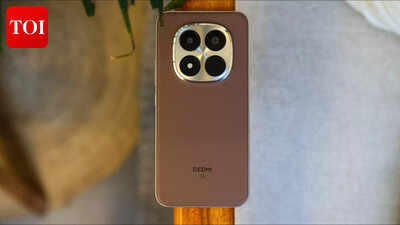
The Redmi Note 15 Pro+ delivers where it counts—two-day battery life, a bright 120Hz AMOLED screen, solid build with IP69K rating, and a capable 200MP main camera. At Rs 37,999, it's pricier than Note buyers are used to, but the phone mostly justifies the jump.
Xiaomi has a habit of stuffing specs into affordable phones until something has to give, and the Note series has always been Xiaomi’s volume play—phones that sell in massive numbers because they nail the price-to-performance ratio.
The 15 Pro+ doesn't deviate from that formula. A 200MP camera, 6500mAh battery, 100W charging, and IP69K water resistance. It has it all, and also the price.The price is Rs 37,999, and longtime Note buyers might need a second to adjust. The Redmi Note series used to live comfortably under Rs 25,000, and Xiaomi has been nudging it upward with each generation. But in a market where everything costs more than it did two years ago, the asking price doesn't sting as much as the number suggests.
Whether that's Xiaomi reading the room correctly or just inflation doing its thing, the value conversation has changed.So, about using it for two weeks, the Note 15 Pro+ does make a solid case for itself. There's a lot Xiaomi got right here, and a few places where the budget shows. Let's get into it, shall we.
The subtle art of looking expensive
The Mocha Brown colour I have with me has a faux leather back that actually feels nice. Not "nice for the price" nice—just nice.
The texture has warmth, the pale gold accents don't scream for attention, and the whole package comes together in a way that suggests Xiaomi's design team was having a good day. There's a tactile quality here that glass and plastic simply can't replicate—it's grippy without being sticky, soft without feeling cheap.
If you prefer something more conventional, Black and Glacier Blue options come with frosted fiberglass backs that are marginally thinner (8.19mm versus 8.47mm for the leather) and lighter.Build quality backs up the aesthetics. IP68 and IP69K ratings mean water resistance that goes beyond splashes—this thing can handle submersion up to 1.5 meters for 30 minutes and high-pressure water jets up to 80°C. Xiaomi even got TÜV SÜD certification for long-term water resistance, if it helps knowing. The screen curves gently at the edges—maybe 2-3mm of wrap on each side—while the frame stays flat. Combined with the subtly curved back, it makes the phone sit comfortably in your palm despite the size.
It's less dramatic than the aggressive waterfalls from a few years ago, though reflections still catch along the curves in bright light, and the occasional accidental palm touch slips past Xiaomi's rejection algorithms.Gorilla Glass Victus 2 protects the front—and I can’t appreciate it enough because this is the glass you’d find on phones costing twice as much. Xiaomi claims 2.5-meter drop resistance onto smooth granite surfaces, again backed by certification for crush, bend, and drop protection.
The internal structure uses a reinforced aluminium-alloy frame with a thickened motherboard and multi-level shock absorption. I didn't test these claims deliberately, but the phone survived a few accidental tumbles onto tile and one unfortunate incident involving a concrete floor.At 207 grams and 8.47mm thick (for the leather variant), it's not a slim phone. You'll feel it in your jeans pocket, and one-handed use requires some hand gymnastics for anyone without large palms.
But Xiaomi has rounded the corners more aggressively than last year's Note 14 Pro+, and this small change makes extended use noticeably more comfortable. The previous model's sharper edges would dig into your palm during long sessions—that's gone now.
The frame is finished to mimic brushed metal convincingly, though it's actually high-strength polycarbonate underneath. Most people won't notice unless they're specifically looking.One design quirk worth mentioning: the camera module has four circular cutouts arranged in a 2x2 grid within a rounded square island, but only two are actual cameras. And this is such a 2020 thing that I felt funny writing it out loud. One's an LED flash, and the fourth houses a laser autofocus module that looks like a lens but isn't. It creates visual symmetry, sure, but it also feels like Xiaomi is trying a bit too hard to suggest more hardware than exists.
The island itself doesn't protrude excessively, maybe 2mm, so the phone doesn't rock too aggressively on flat surfaces when you're typing.The IR blaster survives another generation at the top edge—still handy for controlling TVs, air conditioners, and set-top boxes when remotes inevitably go missing. The SIM tray takes two nano-SIMs or one SIM plus an eSIM, but notably no microSD card. This is the only phone in the entire Note 15 series without expandable storage, which feels like an odd omission on the most expensive model.
All the nits you need
The 6.83-inch AMOLED panel is a good one. Colours are vibrant out of the box—reds pop, blues have depth, greens look lush—and the 12-bit colour depth means gradients render smoothly without the banding artefacts that plague cheaper displays. Xiaomi defaults to a "Vivid" profile that leans punchy, which works for social media and video but oversaturates if you're editing photos. Switching to Original Colour pulls things back to sRGB accuracy, and there's an Advanced mode with manual temperature and saturation sliders if you want to dial it in yourself.Resolution sits at 2,772 x 1,280 pixels—about 446 ppi, which Xiaomi calls "1.5K." Sharper than standard 1080p, not quite flagship 1440p. At normal viewing distances, text is crisp and images hold detail well. I spent long stretches reading articles on this screen without fatigue, and you'd need your nose against the glass to spot pixels.HDR10+ and Dolby Vision support round out the visual story. Streaming from Netflix and Prime Video looks properly dynamic—deep blacks, highlights that pop without crushing detail, contrast that makes content look alive rather than flat.
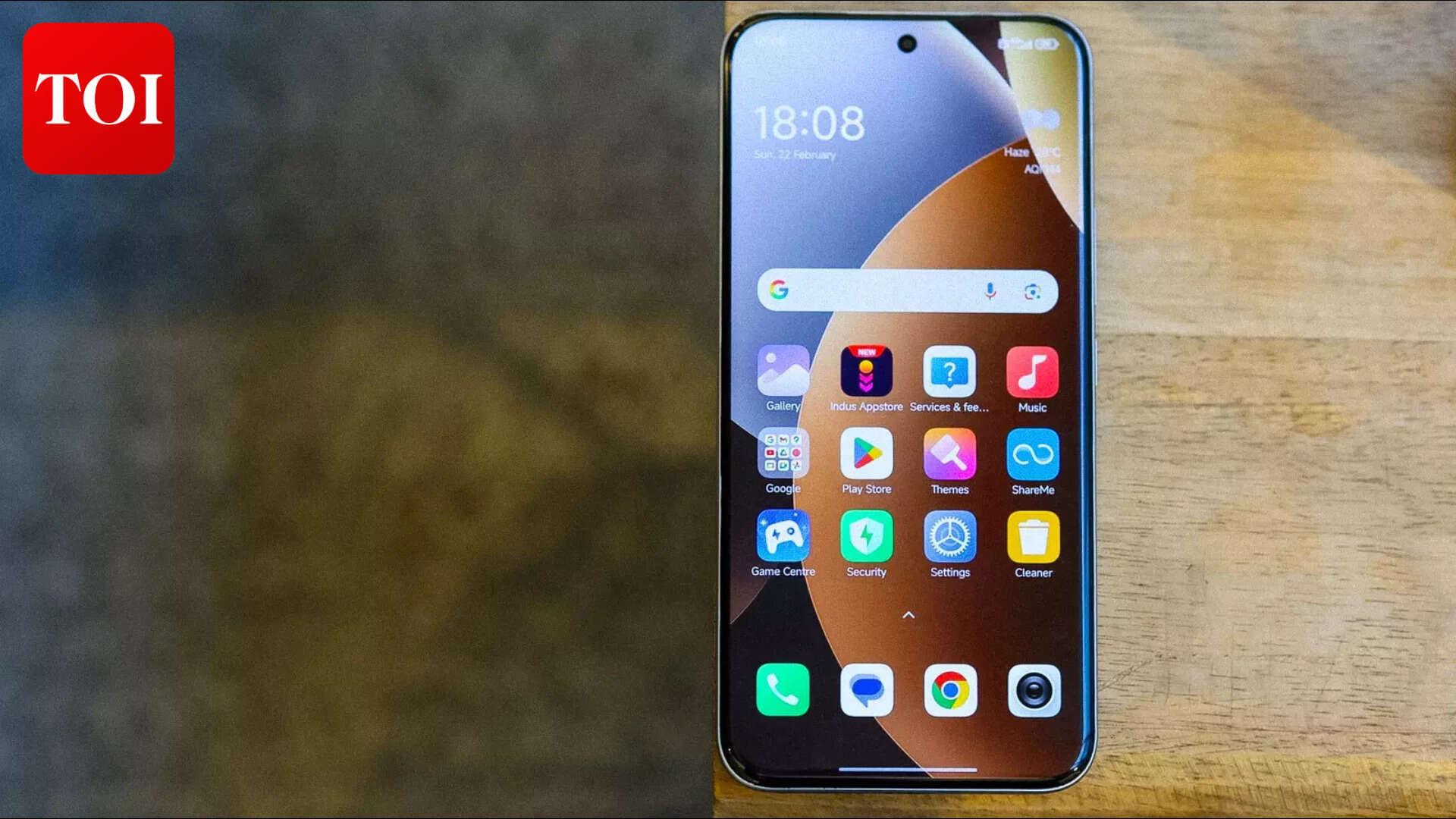
Bright, smooth, easy on the eyes
Brightness is where this panel really shows off. Xiaomi claims 3,200 nits peak for HDR content and 1,800 nits in regular high-brightness mode, and outdoor visibility in harsh afternoon light backs that up—framing photos and reading messages under direct sun worked without squinting. The auto-brightness uses 16,000 steps of adjustment, so transitions between lighting conditions feel smooth rather than jumpy.
On the dimmer end, 3,840Hz PWM dimming reduces the flicker that many AMOLED panels produce at low brightness, and I noticed less eye fatigue during late-night reading compared to phones that skip this.The 120Hz refresh rate keeps scrolling and navigation fluid. It's not LTPO—the panel switches between 30Hz, 60Hz, 90Hz, and 120Hz in steps rather than scaling continuously—but in daily use, the difference is invisible.
Touch sampling rate sits at 480Hz normally and spikes to 2,560Hz in gaming mode, which keeps inputs tight where responsiveness matters.Audio from the stereo speakers is serviceable. The bottom-firing driver and earpiece tweeter produce actual stereo separation—elements pan left to right in videos, dialogue stays clear. Volume gets genuinely loud. But push past 70-75% and it falls apart—bass disappears, mids turn harsh, warmth evaporates.
Fine for YouTube, podcasts, and calls. For music, grab headphones. No 3.5mm jack, so it's Bluetooth or USB-C, and no dongle in the box.The optical fingerprint sensor sits toward the bottom third of the display, lower than feels natural. Fast and accurate once your thumb lands, but the placement takes deliberate effort that didn't fully become muscle memory even after two weeks. Face unlock is quicker for everyday use—2D camera-based, so it works in decent lighting but not darkness.
The daily grind, handled
The Snapdragon 7s Gen 4 handles daily tasks without fuss. Built on TSMC's 4nm process with an octa-core setup—one prime core at 2.7GHz, three performance cores at 2.4GHz, and four efficiency cores at 1.8GHz—it delivers roughly 10% better performance than its predecessor while consuming less power. Apps open quickly, switching between a dozen Chrome tabs and social media stays smooth, and the interface never felt sluggish.
The phone handles the daily grind of messaging, email, social media, and light productivity without making you wait.Gaming sits in the "perfectly fine for most people" category. Call of Duty Mobile handles high settings with stable 60fps. Mobile Legends stays smooth through chaotic team fights. Genshin Impact works at medium settings with mostly stable frame rates, though intensive sequences with heavy particle effects can cause drops into the 40s.
The phone’s cooling system—a vapor chamber with claimed 5,200mm² surface area—keeps things in check during extended sessions.
After 45 minutes of Genshin, the back felt warm but never uncomfortable. No dramatic thermal throttling.RAM management is solid—with 12GB, background apps stayed alive far longer than expected, and Xiaomi's virtual RAM extension can push this to 24GB using storage as swap. The storage itself is where cost-cutting shows, though.
UFS 2.2 means sequential read speeds around 1,000 MB/s when UFS 3.1 would double that. You notice it in small ways—a delay before photos populate the gallery after a burst shoot, slightly longer loads on heavy games.
Nothing dramatic, but for the top of the Note 15 line, previous-generation storage feels like a miss.Software runs HyperOS 2.0 on Android 15—not 16, which many late-2025 devices shipped with. One of Xiaomi's promised four years of OS updates will essentially be spent catching up.
Six years of security patches is part of the commitment, respectable for this price tier.The interface itself is mature. HyperOS has evolved from the MIUI days, with cleaner aesthetics and more logical organisation. Customisation runs deep: lock screen widgets, depth-effect wallpapers, always-on display styles, icon packs, custom fonts. Animation smoothness has improved—transitions feel fluid rather than laggy.
The AI toolkit covers writing assistance in Notes, real-time speech transcription, face-to-face translation that works offline for some language pairs, and dynamic wallpapers generated from your photos.
Functional additions, not gimmicks.The less pleasant software reality: bloatware and ads. First boot brings pre-installed games, promotional notifications, "recommendations" that are advertisements in everything but name.
Some first-party apps show ads. GetApps pushes downloads aggressively. All removable or disableable, but expect 20-30 minutes of cleanup after setup to reach a cleaner experience.Battery life is where this phone earns its keep. The 6,500mAh silicon-carbon cell delivers two full days of use with moderate habits. Not theoretical two days—actual use including social media, photography, an hour of streaming, messaging throughout the day.
I consistently ended each day with 35-45% remaining. Light users could realistically stretch to three days.The 100W HyperCharge fills up in about 40 minutes with boost mode and a compatible charger. I tested with a 120W Xiaomi charger: 31% in 15 minutes, 52% in 30 minutes, full in just over 40. The charger isn't included—you get a cable but need your own adapter. Any USB PD charger works at slower speeds; for full 100W, you need a Xiaomi HyperCharge or UFCS-compatible adapter.There's also 22.5W reverse wired charging through USB-C, turning the phone into an emergency power bank for earbuds or smartwatches.
200 megapixels of mostly good news
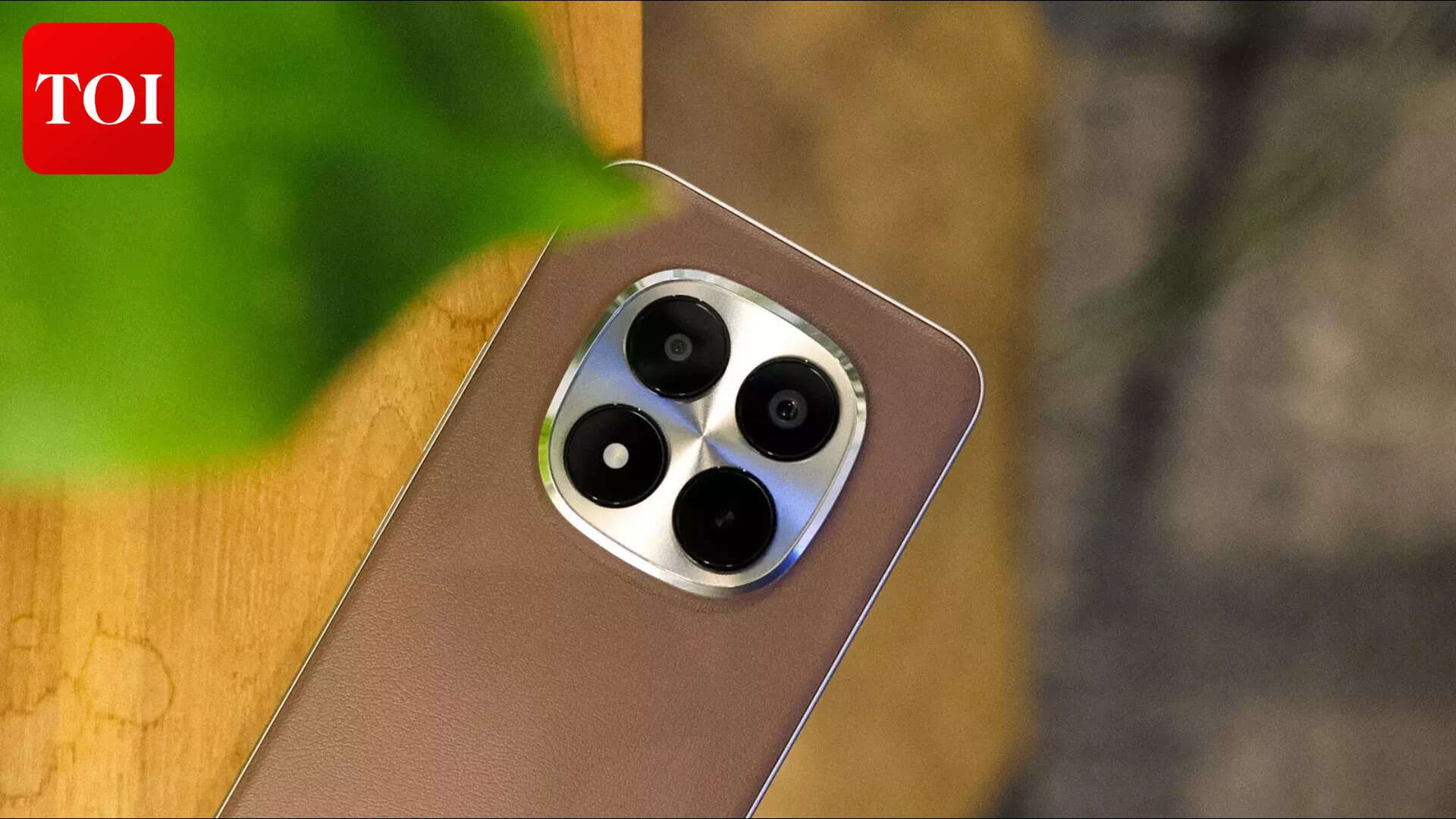
Main camera does the heavy lifting
The main camera uses Xiaomi's new HPE sensor—a 200MP, 1/1.4-inch unit with f/1.7 aperture and OIS. By default, the phone bins 16 pixels into one to produce 12.5MP shots, which is the sweet spot for most use. You can shoot at full 200MP resolution in Ultra HD mode, but that's really for situations where you know you'll crop heavily—the files are massive, processing takes a few seconds, and any hand movement shows.In good light, the main sensor delivers. There's real detail here—textures, foliage, signage in the distance—and colours lean warm and punchy without going overboard. Skin tones look healthy, greens are lush, skies hold their blue. Dynamic range handles tricky scenes well enough that I stopped worrying about backlit subjects. White balance stays consistent across most conditions, which isn't always a given at this price.The pixel count also makes digital zoom more usable than usual. At 2x, results are genuinely sharp—good enough for portraits where you want to avoid wide-angle distortion. At 4x, quality holds up in bright light though sharpening becomes visible. Beyond that, things deteriorate fast. The AI processing tries hard but images past 4x have that unmistakable over-processed, painterly look. Treat 4x as the practical ceiling.

Low light is where this camera falters. Night mode extends exposure to 1-4 seconds depending on how dark it is, and OIS helps keep things steady. Highlights are managed reasonably—neon signs don't blow out completely—and midtones retain decent detail. But shadows get noisy, fine textures dissolve, and there's a processed quality that's hard to miss.The 8MP ultra-wide is the weak link, and I wish I had better news.
It captures wider scenes and that's about the extent of it. Detail is soft even in ideal conditions, there's a noticeable colour shift from the main sensor, and low light performance is genuinely poor. No autofocus means no macro capability either. It exists for those moments when you need to fit more in the frame—group shots, architecture, landscapes—but don't expect to do much with the files afterwards.Video caps at 4K/30fps, which feels limiting when 4K/60 has become standard even at lower price points.
What you do get works well—OIS keeps footage stable during walking shots, autofocus tracks subjects reliably, colours stay consistent. Audio capture is clear with decent stereo separation, though thin on bass and vulnerable to wind.The 32MP front camera is competent. Detail is solid in good light, portrait mode handles edge separation well with adjustable bokeh. Beauty mode is on by default at a subtle level—disable it in settings if you want unprocessed shots.
Video tops out at 1080p/60fps with electronic stabilisation only.One thing worth mentioning: Xiaomi's Gallery app includes surprisingly capable editing tools. Object removal works reasonably for simple backgrounds, there's sky replacement, reflection removal for shots through glass, and a generative expand feature for changing aspect ratios. Not something I'd personally reach for, but if you're the type who’s fine with using AI for their pictures, the features are there.
The pragmatic choice
The Redmi Note 15 Pro+ gets the fundamentals right. Two-day battery life that doesn't require careful management. A screen that's bright, smooth, and genuinely comfortable for long use. Build quality that survives drops and water without feeling like a ruggedised device. A main camera that produces good photos in most conditions and handles zoom better than you'd expect. These are the things most people actually care about, and the phone delivers on all of them.The trade-offs are there, and they are easier to spot at this price. UFS 2.2 storage is a generation behind. The ultra-wide camera does the bare minimum. Software still ships with ads and bloatware that need cleaning up. No 4K/60 video. Android 15 instead of 16. None of these are dealbreakers on their own, and most buyers won't think about them daily. But they do add up to a sense that Xiaomi left a little on the table.Then there's the price. Rs 37,999 is not where the Note series used to live.
The Note 10 Pro Max launched at Rs 19,999, the Note 11 Pro+ at Rs 22,999. We've nearly doubled. But what you're getting for that money has also changed. The 200MP sensor, silicon-carbon battery, IP69K rating, Snapdragon 7s Gen 4—these were flagship specs not long ago. Xiaomi has repositioned the Note series from budget champion to value flagship, and while longtime fans might feel the drift, the hardware mostly justifies the new address.
Mostly.For most people shopping around Rs 40,000, this phone makes sense. It doesn't overpromise, it doesn't chase gimmicks, and it handles the daily essentials without complaint. The Redmi Note 15 Pro+ knows exactly what it is, and there's value in that.








 English (US) ·