

 1 hour ago
6
1 hour ago
6
ARTICLE AD BOX
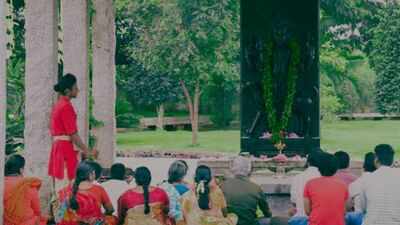
Isha crematoriums, called Kayantha Sthanams, have emerged as a quiet but significant model of how death can be handled with dignity, simplicity, and care. Even today, many cremation grounds in India struggle with cleanliness, infrastructure, and the burden placed on grieving families.
In contrast to this, Isha’s approach stands out for combining public service, environmental responsibility, and spiritual sensitivity in one framework.The idea behind this work is simple, emphasised by Sadhguru Jaggi Vasudev, “As we have responsibilities for the living, we have responsibilities towards the dead.” The final journey of a human being should not be reduced to a mechanical or commercial process, but handled as a solemn social responsibility.The model began in Tamil Nadu in 2010, when the first crematorium was entrusted to Isha in Coimbatore’s Nanjundapuram area. What started there has now expanded into a wide system of crematorium management across the state. Isha currently manages 33 crematoriums in Tamil Nadu, and over the past 15 years, more than 1,25,000 cremations have been carried out. The organisation has facilitated over one lakh cremations and recently launched a free cremation service for families living below the poverty line across the crematoriums it manages in Tamil Nadu.
Isha’s crematoriums include spaces such as the Kalabhairava Dhyana Mandapam at the Isha Yoga Center Coimbatore, where final rites can be conducted in a peaceful and respectful atmosphere. This is offered as a complimentary service to everyone, irrespective of caste, religion, community, social status, or economic background. The emphasis is on creating a setting where the emotional needs of families, ritual needs of tradition, and practical needs of modern infrastructure can coexist.
This is what makes the project distinctive in the national context.Kalabhairava Karma and Kalabhairava Shanti are part of that broader framework of end-of-life support in the yogic tradition. In simple terms, Kalabhairava Karma is a ritual performed for the deceased within a specific time after death. It is done by invoking Devi’s Grace within a particular time span after death and brings “a certain ease and pleasant transition”.
Kalabhairava Shanti is the related ritual performed when the time window for Kalabhairava Karma has passed.
It can be performed any time after death, especially on Amavasya, and can be repeated monthly or yearly. Both are intended as compassionate post-death processes within the yogic tradition, aimed at bringing a more peaceful transition. Sadhguru Jaggi Vasudev explains that someone who has left the body no longer has discretion in the usual sense and therefore a supportive process can make the transition gentler: “Since there is no more discretion or discernment, if you put one drop of pleasantness into the mind of one who has left the body, this pleasantness will multiply a million fold.” The final journey of a human being deserves the same seriousness and care as every other part of life. In Bharat where death rites are deeply personal, culturally rooted and often financially burdensome, Isha’s work offers a model that is at once practical, humane, and rooted in tradition.Baans Ghat Crematorium in Patna is spread across approximately 4.5 acres and is one of the largest crematorium facilities in Asia.
It has 4 electric cremation furnaces, 6 wood-based furnaces, and 8 traditional open cremation platforms, allowing up to 18 cremations at once. Under normal conditions it handles around 18 cremations a day, and during peak periods the number can rise to 50.
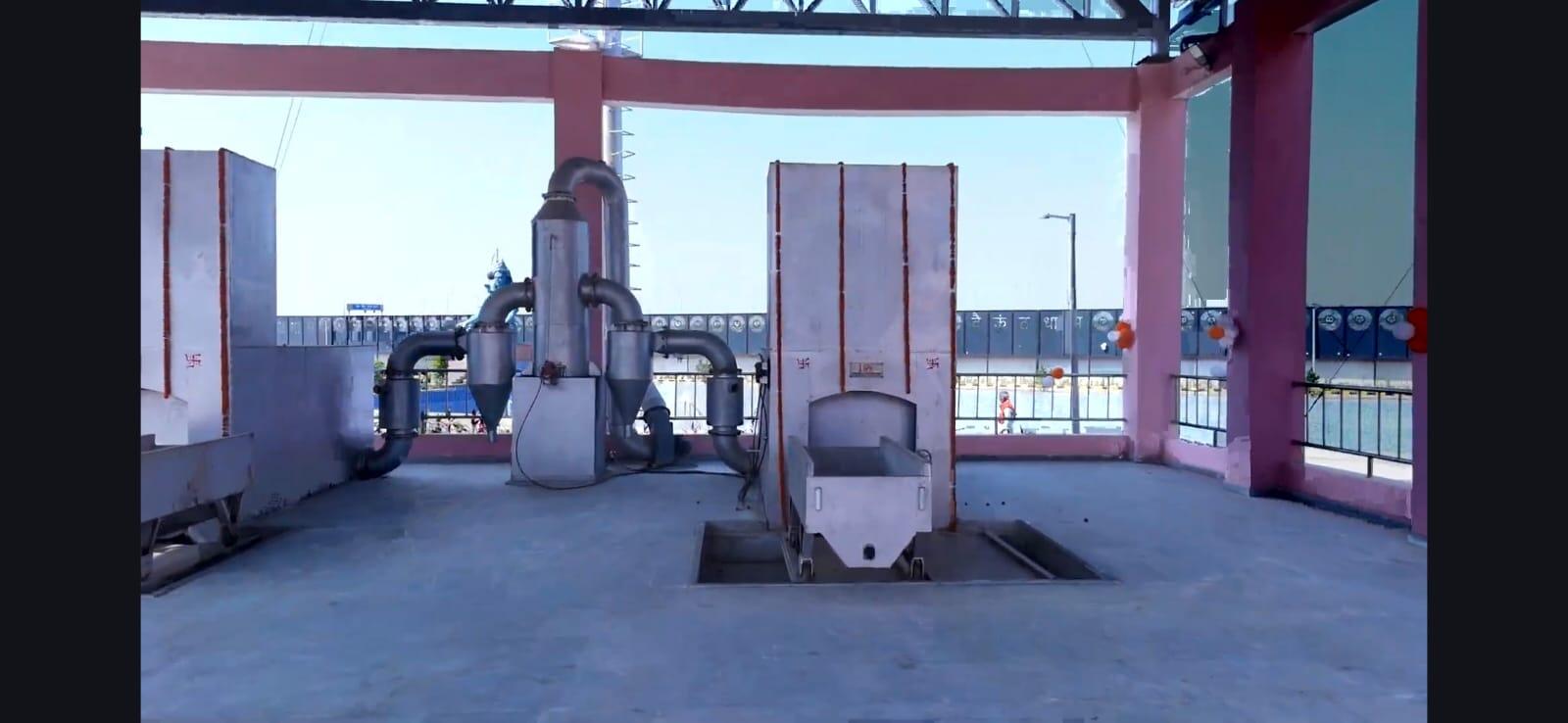
Bans Ghat in Bihar
The public policy value of this model is important. Traditional wood-based cremation can consume around 200 kilograms of firewood per cremation and cost Rs 12,000 or more, while LPG-based cremation is estimated at around Rs 5,000 and electric cremation at around Rs 7,500.
Beyond lower cost, these methods reduce smoke, dependence on firewood, and emissions, making them more suitable for environmentally stressed river systems.
This is especially relevant in Bihar, where many crematorium sites are on or near the Ganga and its tributaries. In that sense, Isha’s crematorium work is not only about service delivery, but also about river conservation, cleaner air, and more sustainable public infrastructure.Bihar also gives the story a larger civic dimension. The state has allotted land to Isha Outreach for five modern crematorium facilities at Patna, Begusarai, Bhagalpur, Gaya, and Saharsa with a sixth one in Chapra currently in progress. Baans Ghat has been positioned as a demonstration project, with a focus on maintenance, cleanliness, user experience, and the eventual installation of LPG-based systems. The expected timeline for the additional Bihar projects is one to two years, since the locations require soil testing, riverbank assessments, design, approvals, fundraising, construction, and commissioning.The crematorium initiative has also created stable employment and has supported the education of staff children and better family welfare. That matters because a model of dignity in death also needs dignity for those who perform the work. In practical terms, this is not a symbolic project; it is an operating public service system that touches families, workers, and local communities every day.








 English (US) ·