

 3 hours ago
5
3 hours ago
5
ARTICLE AD BOX
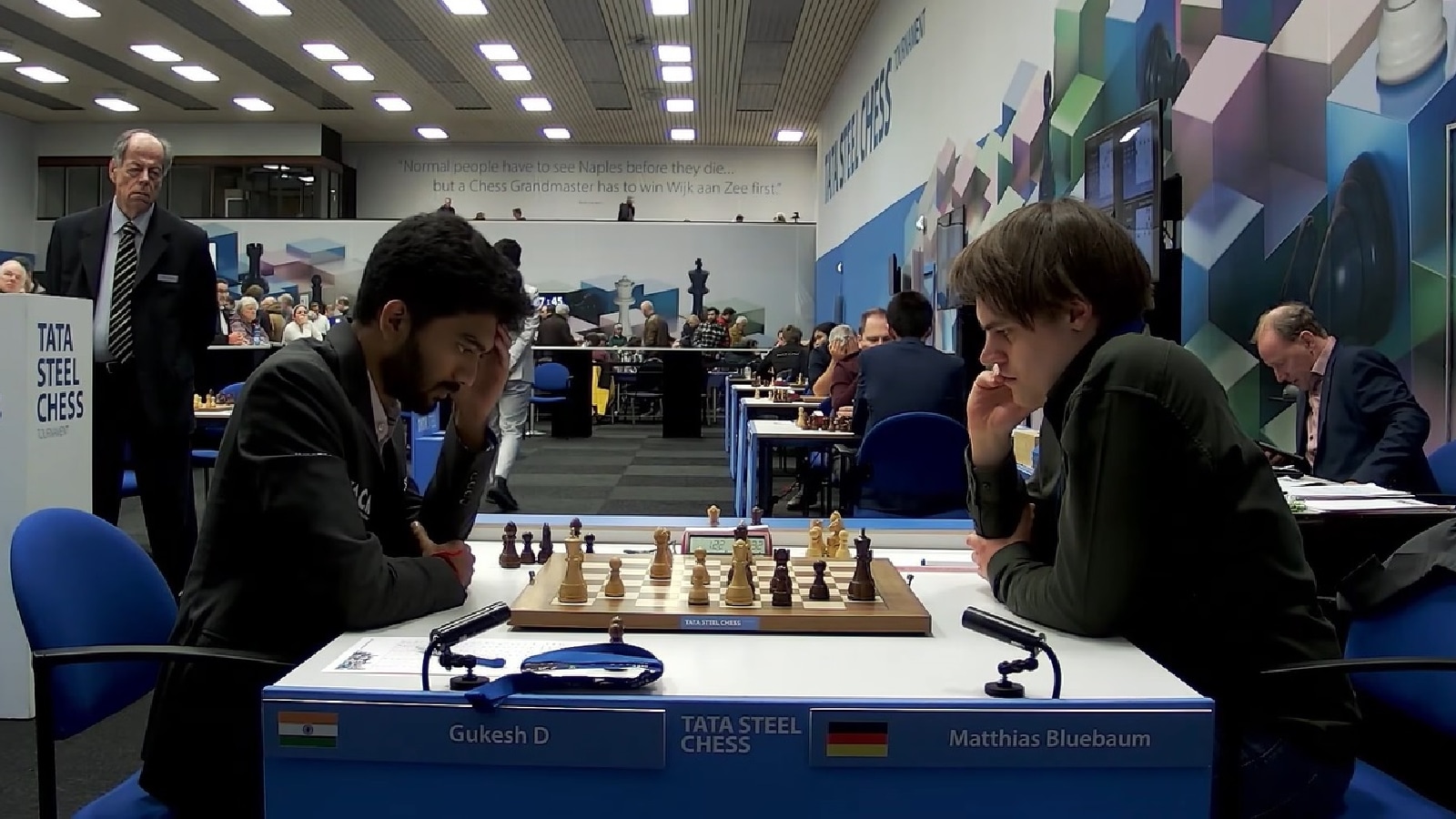
With a teen World Champion, a 2800 Elo club member, and a two-time Candidates contender, all before they could legally buy a drink in some countries, the trio of D Gukesh, Arjun Erigaisi, and R Praggnanandhaa are certainly flying the dominant wave. Every top invitational now seems packed with these young Indian stars. If not all three, then at least two of these top talents regularly feature in almost all top tournaments.
Every time these young giants face each other over the board, fans lean in. They can’t help it either. Any matchup between Praggnanandhaa vs Erigaisi, or a Gukesh vs Arjun or Pragg, is dissected by many as a potential future World Championship duel.
But this fan-favourite tussle and the hunger to see the nation’s best battle the best isn’t new.
Dibyendu Barua: The Chess pioneer who battled Viswanathan Anand in race to be India’s first Grandmaster
There was another duel, once. A clash that crackled with an excitement that might still rival today’s. It happened thirty-four years ago, in a different India, on the cusp of everything.
It was Calcutta, January 1992. The air in the old Russian House at the Gorky Sadan was stout with anticipation. The Goodricke tournament was underway, a jewel in India’s sparse chess calendar.
Viswanathan Anand was already a comet then. Five years earlier, he’d become India’s first Grandmaster. He’d shattered a decades-old ceiling to become India’s first Grandmaster. He had swept national, Asian, and World Junior titles and was now priming for a quest no Indian had ever dared dream of: winning the Chess World Championship.
Story continues below this ad
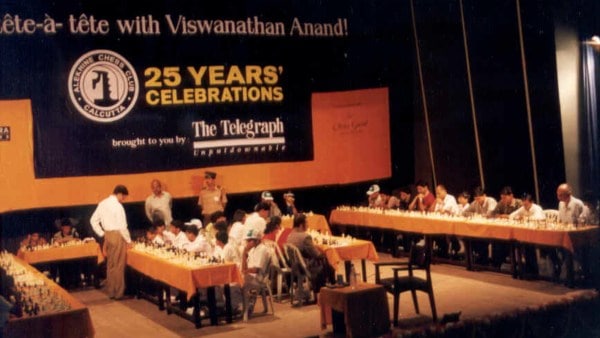 Viswanathan Anand at Gorky Sadan. Russian House in Kolkata for an exhibition game. (PHOTO: Gorky Sadan)
Across from him sat Dibyendu Barua, Calcutta’s own and a newly minted India’s second Grandmaster, a local hero with a devoted following.
Barua remembers those days with clarity. He and Anand had once been in a race for that first GM title, sharing rooms and team events. But by ’91-’92, Anand had surged way ahead. “He was on a different level altogether,” Barua recalls. “That Goodricke tournament was the last time we ever played a competitive game. After that, he rarely played in India. There simply weren’t enough elite tournaments here for his calibre. He belonged to Europe’s circuit,” he tells The Indian Express.
The Goodricke event was played in a Swiss format, and not in a round-robin, where all-play-all, meaning pairings were made based on scores and results. The organisers, sensing history and headlines, saw their chance. Both Anand and Barua were on similar points. They could pair them without breaking the rules, and they did.
Huge following
“The organisers didn’t want to take any chance,” Barua remembers with a chuckle. “That was the only time we could have faced each other, and they forced the pairing.”
Story continues below this ad
The buzz was instant. “You won’t believe the popularity in Kolkata back then,” he says. “The previous evening, Doordarshan announced: ‘Tomorrow, Anand and Barua, India’s first and second Grandmasters, will play each other.’ Things were at a different level. Anand had a huge following, and people turned up in numbers just to see us together.”
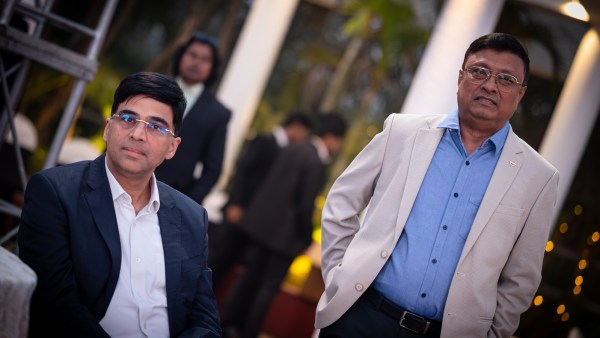 Viswanathan Anand and Dibyendu Barua. (PHOTO: Tata Steel Chess India/Vivek Sohani)
On the day of the game, Gorky Sadan was packed. A crowd swelled outside the Russian House compound, unable to get in. This was the early ‘90s, no live streams, no electronic display boards. In India, those would come only a decade later. This was the era of the manual demonstration board, where a person would physically move pieces on a large wall-mounted set for the audience.
But the crowd didn’t just want a glimpse. They also wanted to follow the game.
Story continues below this ad
Barua recalls, “You won’t believe it. They had to put up not one, but six or seven demonstration boards all around the hall. So many people had come. They all wanted to follow every move.”
Over the board, the tussle was real. Barua, trailing 2.0-3.0 in their head-to-head match-up, was more than a match that day. With Anand playing white, they engaged in a Queen’s Gambit Declined Slav. The game stretched for 56 moves with three pawns and a bishop-knight each for a technical grind. Finally, they shook hands and shared the point. That was the last time ever that the first GM of India played against India’s second GM.
INTERACTIVE: Viswanathan Anand vs Dibyendu Barua (Goodricke Tournament, Calcutta – 1992)
Anand would go on to tie for first place with David Norwood. He became the powerhouse who revolutionised chess in India, going on to win the World Championship not once or twice, but five times across different formats in an era of turmoil to cement his legacy.
Barua’s path diverged. He didn’t reach those same dizzying heights, but his legacy in Bengal is enduring. Today, he is a pillar of the chess community, an organiser, a coach, running a large academy, looking after the next wave.
Story continues below this ad
Today, when Gukesh, Praggnanandhaa, and Erigaisi face off, it’s imperative to remember that this is not the beginning as we know it. It’s more like a tale in a story that began decades ago, in a packed hall in Calcutta, where two pioneers showed a nation just how much a chess game could mean.

 English (US) ·