

 1 hour ago
5
1 hour ago
5
ARTICLE AD BOX

You know that moment. You’re tired, your eyes are burning, but you still scroll, watch “just one more” video, or keep doing anything except sleep. That’s what people call revenge bedtime procrastination.
It’s not really about bad habits as much as it is about trying to take back control of your time. When the whole day feels packed with work, chores, or responsibilities, the night becomes the only space that feels yours. So you stretch it, even if it costs you sleep.And it’s oddly comforting at the moment. Quiet, no expectations, no deadlines. Just you and your phone. But the next morning tells a different story.The tricky part is, it doesn’t feel like a “problem.” It feels like a reward.
That’s why awareness is low. People don’t see it as something that needs fixing because it’s tied to rest, relaxation, even a sense of freedom. Also, we’ve normalised being tired. Everyone’s sleepy, everyone’s scrolling late, so it doesn’t stand out.But over time, it adds up. Less sleep, more fatigue, irritability, poor focus. And then the cycle repeats. You feel drained during the day, and at night, you stay up again trying to feel a little more like yourself.
TOI Health connected with Dr Sumalatha Vasudeva Psychologist, Gleneagles BGS Hospital, Kengeri, Bengaluru and Dr Nalini Nagalla, HOD & Sr Consultant, Pulmonology & Sleep Disorders, Arete Hospitals to discuss what exactly is revenge bedtime procrastination and why people are trapped in it.
For someone hearing this term for the first time, what exactly is “revenge bedtime procrastination,” and why are so many people doing it?
Dr Nalini Nagalla: It’s when you keep delaying bedtime even though you’re tired and know you should go to sleep. After a long day, the late hours can feel like the only time they get for themselves, so sleep ends up getting delayed.
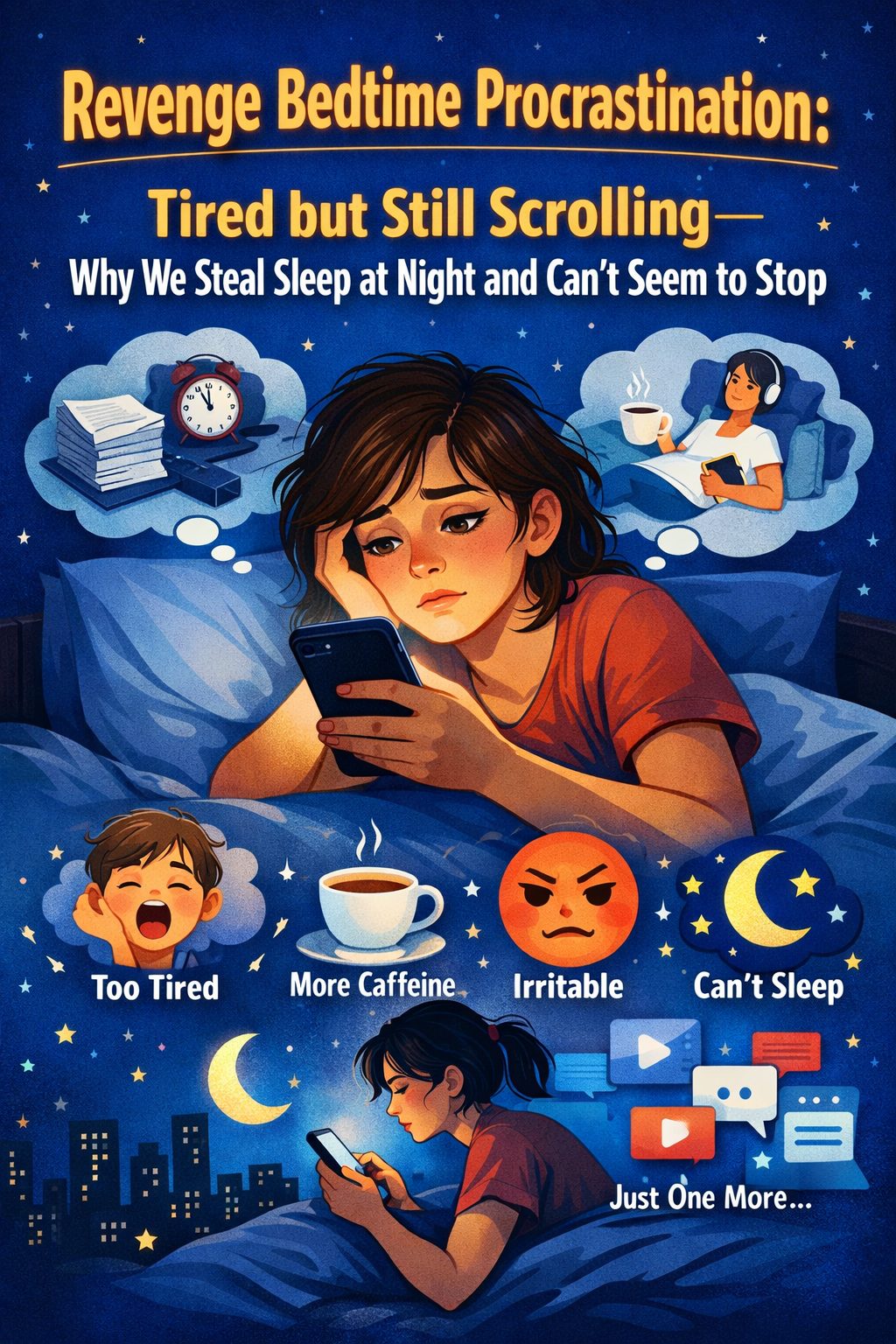
Many end up using that time for things like scrolling on their phone or watching shows. It can feel like personal time they didn’t get during the day. The issue is that sleep gets pushed aside, even though the body still needs proper rest.
People often say, “It’s just one or two hours less sleep.” How much harm can that actually cause over time?
Dr Nalini Nagalla: Losing an hour or two of sleep now and then may not matter much. But if it happens regularly, the shortfall begins to add up over time.As time passes, individuals can start to feel fatigued during the day, experience reduced concentration, and show increased irritability.
Work performance and memory can also be affected. If this continues, it can start to affect overall health, including immunity.
What are the first signs that this habit is starting to affect your health?
Dr Nalini Nagalla: The first signs of sleep deprivation usually don’t hit you like a ton of bricks—they’re much more subtle than that. You might just feel a bit "off" during the day, like you’re dragging your feet or having to read the same email three times just to understand it. That mid-afternoon slump feels a little heavier, and your focus starts to flicker in and out.It’s not just about being tired, though; it’s about your fuse getting shorter. You might find yourself feeling snappy, mentally drained, or suddenly realizing you're on your fourth cup of coffee just to stay human. If you're constantly leaning on caffeine to bridge the gap, your body is essentially waving a yellow flag. When these "off days" start becoming your everyday, it’s a pretty clear signal that your sleep habits need a serious tune-up.
Why does this pattern feel so hard to break, even when we know it’s not good for us?
Dr Sumalatha Vasudeva: A big part of it is that this isn’t really about sleep, it’s about control. During the day, people often feel like their time isn’t fully their own, work, responsibilities, family, constant notifications. So late at night becomes this small window where you finally get to decide what you do, even if it’s just scrolling or watching something mindless.That creates a kind of emotional reward loop. Your brain starts associating staying up late with freedom, relief, even identity, “this is my time.”
So even when you know you’ll be tired the next day, the immediate payoff feels more valuable than the long-term cost.There’s also a biology angle. At night, especially when you’re already tired, your self-control is naturally lower. So the part of your brain that says “just one more episode” tends to win over the part that says “go to bed.” It’s not a lack of discipline, it’s a predictable human pattern.
What are some realistic ways to fix this without completely giving up that “me time” at night?
Dr Sumalatha Vasudeva: The goal isn’t to eliminate that “me time”, it’s to protect it without sacrificing sleep.
If you try to cut it out completely, it usually backfires.A few practical shifts help:
- Schedule your “me time” earlier in the evening. Even 20–30 minutes of intentional downtime before it gets too late can reduce that urge to “steal” time from sleep.
- Set a gentle boundary, not a strict cutoff. Instead of saying “I must sleep at 10:30,” try “I’ll start winding down at 10:30.” That feels less restrictive and more doable.
- Think of bedtime as the grand finale of your day, not just the "off" switch. It shouldn’t feel like a chore you’re procrastinating on; it should feel like a reward you’ve actually earned. You can totally shift the vibe by leaning into the cozy stuff—dimming the lights, putting on that one comfort show you’ve seen a million times, or finally cracking open that book on your nightstand.
- Shrink the habit gradually. If you’re used to staying up till 1 am, don’t jump to 10 pm overnight. Move it back by 15–20 minutes every few days. Your brain adapts better that way.
- Check the daytime imbalance. Often, revenge bedtime procrastination is a signal that your day feels too packed or draining. Even small moments of autonomy during the day, like a proper lunch break or a short walk, can reduce that nighttime “revenge” feeling.
At the end of the day, it’s less about willpower and more about rebalancing your time so you don’t feel like night is your only chance to exist for yourself.Medical experts consulted This article includes expert inputs shared with TOI Health by: Dr Sumalatha Vasudeva Psychologist, Gleneagles BGS Hospital, Kengeri, BengaluruDr Nalini Nagalla, HOD & Sr Consultant, Pulmonology & Sleep Disorders, Arete HospitalsInputs were used to explain what is revenge bedtime procrastination, how does it affect the body and how to break the pattern.









 English (US) ·