

 1 day ago
6
1 day ago
6
ARTICLE AD BOX
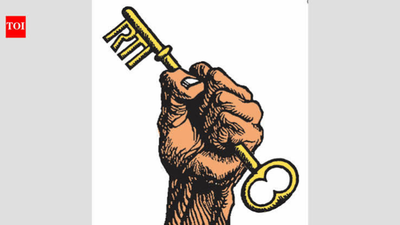
Transparency advocates have issued a legal notice to the Maharashtra government, demanding the immediate withdrawal of the recently notified RTI Rules, 2026 (Representative image)
MUMBAI: The controversy surrounding Maharashtra's recently notified Right to Information (RTI) Rules, 2026 has escalated, with a group of prominent transparency activists, journalists and former information officials issuing a legal notice to the state government demanding that the rules be withdrawn in their entirety within 15 days.The notice, addressed to chief minister Devendra Fadnavis, the chief secretary and the principal secretary of the general administration department, has been issued on behalf of former central information commissioner Shailesh Gandhi, RTI activist Prahlad Kachare, journalist and RTI Katta founder Vijay Kumbhar, senior journalist Vinita Deshmukh, Sajag Nagrik Manch representatives Vivek Velankar and Jugal Rathi, transparency campaigner Mohammed Afzal and other RTI users and citizens.The move comes days after the state government withdrew a controversial provision that would have required applicants to state the purpose for seeking information. However, activists contend that several other provisions introduced through the Maharashtra RTI Rules, 2026 continue to impose barriers that are inconsistent with the spirit and provisions of the RTI Act, 2005.In the 11-page legal notice, the activists argue that the government's power to frame RTI rules under Section 27 of the RTI Act is limited to carrying out the provisions of the parent law and cannot be used to create substantive restrictions on rights granted by Parliament.
The notice alleges that the new rules make the process of obtaining information "more expensive, more technical and more cumbersome" than envisaged under the central legislation.Among the key objections is the requirement that applicants submit a self-attested photo identity proof along with RTI applications. The notice contends that Section 6(2) of the RTI Act expressly states that applicants cannot be asked to provide reasons for seeking information or furnish personal details beyond those necessary for communication.The activists argue that compulsory submission of identity documents could discourage whistle-blowers, journalists and citizens seeking information on corruption and maladministration.The notice also challenges restrictions limiting RTI applications to a single subject and 150 words. According to the activists, such provisions could force citizens to file multiple applications and pay multiple fees to obtain information relating to a single project, contract, policy decision or government transaction.Another major point of contention is the revised fee structure. The rules have increased the RTI application fee to Rs 30 and introduced appeal fees of Rs 50 before the first appellate authority and Rs 100 before the State Information Commission. The notice argues that the cumulative financial burden could deter ordinary citizens from pursuing information, particularly in rural and economically weaker sections.The activists have further questioned provisions imposing charges for digital copies and restricting fee exemptions available to below-poverty-line applicants. They contend that Parliament granted complete fee exemption to BPL applicants under the RTI Act and that a state rule cannot dilute that statutory protection.The legal notice additionally objects to provisions that could allow second appeals and complaints to be dismissed for non-prosecution and to automatically abate upon the death of an appellant.
According to the notice, such procedural requirements risk denying access to information without adjudication on merits.The activists have also criticised the manner in which the rules were framed, alleging that no draft rules, public consultation paper, impact assessment or stakeholder consultation was undertaken before the notification was issued. They argue that a law governing citizens' access to information should itself have been formulated through a transparent process.The notice cites several Supreme Court judgments and a recent Kerala high court ruling that struck down portions of Kerala's RTI Rules, holding that delegated legislation cannot curtail statutory rights granted by Parliament.The signatories have demanded complete withdrawal of the Maharashtra RTI Rules, 2026 and restoration of the earlier legal framework. They have also sought a fresh consultative process involving RTI users, former information commissioners, journalists, civil society groups and legal experts.If the government does not act within 15 days, the activists have said they reserve the right to move the Bombay high court challenging the validity of the rules.The development is likely to reignite debate over the balance between administrative efficiency and citizens' right to know, with transparency advocates warning that any dilution of RTI mechanisms could have far-reaching consequences for public accountability, anti-corruption efforts and access to government records.






 English (US) ·