

 5 hours ago
5
5 hours ago
5
ARTICLE AD BOX
On the night of January 29, 2022, Sabastian Sawe learned that his grandmother was dying.
He was in Seville, Spain, the night before his first competitive half-marathon. His job the next morning was to pace the elite field through 10km, then step aside. Instead, he made a decision. He would run — not for the clock, not for the contract, not for the agent who had never called back — but for Koko.
The woman who had raised him in a mud-walled house in Cheukta with no electricity, who had told him, every time the world closed a door, that it would be okay.
When the gun fired, he ignored the pacing brief entirely. By 7km, the elite field had collapsed behind him. A race director pulled alongside on a motorbike: “Nobody’s with you. Just go.”
He finished in 59:02. A course record by a minute and a half. Days later, he flew home to Kenya and buried her.
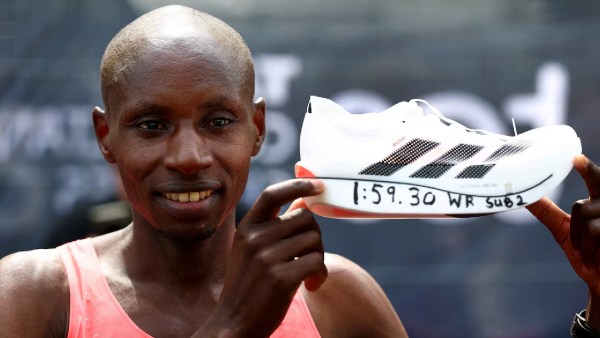
She never saw what he became. On Sunday in London, in a time of 1:59:30, Sabastian Sawe became the first human being to run a legal marathon in under two hours — and his first thought, he told Diario AS in the moments after crossing the finish line, was of his family. Of home. Of the people who had told him, when nothing else was certain, that it would be okay.
***
Story continues below this ad
Sawe was born in Cheukta, a remote village in Kenya’s Rift Valley — the region that produced generations of the world’s greatest distance runners. His father farmed maize. His mother had been a promising sprinter whose early pregnancy ended that dream.
What remained was Koko.
She raised him. Mud walls, dirt floors, faith. “She was always there for me,” Sawe told Runner’s World. “She always told me: it will be okay.” At this memory, his voice trembled — the only moment emotion crossed his face in hours of conversation.
 Sawe was born in Cheukta, a remote village in Kenya’s Rift Valley — the region that produced generations of the world’s greatest distance runners. (Reuters Photo)
He ran to school — everyone did, a ten-minute run. A teacher, Julius Kemei, spotted something and refused to let him hide. “Running is not just talent,” Kemei told him. “It’s your fortune and your future.”
His uncle, Abraham Chepkirwok, set Uganda’s 800m national record in 2008 with 1:43.72 — a mark that still stands. Sawe watched him line up at the Olympics on a generator-powered TV in the barn. “That image I did not forget,” he told Runner’s World.
Story continues below this ad
In 2017, he took a bus to Iten to chase the dream. He trained. Recognition didn’t come.
Then came March 2020: a ruptured tendon. Then Covid. Then his family, watching siblings settle into stable jobs, began to ask the question plainly. Family contacts could get him into the police force. A wage. Security. He was about to be a father. Wasn’t it time?
He tried. The job fell through.
ALSO READ | He came, he Sawe, he conquered history: Sabastian Sawe runs marathon under 2 hours
His uncle Abraham called. “Why didn’t you tell me?” When Sawe confessed everything, Abraham asked him directly: “Is this what you want?”
“No. I want to run.”
“Then leave it to me.”
Story continues below this ad
Abraham called an old rival — Abel Mutai, Olympic steeplechase bronze medallist, now assistant coach at the 2Running Club in Nandi County, founded by Italian coach Claudio Berardelli. In two days, they took Sawe from Iten. “Closed that chapter,” Mutai told Runner’s World.
At 2Running, Sawe found structure — treatment machines, recovery protocols, a coach who spoke of loading phases and cellular adaptation. He healed. The tendon flared again. Berardelli pulled him aside: “Patience. You must accept setbacks. Don’t give up.”
By early 2021, Berardelli had seen enough. “Sabastian is really something special,” he told Runner’s World’s Toby Tanser. “This one… he can run like nobody I’ve seen before.” From a man who had coached world and Olympic champions, those words carried weight.
***
With his earnings, he could live in luxury. He shares a bunkbed — a spartan camp room, three others, his wife Lydia seen only twice a month. On the morning of the race, he had two slices of bread and honey tea for breakfast. His only physical vulnerability, his physiotherapist Shadrack noted, was a slightly thickened Achilles insertion — literally, his Achilles heel.
Story continues below this ad
Then came Valencia in 2024 — a 2:02:05 debut, the second fastest in history. Then London, won by a quarter mile after skipping water at 30km. Then Berlin in 25-degree heat, where he ran 2:02:16 and called it “tough,” the understatement of a man who rates a 2:40 final kilometre at altitude as “four out of ten.”
Berardelli, watching that session: “Forty to fifty seconds faster than his London prep. We are seeing something.”
Kelvin Kiptum was 23 years old when he ran 2:00:35 in Chicago in 2023 — the fastest marathon ever run, the record that made sub-2 feel not just possible but imminent. And then, on a dark rural road in February 2024, he was gone — his car skidding off loose gravel into a tree. The Rift Valley grieved. “It was not if Kelvin would be the first man to break two,” his compatriot Benson Kipruto told Runner’s World. “It was by how much he would do it.”
Sawe carried it home instead.
The mantra has proved itself before. When Abraham and his wife struggled a decade to conceive, Koko told him on her deathbed that all would be well. A daughter was born — on the anniversary of Koko’s death.
Story continues below this ad
On Sunday, the world saw it too. Sawe crossed in 1:59:30. Behind him, Ethiopian debutant Yomif Kejelcha finished in 1:59:41 — also under two hours.
“I prepare well,” he told Diario AS after finishing. “For what has come today, it shows I prepare much better than last year.” He was asked if he could have run 10km more. The interviewer laughed. Sawe did not. “I was capable,” he said.
“I was thinking about my family,” Sawe said, the clock behind him reading something no clock had ever read before.
In Cheukta, in a house his grandmother filled with faith when there was nothing else, they already knew. She told them a long time ago. It will be okay.









 English (US) ·