

 1 week ago
7
1 week ago
7
ARTICLE AD BOX
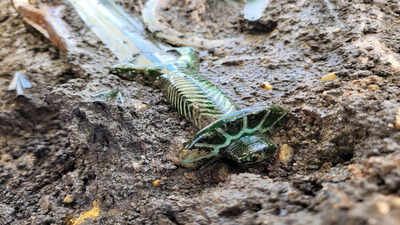
Ancient secrets lie beneath river waters. A discovery of Bronze Age swords in northern Germany reveals more than just lost items. Photo Credit : Archaeology Office Dr. Woidich/Sergiu Tifui.
Muddy riverbanks and quiet waterways hold far more secrets than we realise. When we think about ancient treasures, our minds usually fly straight to dusty chests buried in deep caves or gold tucked away inside stone tombs.
Yet some of the most revealing evidence was left in plain sight, beneath the water. In northern Germany, a remarkable cluster of Bronze Age swords pulled from a riverbed is forcing historians to look closely at how they view ancient weapons and the people who carried them.In cases like this, such finds are often treated as random losses. It is like someone dropping their equipment while crossing a river. In this case, however, there is a greater meaning to be derived from the discovery of the weapons.
The weapons were not simply lost in battle.This discovery offers insight into social life among people who lived thousands of years ago. For a very long time, traditional history literature regarded prehistoric people as mere survivalists interested in food and safety. The swords suggest a culture that may have included ritual and display.A clear message under the currentsIn order to comprehend the significance of finding numerous weapons underwater, it is necessary to consider the common practices of that time period. The study published in the Journal of Archaeological Research explains that storing metal artefacts was quite common in all of Europe at the time.
When a valuable collection of items, such as swords, was taken out of use, it represented both an economic and social loss. It is known that swords are costly items to manufacture, involving unique techniques and materials that were difficult to acquire. By choosing to sink the swords, their owners were sacrificing valuable property. It turned the swords into meaningful statements intended for society and for the supernatural realm.According to archaeologists analysing the German case, water appears to have been a deliberate choice for deposition. In Bronze Age contexts, water may have been seen as a boundary between the earthly and divine spheres. The deposition may have been intended to create a sacred bond, honour a leader, or seek divine protection.
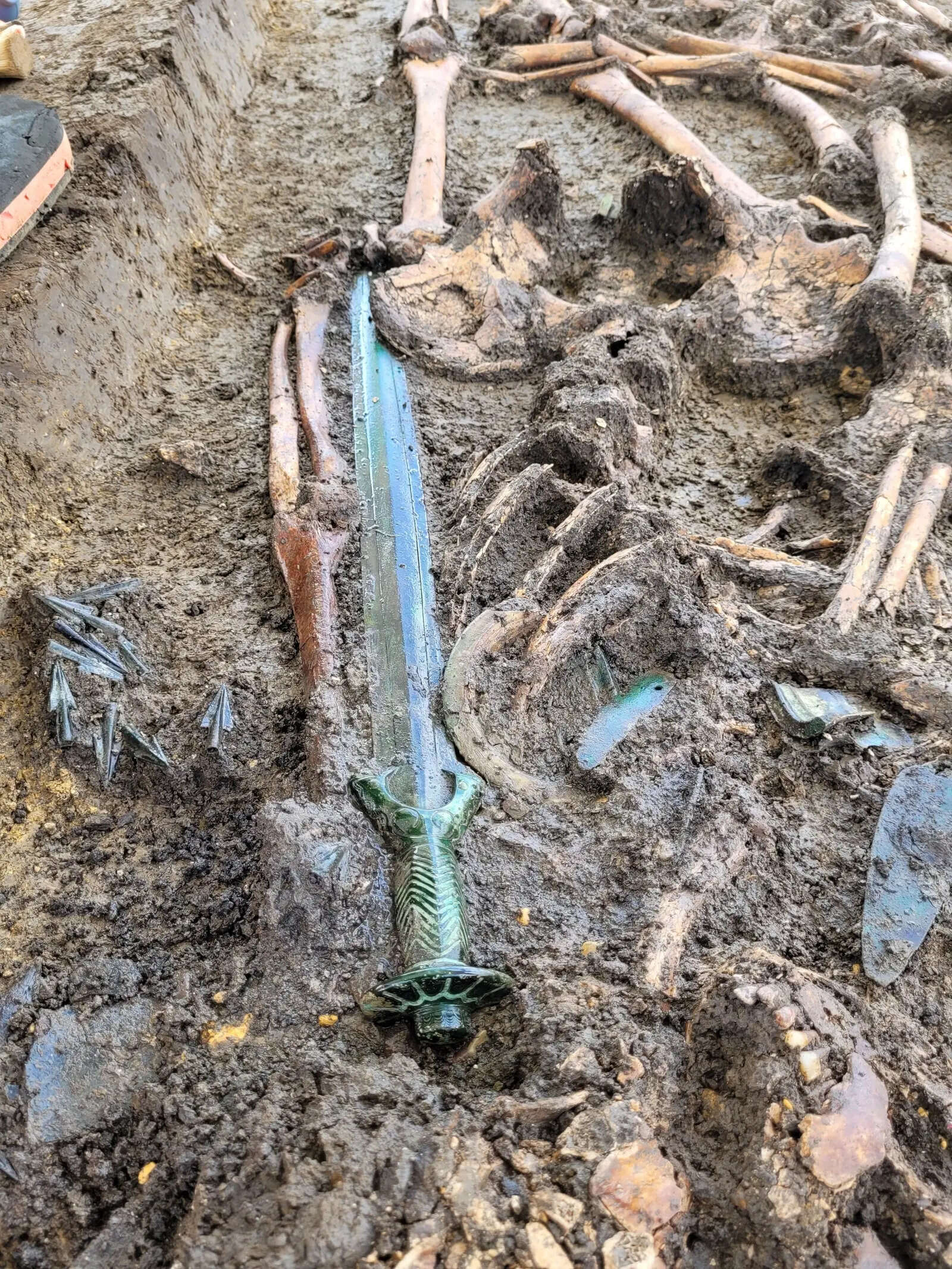
These weapons suggest a culture of ritual and display, not just survival. Rivers served as ancient highways for movement and trade. Sinking valuable swords was a deliberate act, a statement to society and the divine. Photo Credit: Archaeology Office Dr. Woidich/Sergiu Tifui.
Mapping out an ancient highway of human movementThe idea of rivers serving as the centre of ancient lifestyles is backed up by environmental data from the region. A study published in the journal PLOS One explored the network of archaeological sites along the River Stepenitz.
The study indicated that local geographical baselines were used to prove that these northern German waterways functioned as corridors of human movement, trade, and cultural contact.Because these river valleys were important routes in prehistory, actions near the water may have been visible to travellers in the region. Depositing a valuable cluster of swords in a travelled river corridor was a way to create a lasting geographic landmark in people's memories.
It may have been a performance of power and faith in a highly visible space.Ultimately, this German discovery suggests that ancient life included traditions beyond basic daily survival. A plain riverbed can become a place of ritual and public display. By looking beyond the metal itself and focusing on the landscape context, researchers are recovering the choices and beliefs of a long-vanished world.









 English (US) ·