

 1 day ago
5
1 day ago
5
ARTICLE AD BOX
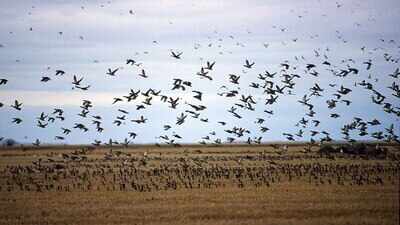
Migrating songbirds exhibit a 'wisdom of crowds' effect, flying with greater geographical accuracy in larger flocks. Image Credits: Wikimedia Commons
When people navigate a new city or choose a restaurant in an unfamiliar area, they often rely on the wisdom of crowds. We consult the digital maps that track the movements of thousands of other commuters to avoid traffic jams, and we read dozens of internet reviews before spending our money.
We often find that groups make better choices than one person alone. Researchers have long wondered whether the same principle applies to animals.Each autumn, large numbers of songbirds migrate long distances toward warmer winter climates, crossing oceans, mountains and changing weather. For decades, wildlife biology was often thought to suggest that these birds relied largely on internal compasses or individual experience.
It was widely assumed that group travel offered protection from predators, while navigation itself was handled by each bird independently.But a breakthrough involving high-powered tracking systems has challenged this solo perspective, suggesting that birds may benefit from a collective intelligence effect. A study published in the journal Science Advances has officially solved this long-standing aerial mystery. The research paper, which focused on the collective navigation of migrating songbirds, reveals that larger flocks of migrating songbirds fly with significantly greater geographical accuracy, with advanced radar studies of swallows and martins illustrating a genuine wisdom of crowds effect playing out across the open sky.
How collective navigation worksThe finding came after an international team of behavioural ecologists and atmospheric scientists monitored the flight paths of thousands of diurnal songbirds using weather radar systems. Unlike traditional tracking methods that require researchers to catch individual birds and fit them with heavy electronic backpacks, this innovative radar approach allowed the team to quietly observe entirely undisturbed, natural populations as they navigated through the upper atmosphere in real time.By analysing speed, orientation, and drift across different group sizes, the investigators found a relationship between flock size and directional accuracy. The data indicated that small groups or solitary birds were more likely to be pushed off course by crosswinds. In contrast, larger flocks of swallows and martins followed a straighter trajectory and were less affected by atmospheric disruptions.Researchers think this may happen because each bird has a slightly imperfect internal map of where it needs to go.
When hundreds of these slightly flawed individual headings are combined into a fluid, moving cluster, the individual steering errors naturally cancel each other out. The group may create a more accurate average route that helps the flock stay on course.
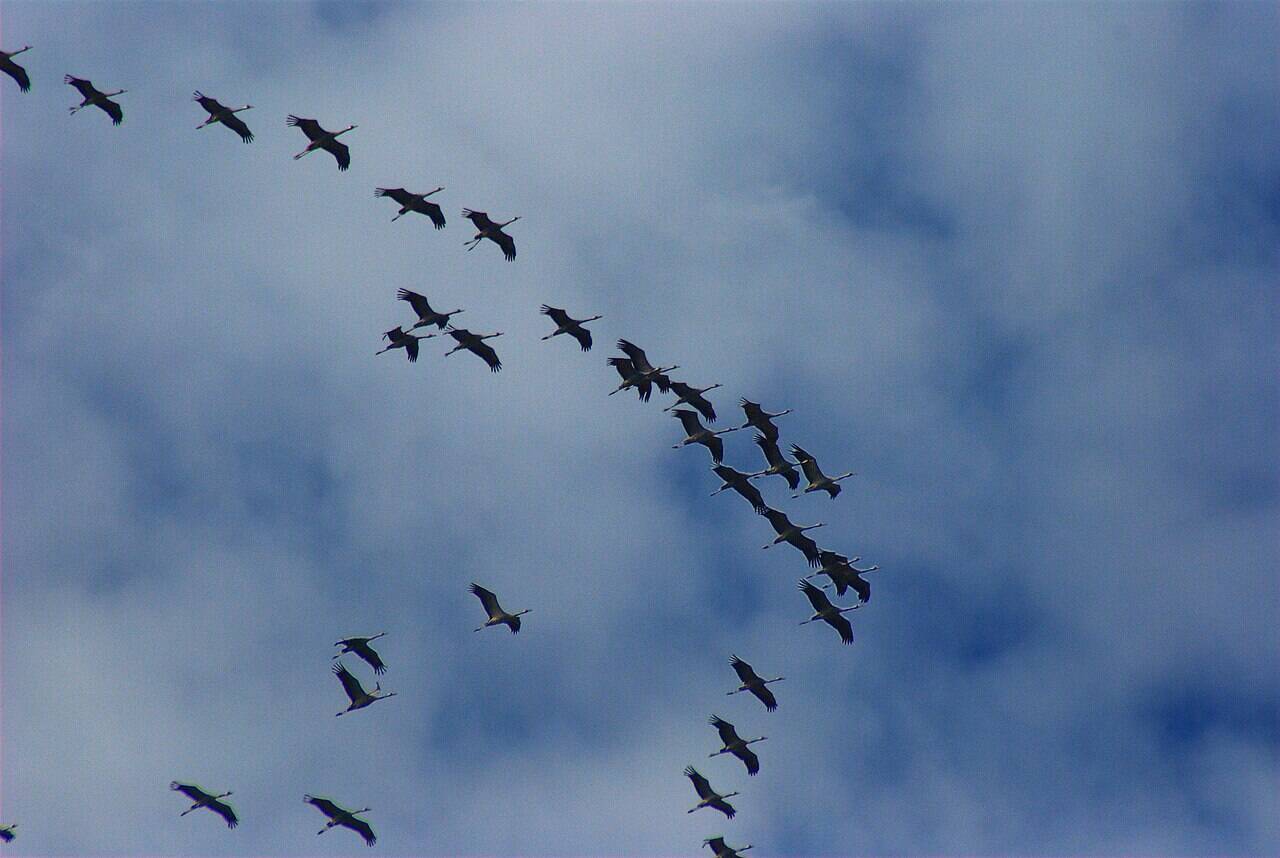
New radar studies reveal that collective navigation, where individual steering errors cancel out, helps birds stay on course despite unpredictable winds. Image Credits: Wikimedia Commons
The environmental benefits of travelling in large flocksThis finding adds another dimension to research on animal behaviour, ecosystem stability and climate patterns.
As changing weather patterns cause seasonal temperatures and wind currents to become increasingly erratic, the ability of migratory birds to navigate efficiently is becoming a matter of urgent survival. The finding suggests that maintaining healthy flock sizes may matter for the long-term survival of migratory species.When birds travel more efficiently, they may conserve energy and arrive at breeding grounds in better condition.
Their return can affect local ecosystems, including insect populations in agricultural areas. Scientists say the findings could one day help inform wind-turbine placement.The study suggests that biological resilience can depend on group behaviour. The coordinated flight of thousands of songbirds shows how group behaviour can improve navigation. Through ongoing study of this kind of behaviour, we learn to appreciate the power of invisible social relationships in the skies of our planet.









 English (US) ·