

 1 week ago
4
1 week ago
4
ARTICLE AD BOX
An educational illustration of Earth's atmosphere, highlighting the ozone layer and its historical changes, including the ozone hole. Image Credit: TIL Creatives
The discovery of the Antarctic ozone hole in 1985 brought about a shift in people's views of pollution. In 1987, countries adopted the Montreal Protocol, an international agreement aimed at phasing out ozone-depleting substances.
The treaty is widely regarded as one of the world's most successful environmental agreements.But how different would the picture have been if scientists had noticed the signs much earlier?According to a new study published in the Proceedings of the National Academy of Sciences (PNAS) and led by researchers at the Massachusetts Institute of Technology (MIT), it would be possible to detect human-induced ozone depletion even as far back as 1957 – almost three decades earlier than the Antarctic ozone hole was discovered.The atmosphere had started changing even before the rise of CFCsCFCs are known as the main cause of ozone-layer depletion. CFCs were widely used in refrigerators, air conditioning, aerosol spray cans, and foam production before being phased out under the Montreal Protocol.But the new study suggests that the earliest human-caused ozone damage was not driven mainly by CFCs.In fact, there was another man-made substance that was much more common even before the rise of CFCs. It is called carbon tetrachloride and is widely used as a cleaning agent and in industrial production.
In 1950, carbon tetrachloride emissions were about three to four times higher than the emissions of CFCs, making it the main culprit behind early ozone depletion.Why did nobody notice back then?This does not mean scientists in the 1950s ignored the evidence around them. The point the researchers make is that the technology in those days was simply not advanced enough to isolate the tiny signs of anthropogenic influence from the natural oscillations of the atmosphere.
The concentration of ozone varies naturally due to volcanoes, solar activity, and weather changes. Instruments used in the past recorded the total amount of ozone in a column of air and could not discern small variations in the height of the atmospheric layer.Nowadays, satellites are much more advanced. They can see the ozone layer in individual atmospheric layers and can separate natural oscillations from the trend driven by humans.Using modern technology in computer simulations, the researchers wondered about one thing – what would have happened if such systems had been around in 1950?

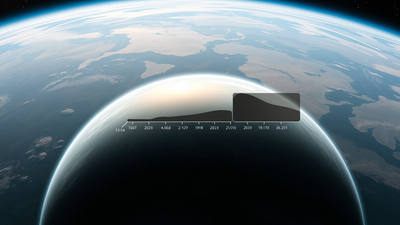
A photorealistic depiction of Earth's upper atmosphere, showcasing the ozone layer before CFCs and the subtle infiltration of carbon tetrachloride. Image Credit: TIL Creatives
The first signature could have emerged as early as 1957To answer this question, the group conducted a modeling experiment for atmospheric conditions dating back to 1850, followed by climate simulations starting in 1950. They accounted for all relevant factors affecting the atmosphere, such as greenhouse gases, chemicals damaging the ozone layer, volcanic activity, and natural changes in the environment.The result showed that the first detectable and statistically robust signature of anthropogenic ozone depletion would be produced in the upper stratosphere over the tropics in 1957. It might seem strange because usually people think about the Antarctic ozone hole when talking about ozone depletion. However, the reason is clear – this region in the atmosphere has fewer variations, making it possible to see even small changes in ozone content.The researchers revealed that modern monitoring methods would be able to register anthropogenic depletion in 1976, both in the upper and lower stratosphere, even above Antarctica. However, in fact, the Antarctic ozone hole was recognized much later – in 1985.A reminder of the importance of long-term monitoringThis does not mean, however, that intervention would have been possible earlier. It was necessary for scientists to determine which chemical elements were causing the ozone depletion and convince the government to take action.
Nevertheless, this research suggests the necessity of continuous monitoring of the atmosphere.The researchers noted that the satellite, which measures ozone at several altitudes in the stratosphere, was launched in 2004 and has already outlived its planned lifespan. If no substitute is found, it will become more difficult to detect smaller changes in the ozone layer.The ozone tale remains a valuable lesson to be learned fromThe ozone layer is a natural shield that helps to absorb much of the sun's ultraviolet rays, which otherwise would harm life on Earth.
Since the Montreal Protocol was signed in 1987, levels of many ozone-depleting chemicals have fallen over time, and the ozone layer is slowly healing.The above finding does not negate the positive story of the successful attempt at addressing ozone depletion. What it actually does is bring forth the realization that the earliest signs of human impact on the atmosphere might have appeared far earlier than what was initially thought.









 English (US) ·