

 59 minutes ago
8
59 minutes ago
8
ARTICLE AD BOX
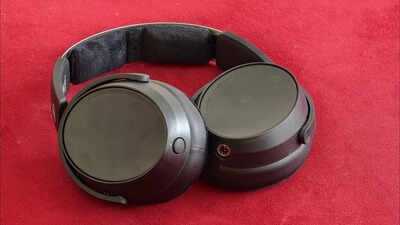
This closed-back headphone sounds like it forgot to seal itself shut
Closed-back headphones have always come with an apology attached. You get isolation and a build that laughs off studio abuse, and you pay for it in the sound—boxy, a little airless, never quite as open as the music wants to be.
For thirty years that felt like physics rather than a compromise. The HD 480 Pro disagrees.That alone would make it easy to recommend. What complicates the recommendation is how Sennheiser sells it. There are two versions. The HD 480 Pro is Rs 43,999 and ships with a soft carrying bag. The HD 480 Pro Plus, the pair I've been testing, is Rs 47,999 and trades that bag for a hard travel case. Nothing else separates them: the same 38mm drivers lifted from the open-back HD 490 Pro, the same recording earpads, the same sound to the decibel.
The case is the whole upgrade. So the headphone worth talking about is really the Pro, and the only question the Plus raises is whether a travel case is worth Rs 4,000.We'll get to that. First, the headphone, because that's the part that makes the question worth asking at all.
The fit does most of the persuading
Pick it up and the first surprise is how little there is to hold. At 272 grams it feels closer to a pair of decent open-backs than to the dense, clamping slabs most studio cans turn out to be.
The headband is a thin strip of metal that spreads the weight so evenly you stop registering it after a few minutes. The cups are matte plastic, the pads are velour, and the clamp is firm enough to stay put through an enthusiastic head-nod without turning into a vice by hour three.
This is a headphone you can forget you're wearing, which is exactly what a long session demands and exactly what most of its rivals fail to deliver.Then you start noticing the small stuff. Braille markers on the back of each yoke tell you left from right by touch, so you're not squinting into the cups in a dimly lit room. The cups swivel with just enough resistance to settle where your head wants them and no more. And the pads have shallow channels moulded into them for the arms of your glasses. I wear glasses every waking hour, and that single detail does more for long-session comfort than any amount of memory foam.
The seal stays intact, the pressure points don't form, and the dull ache that usually creeps in behind my ears never arrived.There's one caveat, and it's one Indian buyers in particular should weigh. Velour traps heat. Across a long afternoon in a room that wasn't quite cool enough, the pads grew warm in a way that broke the spell a little, and through a Delhi summer that warmth will arrive faster than the spec sheet suggests. That's the trade for the plush comfort, and it's all you get—velour is the only pad in the box, with no breathable fabric alternative like the one Sennheiser developed for the 490 Pro.The good news on the long view is that the headphone is built to last and built to be fixed. The pads are washable and replaceable, the construction is fully serviceable, and Sennheiser is keen to point out the engineering pedigree behind it: designed in Germany, hand-assembled in Romania, packed in forest-friendly cardboard. None of that shows up in the sound. All of it matters if you intend to keep these for the better part of a decade, which at this price you probably should.
Open the box and that's about it
Here's the full contents list, and it's short. A three-metre coiled cable, a 3. 5mm-to-6. 3mm screw-on adapter, and either a carry bag or, on this Plus version, a hard case. No spare pads, no straight cable, no second set of cushions. For a headphone at this price, the bundle is thin, and the absence of a straight cable on the more expensive model is a real head-scratcher.The cable, at least, is thoughtfully made. It terminates in a plain 3.
5mm plug threaded for the bundled quarter-inch adapter, which means it slots straight into a small interface like a Scarlett 2i2 and then scales up to studio gear when you need it. Near the earcup there's a tight little coil moulded into the cable, and it does real work. It kills almost all of the rustle and thump that travels up a cable and into your ears when you move, the noise that plagues so many closed-backs.
If you're sensitive to that occlusion effect, you'll feel its absence as a small daily relief rather than a feature you'd ever think to ask for.But none of that is the Plus. The Plus is the case. And a hard case, however nicely made, is a strange thing to build a more expensive model around when the Pro sounds identical down to the last decibel.
Don't let the 130 ohms scare you
The connection is sensibly done. There's a mini-XLR port on each cup, so you can run the detachable cable from whichever side suits your desk, and a soft cap covers the port you're not using to keep dust out. At 130 ohms the impedance sits higher than most consumer closed-backs, which can read like a warning to go shopping for a headphone amp.You don't need one. Rated at 98dB SPL per milliwatt, the HD 480 Pro Plus gets plenty loud straight out of a laptop, and I spent most of my time driving it from a MacBook without ever once wishing for more headroom. A dedicated DAC or amp will tidy things up at the margins if you already own one. It is not a prerequisite, and that matters when you've already committed this much to the headphones alone.
It blocks the right things, not everything
These are closed-backs without active noise cancellation, so set your expectations by the seal rather than by electronics.
The large pads and that measured clamp form a good barrier above 2kHz, blocking the high-frequency clatter that fills most workspaces by something in the region of 35 to 45dB. In practice that meant the thin whine of a struggling air conditioner faded to nothing, and keyboard chatter dropped to a polite murmur I could ignore.Low, broad noise is another matter. A heavy door thudding shut still reached me, and the rumble of traffic or a neighbour's bass-heavy playlist through a shared wall isn't going anywhere.
That's the nature of passive isolation, not a flaw. Just don't mistake "closed-back" for "silent," and don't buy these expecting to seal out a noisy commute.
It opens up where sealed cups close in
This is where the apology was supposed to live, and it simply doesn't.The tuning is mostly neutral with a gentle warm lean, the kind of balance that flatters music without lying to you about it. There's a deliberate lift in the bass, a few decibels of extra weight in the deep sub region and again through the mid-bass, and it gives the low end a real push.
Ritviz's "Liggi" leans on exactly that, its synth bass dropping in with depth and a control that never smeared into the rest of the mix. If anything there's a touch too much bounce in the mid-bass for my taste, a hint of extra thump where I'd want the floor flatter for serious work.
For listening rather than mastering, though, it reads as fun, not wrong.The midrange has a quirk worth understanding before you buy. There's a small dip around 180Hz, and it does two things at once. It pulls a little chest and intimacy out of male vocals, so Arijit Singh's "Channa Mereya" lost a sliver of the warmth that usually sits under his voice as he drops into the lower notes. But the same dip clears space for detail, and on Prateek Kuhad's "Kasoor" the fingerpicked guitar came through with a clarity and separation that a warmer, thicker headphone would have smudged over.
It's a deliberate choice, not a flaw, and which side of it you land on depends entirely on what fills your library.The treble is the quiet triumph. There's no sibilance, no glassy edge, none of the brittle harshness that turns long sessions with studio cans into a chore your ears want to escape. High notes ring out and then stop cleanly, with no metallic afterglow hanging in the air. Put on "Kun Faya Kun" and the hand percussion and high strings shimmer and decay exactly as they should, while the lead vocal, the harmonium and the swelling chorus spread out across a stage wider than a sealed cup has any right to produce.
Sennheiser credits a "Vibration Attenuation System" for cutting reflected sound and distortion inside the cup, and whatever the marketing department wants to call it, the low end stays clean and the space stays open. That sense of room, the feeling that the music is happening in front of you rather than inside your skull, is the part that keeps reminding you this isn't behaving like a closed-back at all.
Pay for the headphone, not the luggage
On sound alone, this is one of the easiest closed-backs to recommend right now.
It comfortably outclasses the studio staples people reach for out of habit, and it holds its own against open-backs that cost more and isolate nothing. As a single pair you can mix on, carry to a friend's setup, and then listen to for pleasure the same evening, it's about as versatile as the format gets.That leaves the one question we opened with: is the Plus's travel case worth Rs 4,000? For almost everyone, no. The Pro is the better value at Rs 43,999, and that Rs 4,000 buys a hard case and nothing else—no different driver, no better pad, not a decibel of extra sound.
The case is well made, and if you're forever hauling your headphones between studios or onto flights, it'll earn its keep. If you're not, you'll keep this pair on a desk and never once wish for it.So, does it escape the old closed-back bargain? Almost entirely. The boxiness is gone, the congestion is gone, the sense of music trapped in a sealed cup is gone. What Sennheiser has really done is take the compromise that used to live in the sound and move it onto the price tag, and on the Plus, onto a case you may never open. The headphone is excellent either way. Buy the Pro.









 English (US) ·