

 1 hour ago
4
1 hour ago
4
ARTICLE AD BOX
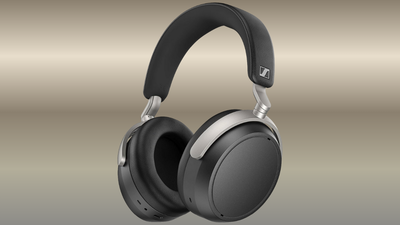
The Sennheiser HDB 630 are the wireless headphones audiophiles have been waiting for. They sound exceptional—detailed, balanced, and revealing in ways most wireless ANC cans aren't. The bundled Bluetooth dongle is a clever addition, and 60-hour battery life is genuinely impressive. Some things lag behind Sony and Bose, but if sound is your priority, these deliver at Rs 44,990.
Sennheiser's HD 600 series has been around long enough to become shorthand for "serious listening." These are the headphones people graduate to when they stop caring about bass drops and start caring about whether they can hear the room the album was recorded in.
The problem has always been that enjoying them meant wires, amplifiers, and a quiet room. Not exactly something you carry to work.The HDB 630 changes that equation. Take the audiophile DNA, lose the cables, add noise cancellation and a 60-hour battery. There's even a USB-C dongle in the box that upgrades your phone's Bluetooth to support high-resolution audio—yes, even on iPhones. I've had these for a few weeks now, and I have thoughts.
Looks like your sound engineer friend's headphones
The HDB 630 won't turn heads. Matte black oval earcups, silver accents connecting the yokes to the headband, zero embellishments. They look like studio monitors that accidentally went wireless—which, honestly, is kind of what they are.At Rs 44,990, you might expect something that looks more premium. What a Sony or Bose have going for them, despite their quirk. The Sennheisers are more function than fashion. The silver connecting pieces have a slightly plasticky quality, and there's some rattling when you pick them up.
Small things, but noticeable at this price.What actually matters—comfort—is handled well. The earcups are deep and generously padded, fully wrapping around my ears without pressing against them. The headband distributes weight evenly. The clamping force hits that rare balance: tight enough to seal for ANC, loose enough that your head doesn't feel squeezed after a couple of hours.I wore these through full workdays and a long flight. No discomfort, no adjusting every twenty minutes.
That's really all you can ask for.The carry case is excellent. Hardshell, fabric exterior, dedicated slots for cables, the dongle, and an airplane adapter. It's bigger than Sony's folding case, but the protection feels worth it.
This is why you're paying
The HDB 630 sound like Sennheiser headphones. I know that sounds obvious, but in a market where wireless ANC cans chase bass-heavy "excitement," these stay true to the brand's neutral philosophy.Bass is present but restrained—punchy without being pushy. There's a deliberate dip in the sub-bass compared to consumer-oriented models like the Momentum 4. Mids sit forward and textured, vocals positioned close in the mix. Treble stays controlled, never harsh.What surprised me was the detail retrieval. Playing D'Angelo's Voodoo, I could pick out instruments I'd previously missed—the Rhodes buried beneath layered vocals, bass guitar doing its own melodic thing, percussion scattered across the soundstage with precision.
These aren't headphones that blend everything into pleasant mush. They dissect.The bundled BTD 700 dongle adds another layer. Plug it into your phone's USB-C port, and it bypasses your device's Bluetooth limitations to enable aptX Adaptive—supporting streams up to 24-bit/96kHz. For
iPhone
users stuck with AAC, the upgrade is immediate. Music gains body and dimension; the presentation feels less compressed. It's a clever fix to a real problem, and one of the reasons the HDB 630 stand apart.Wired listening via USB-C goes even further. The internal DAC handles high-resolution files cleanly—more authority in the bass, more air around instruments. Not transformative over the dongle, but noticeable if you're paying attention.Fair warning: if you primarily listen to bass-heavy genres and want physical impact, these might feel lean. There's a bass boost toggle in the app, and the parametric EQ offers serious control.
But out of the box, the tuning prioritises accuracy over thump. Some will love that. Others will need to tinker.
Noise cancellation gets the job done
Sennheiser hasn't tried to out-Bose Bose here. The HDB 630's ANC is effective, not extraordinary.On flights, engine drone gets noticeably reduced—not eliminated, but manageable. In offices, air conditioning and background chatter fade to workable levels. Walking through traffic, things soften without disappearing.
It creates space for your music rather than sealing you off from reality.Default ANC is set to 60%, probably to protect sound quality. Crank it to maximum in the app—no obvious sonic penalty, and you'll want the extra isolation.Adaptive mode adjusts intensity based on ambient noise. It works fine. Transparency mode sounds natural enough for quick conversations. There's an anti-wind setting for outdoors, though it slightly reduces ANC strength when active.Compared to the Sony WH-1000XM6 or Bose QuietComfort Ultra Gen 2, the Sennheisers let more through—especially voices. If silence is your priority, those remain better options. But for most situations, this does the job.
The app has more than you'll probably use
Sennheiser's Smart Control Plus app is well-designed and genuinely useful. The parametric EQ is the highlight—unlike basic five-band sliders, this lets you select specific frequencies, adjust gain precisely, and control bandwidth.
Spend some time dialling in your curve, and these headphones become whatever you want them to be.Crossfeed is an unusual addition. It bleeds a portion of each channel into the other, simulating speakers in a room rather than drivers pressed against your ears. On older stereo recordings with hard-panned elements, it actually improves immersion. Subtle, but worth trying.Sound Zones geofence locations and apply preset EQ and ANC profiles automatically.
Clever in theory. Whether you'll actually remember to set it up is another matter.The touch controls are less impressive. Volume swipes overshoot. Single-tap play/pause triggers accidentally when you're just adjusting fit. The pinch gesture for ANC? Rarely works as intended. Sony does this far better.On-head detection is similarly temperamental. A light knock on my desk once woke the headphones, connected to my phone, and started blasting music.
I turned it off after a week.
Sixty hours, give or take
Sixty hours with ANC on. That's the claim, and real-world usage gets remarkably close.I charged these twice over three weeks of daily use—commutes, office hours, evening sessions. The Sony WH-1000XM6 manages roughly 30 hours. Bose QuietComfort Ultra, 24. This is genuinely different.Using the dongle and high-res codecs increases power draw, dropping the figure to around 45 hours. Still excellent.Quick charging gives you seven hours from ten minutes plugged in. One thing to note: the headphones must be powered on for any playback, wired or wireless. No passive mode here.
Audiophile dreams come true… finally
The HDB 630 make their priorities clear. Sound comes first. Everything else—design, noise cancellation, touch controls—falls into line behind it.On sound, they deliver. The detail, tonal balance, and spatial presentation exceed anything else in the wireless ANC category at this price.
The dongle solves Bluetooth's codec problem elegantly. The parametric EQ lets you fine-tune endlessly. The battery means charging becomes something you think about once a week.The trade-offs are real, though. Noise cancellation trails Bose and Sony. Touch controls need refinement. The design, while comfortable, doesn't quite look like Rs 44,990.These aren't trying to be the best at everything. They're trying to be the best at one thing—sound—and they succeed. If that's what matters most to you, the HDB 630 are hard to argue against. If you want the complete package where everything works seamlessly, the Sony XM6 remain the safer pick.But safe wasn't really the point here, was it?









 English (US) ·