

 1 hour ago
5
1 hour ago
5
ARTICLE AD BOX
Shashi Tharoor has urged the government to amend the law so passports and Aadhaar conclusively prove citizenship. His proposal follows confusion over the MEA's stand and seeks to end bureaucratic uncertainty for Indians.
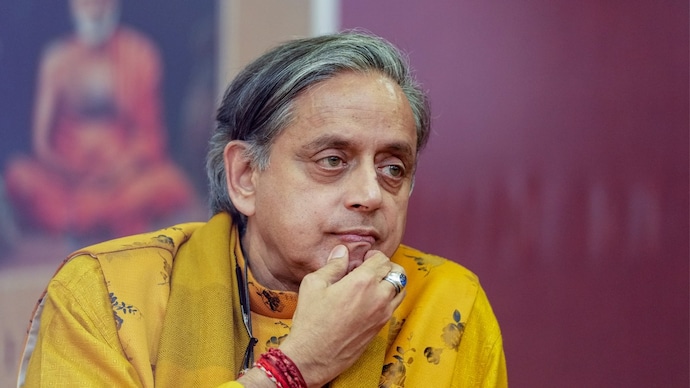
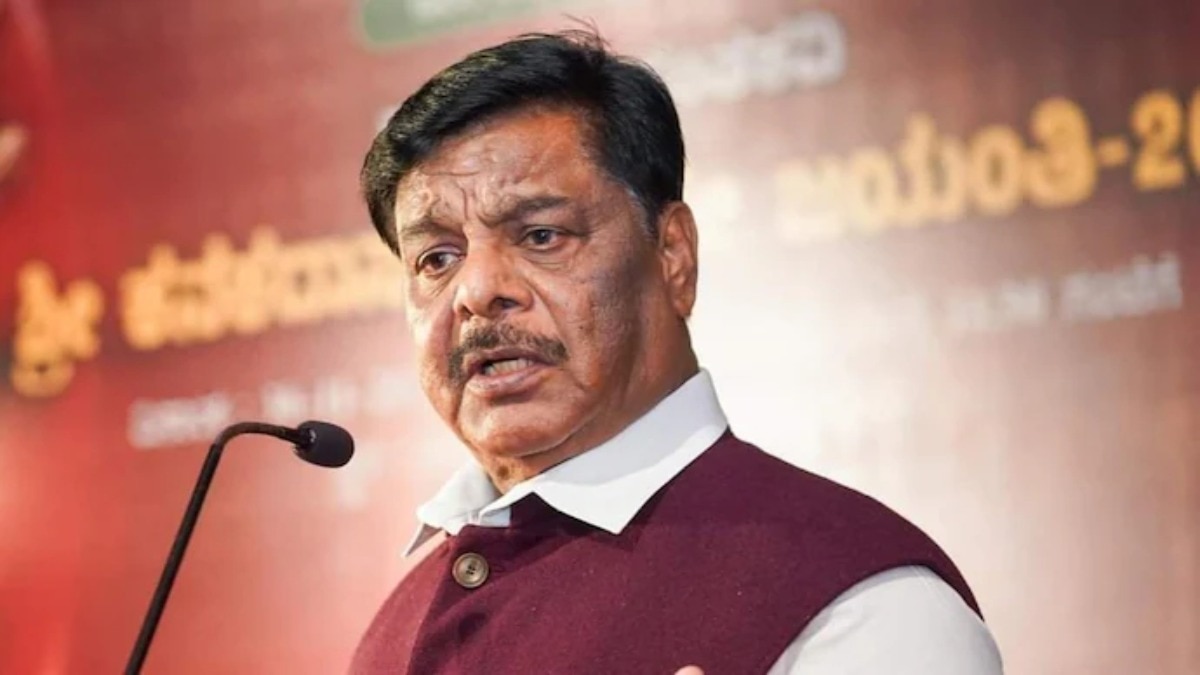
Amid passport row, Tharoor seeks legal recognition for passport, Aadhaar as citizenship proof. (Photo: PTI)

Newdelhi,UPDATED: Jun 26, 2026 20:28 IST
Amid the row over whether a passport proves Indian citizenship, senior Congress leader Shashi Tharoor on Friday said the government should amend the law to make both the passport and the Aadhaar card valid and conclusive proof of citizenship unless they are explicitly cancelled or withdrawn by the state.
Tharoor said this would require fixing a key administrative issue, as Aadhaar is currently issued on the basis of 182 days of local residence rather than nationality, and is held by both citizens and non-citizen residents. He suggested that non-citizens in India should be issued a visually distinct Aadhaar card.
In a post on X, the former minister of state for external affairs said, "The recent statement by the Ministry of External Affairs (MEA) -- on #PassportSevaDivas, no less! -- clarifying that an Indian passport is primarily a 'travel document and not conclusive proof of citizenship' has triggered a predictable wave of public bewilderment and political sparring."
He said that while the government has defended this as a long-standing legal position rooted in Section 20 of the Passports Act, 1967, which allows the state to issue passports to non-citizens under rare, public-interest circumstances, "this is a distinction without a difference, meaningless to the average citizen".
"For decades, the passport has been considered the gold standard of identity. We navigate the gruelling bureaucratic maze of police verifications and document checks required to obtain one, precisely because the state demands concrete proof of citizenship before granting it. To turn around and declare that the very document born from this rigorous vetting does not actually prove citizenship creates an absurd legal paradox," he said.
Questioning what establishes domestic citizenship if a passport does not, Tharoor said, "The Supreme Court has already ruled that the Aadhaar card is merely a proof of identity and residence, not citizenship. This leaves millions of Indians in a bizarre administrative limbo where they possess world-class biometric and state-issued documents, yet none are legally deemed 'conclusive' proof of their nationality within their own borders."
Calling for what he described as a legislative overhaul, he said, "The government should formally amend the legal framework to make both the passport and the Aadhaar card valid, conclusive proofs of Indian citizenship unless they are explicitly cancelled or withdrawn by the state." He added that, because Aadhaar is issued on the basis of residence and not nationality, it is held by citizens and non-citizen residents alike.
Tharoor said, "The solution is straightforward. The Unique Identification Authority of India (UIDAI) should introduce a visually distinct Aadhaar card (featuring, say, a visible diagonal red stripe across the front), specifically designated for non-citizens living in India." He said that by clearly separating the two categories, the state could ensure that carrying either a standard citizen's Aadhaar or a valid passport is compulsory and sufficient proof of citizenship for Indian nationals at all times.
According to him, such a dual-document policy would streamline domestic verification, reduce arbitrary bureaucratic challenges during electoral revisions, and give every Indian legal certainty regarding identity.
The controversy intensified on Thursday, with the government saying no new decision had been taken on the status of passports in the past 12 years, and the opposition alleging that groundwork was being done to "arbitrarily deny" citizenship rights to those who "disagree" with the ruling dispensation.
Citing the Passports Act, 1967, government sources said passports can be issued even to non-citizens "in the public interest". Election Commission officials, meanwhile, said a passport remains one of the 12 valid supporting documents that voters can use to prove their eligibility to be on the electoral roll.
Amid the row, the MEA on Thursday published a gazette notification dated June 20 announcing an increase in the application fee for an ordinary fresh 36-page passport from Rs 1,500 to Rs 2,500.
The controversy began after media reports, citing MEA officials, said that a passport is a travel document and not proof of citizenship. It is not a document that establishes citizenship, the officials had said on Wednesday. A government source later said, "It was not decided yesterday that the passport is not proof of citizenship. It was not even decided in the last 12 years under the Narendra Modi government. The passport has never been a proof of citizenship," while also citing Section 20 of the Passports Act, 1967, under which passports and travel documents can be issued to persons who are not citizens of India.
At the centre of the dispute is the question of what should count as conclusive proof of Indian citizenship, with Tharoor seeking changes to the legal framework and the government maintaining that the passport has never been treated as such under the law.
- Ends
Published By:
India Today Web Desk
Published On:
Jun 26, 2026 20:28 IST





 English (US) ·