

 1 week ago
31
1 week ago
31
ARTICLE AD BOX
Last Updated:June 17, 2026, 15:27 IST
The debate over Telegram's temporary NEET-related ban has taken an unexpected turn, with the platform's responses on X becoming a controversy of their own


Telegram's responses on X have not helped its public perception in India.
For much of Tuesday, the reactions around the Centre’s temporary ban on Telegram revolved around a familiar question: is it justified?
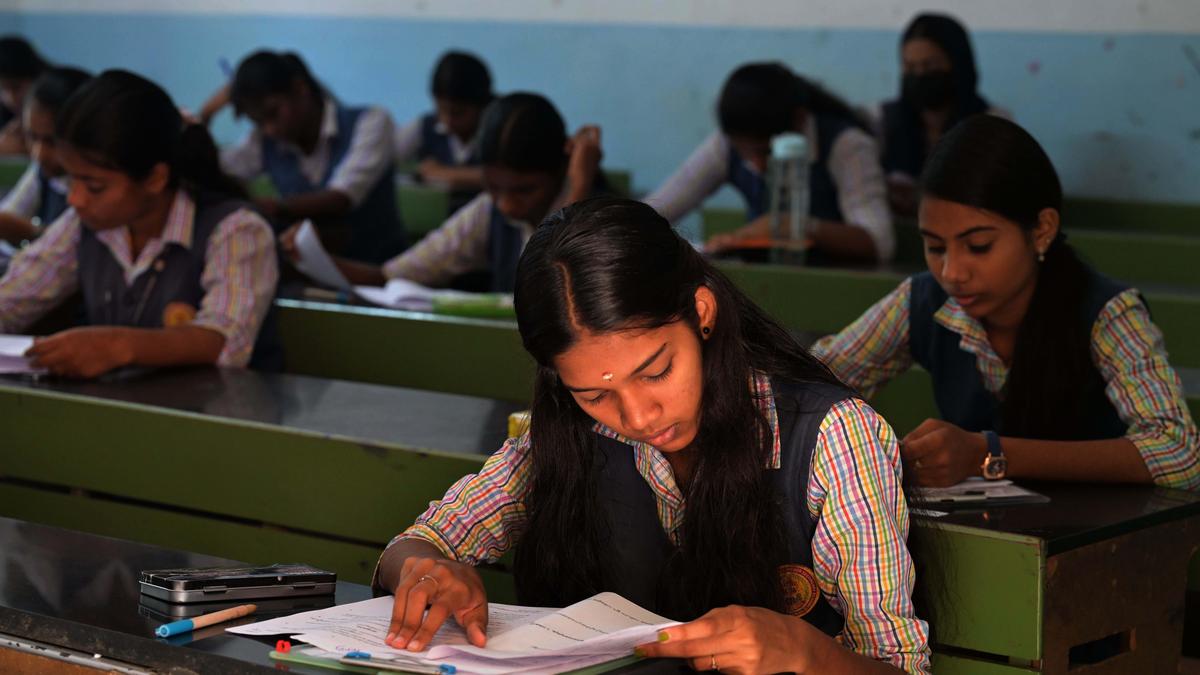
The Ministry of Electronics and Information Technology’s decision to restrict access to the messaging platform until June 22 ahead of the NEET-UG 2026 re-examination drew mixed reactions. Many students and parents welcomed the move as a necessary step against paper leak rackets that had allegedly flourished on the app. Others questioned whether the state was trying to deflect blame.
Around 24 hours later, Telegram’s snarky responses on X have shifted attention further away from any meaningful debate.
The most notable was its reply to Congress MP Karti Chidambaram in which Telegram’s official account flippantly suggested shutting down shopping malls because thefts occur inside them or closing roads because some people speed.
You should also shut down all the shopping malls since there might be a theft in one of them. And close the roads because I heard someone was speeding.— Telegram Messenger (@telegram) June 16, 2026
The analogy perhaps intended to argue that platforms should not be blamed for the actions of individual users. Instead, it achieved something else: it turned the spotlight onto Telegram itself.
The reaction was swift and critical. Social media users questioned whether the comparison trivialised a controversy involving lakhs of students whose futures were affected by allegations of examination fraud.
Stop being a cry baby. You know that your platform has severe loopholes that have been misused by many people. Your platform is a hub of banking scams, fake online job scams, crypto scams, and many others. That’s why you are banned in many countries.— Jay (@jay_baaz) June 17, 2026
One user responded that malls are not allowed to become safe havens for organised theft and argued that platforms also carry responsibilities when illegal activity repeatedly occurs in plain sight.
Another pointed out that while a theft affects individual victims, a paper leak can undermine a competitive examination taken by millions. Others accused Telegram of ignoring concerns about scam channels and fraudulent networks operating on the platform.
But Telegram doubled down…
Try harder. Malls stop crimes when they are aware – so does Telegram. No matter how actively anyone polices, misuse happens. pic.twitter.com/2XW5Cg7y5W— Telegram Messenger (@telegram) June 16, 2026
… and then some.
wasn’t on mine either— Telegram Messenger (@telegram) June 16, 2026
To be sure, Telegram was not without supporters. Several users argued that examination leaks originate within institutions and systems, not messaging apps. Others described the restriction as a distraction from the need to identify and punish those responsible for the leaks.
But by choosing to engage through exaggerated analogies and snarky replies on social media, Telegram shifted the discussion away from legitimate questions about the government’s logic and towards the tone of its own response.
Why Telegram’s Response Stands Out From Other Tech Giants
That is not typically how large technology companies handle disputes with governments.
Over the years, global tech giants operating in India have frequently challenged government directives, but usually through courts, regulatory processes or formal public statements. WhatsApp challenged India’s traceability requirements in court, arguing that they would undermine end-to-end encryption. X, formerly Twitter, has publicly disagreed with certain content-blocking orders while complying with them in India. Google, Meta and Microsoft have generally responded through legal channels or regulatory engagement.
Companies disagreeing with government actions is not unusual. What is less common is a platform using such a disconnected analogy for such a grave issue.
The criticism becomes easier to understand when examined alongside the government’s rationale for temporarily banning Telegram in the first place.
Why The Govt Targeted Telegram And Not WhatsApp
Authorities have argued that Telegram’s structure differs significantly from most mainstream messaging platforms. Unlike WhatsApp, which is primarily designed around phone-number-based communication and closed groups, Telegram hosts public channels that can attract enormous audiences. These channels are searchable and can be discovered by anyone looking for specific keywords.
According to investigators, several channels openly advertised alleged access to NEET question papers and charged students and families money in exchange for what they claimed were leaked examination materials.
The government has also focused on a specific Telegram feature that it says enabled a sophisticated fraud.
The ‘Time Travel’ Trick At The Centre Of The NEET Paper Leak Scam
The app allows administrators to edit messages while retaining the original timestamp. Investigators allege that scammers exploited this feature to create the illusion of a paper leak.
The process was relatively simple. An administrator would upload an ordinary or irrelevant document days before an examination. After the exam concluded and the actual question paper entered circulation, the original file would allegedly be replaced with the real paper. The post would continue displaying the earlier timestamp, allowing screenshots to be presented as evidence that the paper had been available before the test.
Authorities say this tactic was repeatedly used to convince students and parents that question papers had leaked, helping fraudsters demand large sums of money for supposed insider access.
This concern also explains why the government ordered Telegram to temporarily disable message editing in India until June 30.
The distinction is important because it helps explain why Telegram, and not WhatsApp, became the focus of the action.
Government agencies have not publicly alleged that WhatsApp played a similar role in the alleged fraud networks linked to NEET. WhatsApp’s ecosystem is more closed, less searchable and more dependent on direct contact between users. Telegram’s public channels, large-scale broadcasting capabilities and relative anonymity have made it a preferred tool for a range of communities, from educators and hobbyists to fraud networks and even cybercriminal groups.
From India To France: Telegram’s Growing Regulatory Troubles
This is not the first time Telegram has found itself at the centre of a confrontation with a government.
The platform has faced regulatory scrutiny in multiple countries over content moderation, law-enforcement cooperation and criminal activity conducted through public channels. Authorities in France, Brazil and Russia have all taken action against Telegram at various points, while regulators in the United Kingdom have examined aspects of the platform’s compliance with online safety obligations.
Telegram’s supporters often argue that governments are targeting the messenger rather than the source of the problem. Critics counter that platforms cannot indefinitely avoid questions about responsibility when unlawful activity repeatedly takes place through publicly accessible channels.
In India, both arguments have found an audience.
The Bigger Question: Can Telegram Be Blamed For Exam Leaks?
The National Testing Agency remains responsible for conducting a secure examination. If question papers are compromised, the source of the breach lies within the examination ecosystem rather than within a messaging application. That reality has not changed because Telegram was restricted.
At the same time, the platform’s responses on X have not helped its public perception.
Before Telegram entered the debate, the conversation was largely centred on whether the government had overreached and whether platform-level restrictions were justified. After the company’s social media intervention, attention has increasingly shifted towards Telegram’s conduct.
For a company seeking to defend itself against government action, that may have been an own goal.
Handpicked stories, in your inbox
A newsletter with the best of our journalism
About the Author
Nitya Thirumalai, News Editor at News18.com, writes on Indian and global politics as well as Formula 1. She was Google News Initiative-Columbia Journalism School Fellow in the inaugural Newsroom Leade...Read More
News india 'Shut Down Malls Too': Is Telegram Hurting Its Own Case With Snarky Replies On X?
Disclaimer: Comments reflect users’ views, not News18’s. Please keep discussions respectful and constructive. Abusive, defamatory, or illegal comments will be removed. News18 may disable any comment at its discretion. By posting, you agree to our Terms of Use and Privacy Policy.
Read More







 English (US) ·