

 43 minutes ago
4
43 minutes ago
4
ARTICLE AD BOX
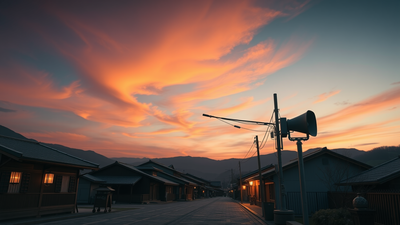
A quiet Japanese town at dusk, with traditional houses and a modern speaker against twilight hills. Image Credit: TIL Creatives
If you are in Japan around 5 p.m., you may hear music from speakers mounted on posts in towns and cities. But for loal residents, this is just another routine part of the day. But behind the music is one of Japan’s key disaster-preparedness measures.
Japan has spent decades building systems to alert the public quickly about disasters. The daily tone is not just a tradition; it is also a routine check of the country’s disaster communication system.Why does Japan play music in the eveningJapan is located in the Ring of Fire, which makes it prone to earthquakes. The country also faces typhoons, volcanic activity, and tsunamis in some areas. To address these risks, local governments use a public warning system called Bosai Musen, or disaster wireless communication system.
As explained by the Japanese Ministry of Internal Affairs and Communications, this system serves as an emergency communications system that allows the government to communicate with citizens during emergencies.Rather than testing with a daily siren, local governments use a short musical broadcast that lasts 30 to 60 seconds. According to Atlas Obscura, the practice dates back to the 1960s, when municipalities began adopting disaster communication loudspeaker systems that were routinely tested with short musical broadcasts.
Different tunes in each localityThere isn’t a fixed melody used all throughout Japan. For instance, many towns use traditional Japanese folk songs, including “Yuyake Koyake.” The song is associated with children heading home in the evening, making it a fitting way to mark the end of the day. Others use town anthems, other musical pieces, or public messages after the songs. According to Atlas Obscura, the evening broadcast has transformed into more than just a technical broadcast over time.
Schoolchildren use it as a cue to head home, while workers see it as the end of the workday. Most people barely notice it until they hear it.
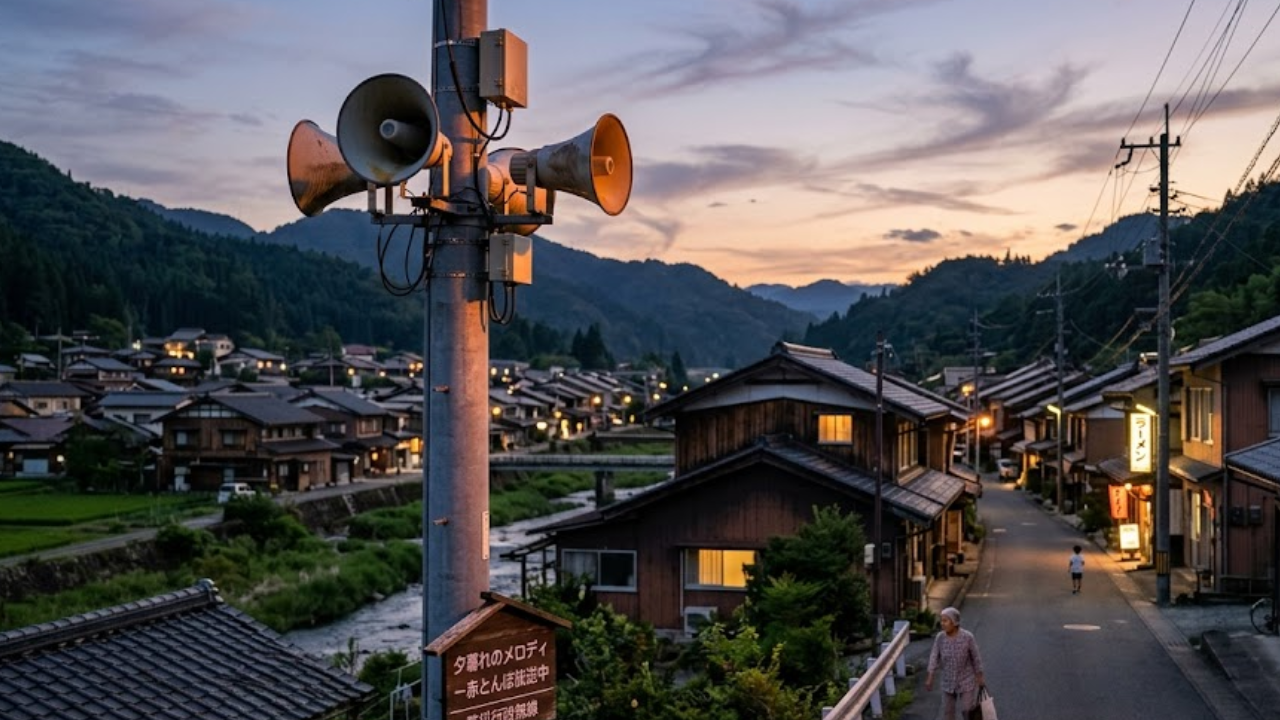
Many towns use traditional Japanese folk songs, including “Yuyake Koyake.” The song is associated with children heading home in the evening, making it a fitting way to mark the end of the day. Image Credit: Gemini
A system that has shown its worthWhile the tunes are soothing, the system beneath them plays an important role. Japan’s disaster communication system works alongside the country’s earthquake early warning system. According to the Japan Meteorological Agency (JMA), the Earthquake Early Warning system detects the initial seismic waves generated by an earthquake and rapidly issues alerts before stronger shaking arrives.
The warning period is usually a few seconds to tens of seconds, but that can still be enough time to act.The importance of such warning systems was particularly evident during the Great East Japan Earthquake and tsunami that occurred in March 2011. Footage taken of the event showed messages being delivered through loudspeakers to tell people to evacuate to high ground before the tsunami waves hit their coastal areas.
The government and the Japan Meteorological Agency recognise these warning systems as essential parts of Japan’s emergency plan, alongside television, radio, mobile phone alerts, and local governments.Not everyone welcomes the daily broadcastsDespite the objective of such tests, they have sometimes come under criticism. Some residents say the broadcasts create noise pollution, especially in crowded cities. Other residents say broadcasts for local events and municipal announcements are unnecessary and distract from the system’s emergency purpose.According to Atlas Obscura, municipal government websites often receive complaints about the noise levels of the broadcasts and about unnecessary non-emergency announcements. Legal action has even sometimes been taken over the issue of noise pollution. Nevertheless, the local municipalities continue to conduct the broadcast tests.A reminder that preparedness is a part of daily livingJapan is well known for its disaster preparedness, including earthquake-resistant buildings, frequent evacuation drills, and advanced warning technology.
The UN Office for Disaster Risk Reduction has repeatedly pointed to preparedness, early warning systems, and community readiness as key to reducing disaster risk in Japan.The melody in the evening is part of this philosophy. Instead of seeing preparedness for emergencies as something that is required only during a disaster, Japan integrates it with the daily routine. While the simple folk song heard at 5 p.m. is nothing special to a visitor, it is, in fact, a gentle reminder that the system of preparedness works exactly as it should work.









 English (US) ·