

 1 week ago
13
1 week ago
13
ARTICLE AD BOX
4 min readNew DelhiApr 22, 2026 01:05 PM IST
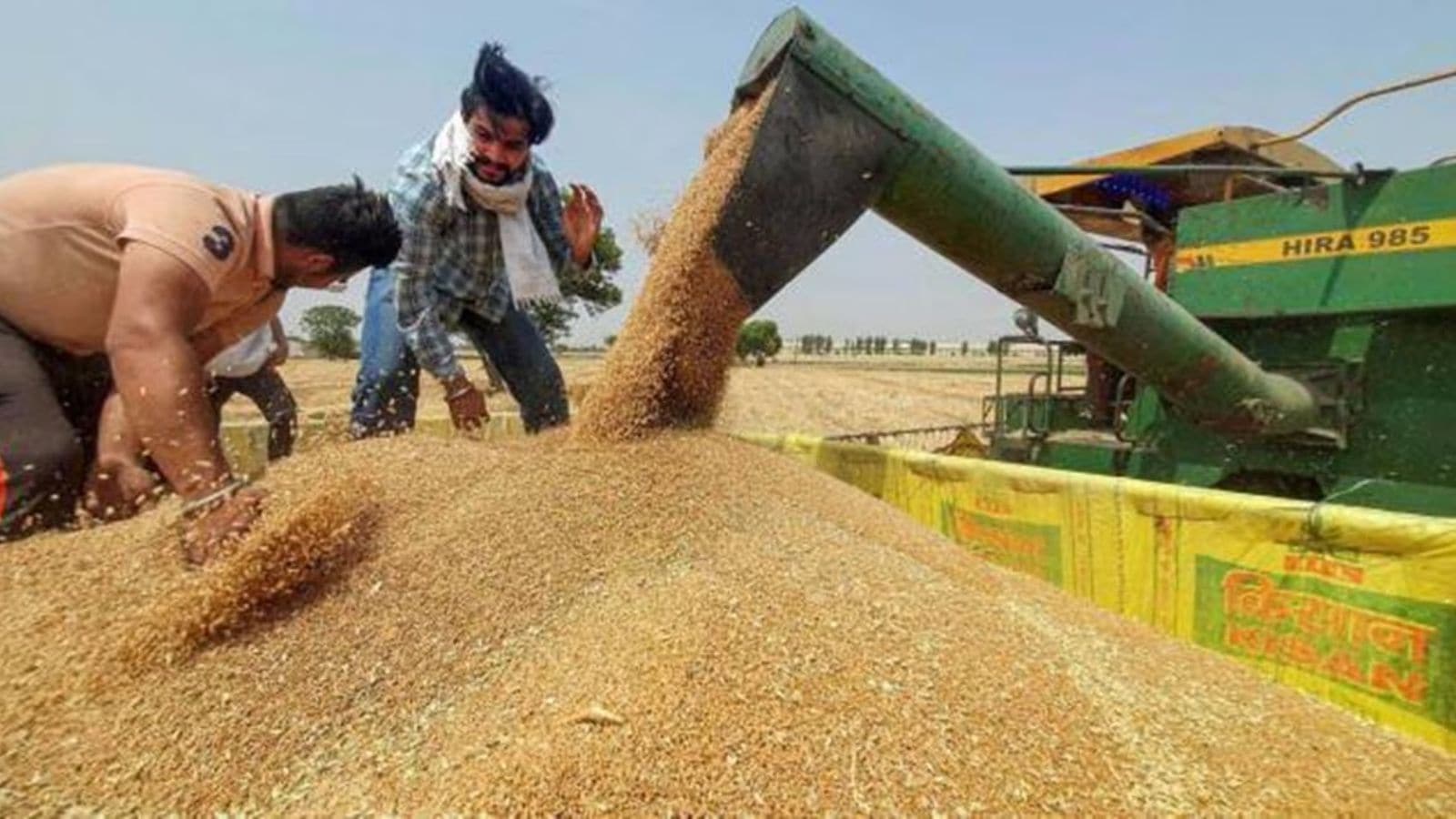 Wheat procurement slowdown hits Rabi season 2026-27 as Madhya Pradesh lags, pulling down overall national numbers compared to last year.
With sluggish wheat procurement pace in Madhya Pradesh, the second biggest contributor to the Central pool maintained by the government to distribute food grain under the National Food Security Act, 2013, the overall exercise in the country has been significantly lower during the ongoing rabi marketing season 2026-27 as compared to the last year.
Union Agriculture Minister Shivraj Singh Chouhan has flagged the challenges being faced by farmers during procurement in his state of Madhya Pradesh. On Tuesday, Chouhan chaired a meeting, via video conferencing, and reviewed wheat procurement operations in his Parliamentary constituency (Vidisha), which comprises four districts –- Vidisha, Raisen, Sehore, and Dewas.
During the meeting, Chouhan issued directives and said that problems faced by the farmers “must be addressed and resolved immediately through coordination.”
According to the Food Ministry sources, the procurement of 114.29 lakh metric tonnes of wheat has been reported across 10 major states as of April 20, which is about 38 per cent of the current year’s overall target of 303 lakh metric tonnes and 16 per cent lower as compared to the quantity procured (135 lakh metric tonnes) in the corresponding period of the last year.
Punjab, Madhya Pradesh, and Haryana are the three major contributors of wheat to the Central pool, with the procurement figures reaching 119.19 LMT, 77.74 LMT, and 71.43 LMT, respectively, during the last year. The wheat procurement operations began in Punjab and Haryana on April 1 and in Madhya Pradesh on March 15. This year, Punjab and Haryana have kept the pace of wheat procurement so far, with both states being able to procure 91 per cent and 70 per cent of total quantity arrival at the procurement centre.
However, the pace has been relatively sluggish in Madhya Pradesh. According to sources, Madhya Pradesh has reported a procurement of 7.25 LMT of wheat against the arrival of 15.66 LMT as of April 20 this year, which is about 85 per cent lower as compared to the quantity (47 LMT) procured during the corresponding period last year.
The slow pace of wheat procurement in Madhya Pradesh during the current year is significant, given the state’s contribution to the national food security basket.
Story continues below this ad
Chauhan also directed the officials concerned that issues related to “slot booking, registration, and verification be resolved on a priority basis.”
The pace of procurement has been reported to be lower in Uttar Pradesh, which is the biggest producer of wheat in the country. Despite being the biggest producer, UP’s contribution to the wheat procured for the Central pool has remained low over the years. Last year, a quantity of just 10.27 LMT of wheat was procured from Uttar Pradesh. This year, the state has reported procurement of just 2.74 LMT of wheat as of April 20, which is almost 40 per cent lower than the quantity (4.54 LMT) procured during the corresponding period last year. This year, wheat procurement in UP began on March 17.
According to the sources, the issue of the slow pace of wheat procurement is likely to be discussed during the meeting of Uttar Pradesh’s Food and Civil Supply Minister Satish Chandra Sharma with Union Food Minister Pralhad Joshi on Wednesday.
Sharma said that the wheat procurement has been slower in the state due to unseasonal rainfall across the state during late March and early April.
Story continues below this ad
The wheat acreage in Rabi 2026 has increased to about 334.17 lakh hectares compared to 328.04 lakh hectares last year.
As per the Second Advance Estimate of Production of Food Grains for the year 2025-26, wheat production is likely to reach 120 million metric tonnes, up from 117 million metric tonnes recorded in 2024-25.
As per the buffer norms, a stock of 74.6 LMT of wheat is required to be maintained as of April 1 every year. Then, on July 1, the buffer requirement is set at 275 LMT.
In February, the government allowed the export of 25 lakh metric tonnes of wheat. Earlier this month, an additional quantity of 25 lakh metric tonnes of wheat was allowed for exports.

Harikishan Sharma, Senior Assistant Editor at The Indian Express' National Bureau, specializes in reporting on governance, policy, and data. He covers the Prime Minister’s Office and pivotal central ministries, such as the Ministry of Agriculture & Farmers’ Welfare, Ministry of Cooperation, Ministry of Consumer Affairs, Food and Public Distribution, Ministry of Rural Development, and Ministry of Jal Shakti. His work primarily revolves around reporting and policy analysis. In addition to this, he authors a weekly column titled "STATE-ISTICALLY SPEAKING," which is prominently featured on The Indian Express website. In this column, he immerses readers in narratives deeply rooted in socio-economic, political, and electoral data, providing insightful perspectives on these critical aspects of governance and society. ... Read More
Stay updated with the latest - Click here to follow us on Instagram
© The Indian Express Pvt Ltd






 English (US) ·