

 56 minutes ago
4
56 minutes ago
4
ARTICLE AD BOX
3 min readNew DelhiMay 23, 2026 01:32 AM IST
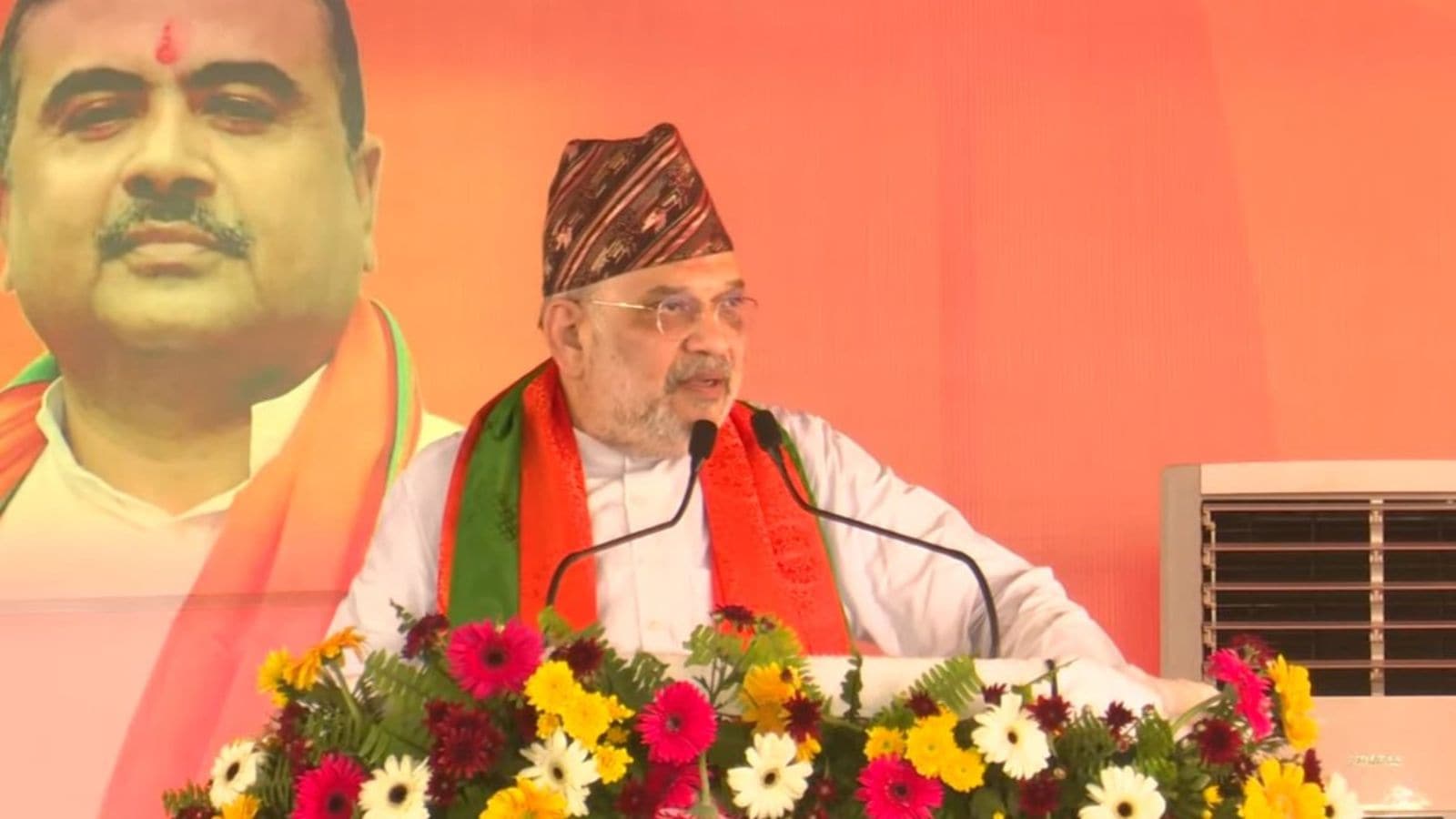 Union Home Minister Amit Shah. (Credit: X/@BJP4India)
Union Home Minister Amit Shah on Friday announced a major technological and operational push to strengthen India’s borders, saying the government will soon roll out a Smart Border project to make frontiers with Pakistan and Bangladesh impenetrable and to eliminate illegal infiltration.
Addressing the Border Security Force’s (BSF) Investiture Ceremony and the Rustamji Memorial Lecture, Shah said, “Border security can no longer rely solely on traditional methods.”
He outlined a new approach that blends stronger inter-agency coordination with high-end technology.
“The Ministry of Home Affairs will soon introduce a Smart Border Project equipped with drones, radars, modern cameras and other advanced technologies. Once this initiative begins, the work of the BSF will become significantly easier and stronger,” he added.
“Since 2014, India’s defence and border policies have seen a transformational shift under Prime Minister Narendra Modi,” he said.
Cross-border responses, including surgical strikes and air strikes, marked the end of resolving terror attacks through negotiations, he added.
On Vibrant Villages initiative, he said, “Vibrant Villages-1 and Vibrant Villages-2 are development programmes being implemented in a democratic manner with the cooperation of the BSF. The BSF’s jurisdiction has been extended from 15 kilometres to 50 kilometres and decisions related to land allocation in West Bengal have also been finalised.”
Highlighting contemporary threats on India’s frontiers, Shah flagged illegal infiltration, narcotics, cattle smuggling, counterfeit currency and the increasing use of drones for smuggling weapons and contraband. “The government has resolved not only to stop infiltration but to identify and expel every infiltrator. It will not allow unnatural demographic change,” he said, adding that the BSF must prevent conspiracies aimed at altering demographics through infiltration.
Story continues below this ad
He said that governments in Tripura, Assam, and West Bengal now follow policies that clearly oppose illegal infiltration. “It is the responsibility of the BSF not only to secure the borders but also to maintain close coordination with village-level officials, police stations, district collectors, and superintendents of police. Detailed information must be gathered about new infiltrators, their routes of entry, and the networks involved in smuggling, including that of cattle, and that all such routes must be systematically identified and shut down,” he said.
Shah said that the time has come to decisively stop infiltration that has continued unchecked for years.
To meet these challenges, Shah stressed deeper coordination among State Police, Central Armed Police Forces (CAPFs), the Narcotics Control Bureau, intelligence agencies and state administrations. “Border security should no longer be viewed as an isolated responsibility but as a broader territorial responsibility,” he said, calling for information-driven operations that map infiltration routes and smuggling networks and shut them down systematically.
Shah said the Smart Border project will integrate surveillance technologies to create an impregnable border security grid within the next year. He underlined the need for BSF personnel to adopt the new technologies, build stronger ties with local communities and improve coordination with district administrations to make India infiltration-free.








 English (US) ·