

 1 hour ago
5
1 hour ago
5
ARTICLE AD BOX
The government will convene a special three-day session of Parliament beginning Thursday, a sitting expected to be stormy as it moves to introduce three major bills that could reshape India’s electoral architecture and representation system.
Signalling a significant reset in how political representation is structured, the government will take up the Constitution (One Hundred and Thirty-First Amendment) Bill, 2026; the Delimitation Bill, 2026; and the Union Territories Laws (Amendment) Bill, 2026. Together, these aim to enable fresh delimitation based on updated Census data, expand the Lok Sabha’s strength and operationalise the long-pending one-third reservation for women.
At the heart of the session is the Constitutional Amendment Bill aimed at enabling the implementation of 33 per cent reservation for women in the Lok Sabha and state assemblies. While the women’s reservation law was passed in 2023, it is yet to be operationalised, as it is linked to a fresh delimitation exercise. The government is now looking to amend relevant provisions to pave the way for its rollout ahead of the 2029 Lok Sabha elections.
The Opposition has criticised the delimitation and is set to seek a deferment of the proposed exercise until the 2021 Census data, which is expected to be published in 2027, is available. They will raise the issue of using the 2011 Census as the baseline for delimitation.
ABOUT CONSTITUTION (131st AMENDMENT) BILL
At the core of the legislative package is the Constitution (131st Amendment) Bill, which seeks to overhaul the basis of constituency allocation by allowing delimitation using the 2011 Census instead of the 1971 Census, which has been the reference point for decades.
The move will effectively end a long-standing freeze that had preserved the relative representation of states despite demographic shifts. The government argues that India’s population patterns have changed significantly due to migration, urbanisation and uneven growth, creating disparities in constituency sizes.
The amendment is expected to pave the way for a full-scale redrawing of constituencies and redistribution of seats to better reflect current population realities.
ABOUT DELIMITATION BILL
Closely linked is the Delimitation Bill, 2026, which proposes a fresh delimitation exercise based on updated population data. This exercise is also expected to significantly expand the strength of the Lok Sabha – from 543 seats to around 850 – to accommodate population changes and reservation requirements.
The redrawing of constituencies would impact seat allocation across states, potentially altering the political balance in Parliament. The expansion is also seen as necessary to implement quotas without drastically reducing existing representation.
ABOUT UNION TERRITORIES LAWS (AMENDMENT) BILL
The third piece of legislation – the Union Territories Laws (Amendment) Bill, 2026 – seeks to align legal and administrative provisions with the proposed changes. It is expected to address seat allocation for Union Territories and create mechanisms to implement reservation within the revised constituency framework.
Together, the three bills form a coordinated attempt to synchronise delimitation, expansion of Parliament and implementation of women’s reservation.
WOMEN'S RESERVATION: FROM LAW TO IMPLEMENTATION
The broader objective of the legislative package is to operationalise the 33 per cent reservation for women in the Lok Sabha and state assemblies under the Women's Reservation Act, also known as the Nari Shakti Vandan Adhiniyam.
While the law was passed in 2023, its implementation was tied to a future delimitation exercise based on the next Census, potentially delaying it until 2034. The current move aims to fast-track the process and bring the quota into effect by the 2029 Lok Sabha elections.
Prime Minister Narendra Modi has urged political parties to support the amendments, stressing the need to implement the law in its “true spirit.” The BJP has issued a three-line whip, asking all its MPs to remain present throughout the three-day proceedings.
OPPOSITION FLAGS DELIMITATION CONCERNS, QUESTIONS TIMING OF PARLIAMENT SESSION
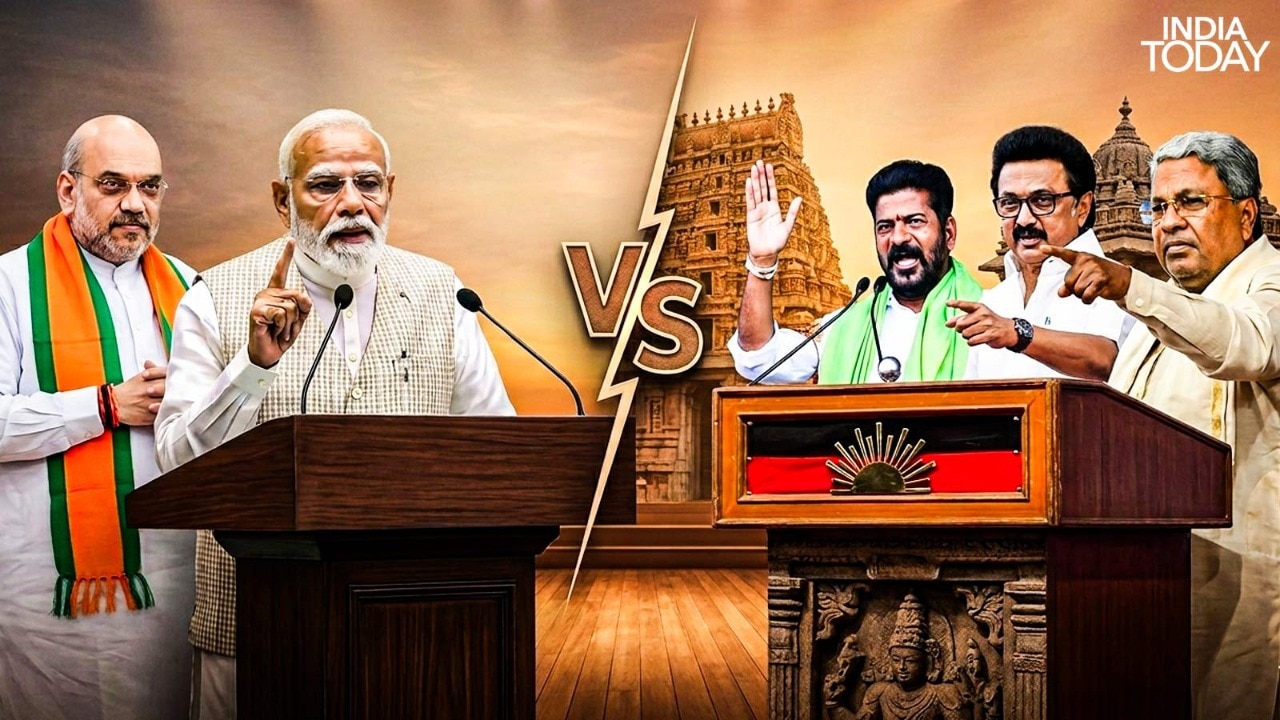
The proposals have triggered an outcry from Opposition parties, particularly over the delimitation exercise. They have warned that using updated population data could disproportionately benefit northern states with higher population growth, reducing the relative representation of southern states such as Tamil Nadu, Kerala and Karnataka, which have stabilised population growth.
Regional parties, including the DMK, have argued that such a move could “disturb the federal balance” and weaken the political voice of southern states. The DMK has announced a black flag protest against the delimitation exercise on Thursday.
Opposition leaders have also questioned the timing of the special session, arguing that sweeping constitutional changes are being rushed through a short sitting without adequate consultation.
There are also concerns that linking women’s reservation to delimitation could delay its implementation or make it contingent on a politically sensitive exercise.
Congress president Mallikarjun Kharge has accused the government of pushing the reforms for “political mileage”. In a rare show of unity, the INDIA bloc has indicated it will oppose the delimitation bill, while supporting women’s reservation in principle.
“We are not against women’s reservation, but oppose the way the government is bringing the bills. It is politically motivated. We have decided to oppose the delimitation bill,” Kharge said after a meeting of opposition leaders.
Congress leader KC Venugopal said the opposition would vote against the delimitation exercise.
With proposals to redraw constituencies, expand the Lok Sabha and implement women’s reservation all on the table, the special session is expected to witness intense debate and a sharp political showdown. The outcome could have far-reaching implications for India’s electoral map, federal balance and the future of political representation.
- Ends
Published By:
Prateek Chakraborty
Published On:
Apr 16, 2026 07:00 IST




 English (US) ·