

 42 minutes ago
3
42 minutes ago
3
ARTICLE AD BOX
4 min readNew DelhiMay 23, 2026 03:14 AM IST
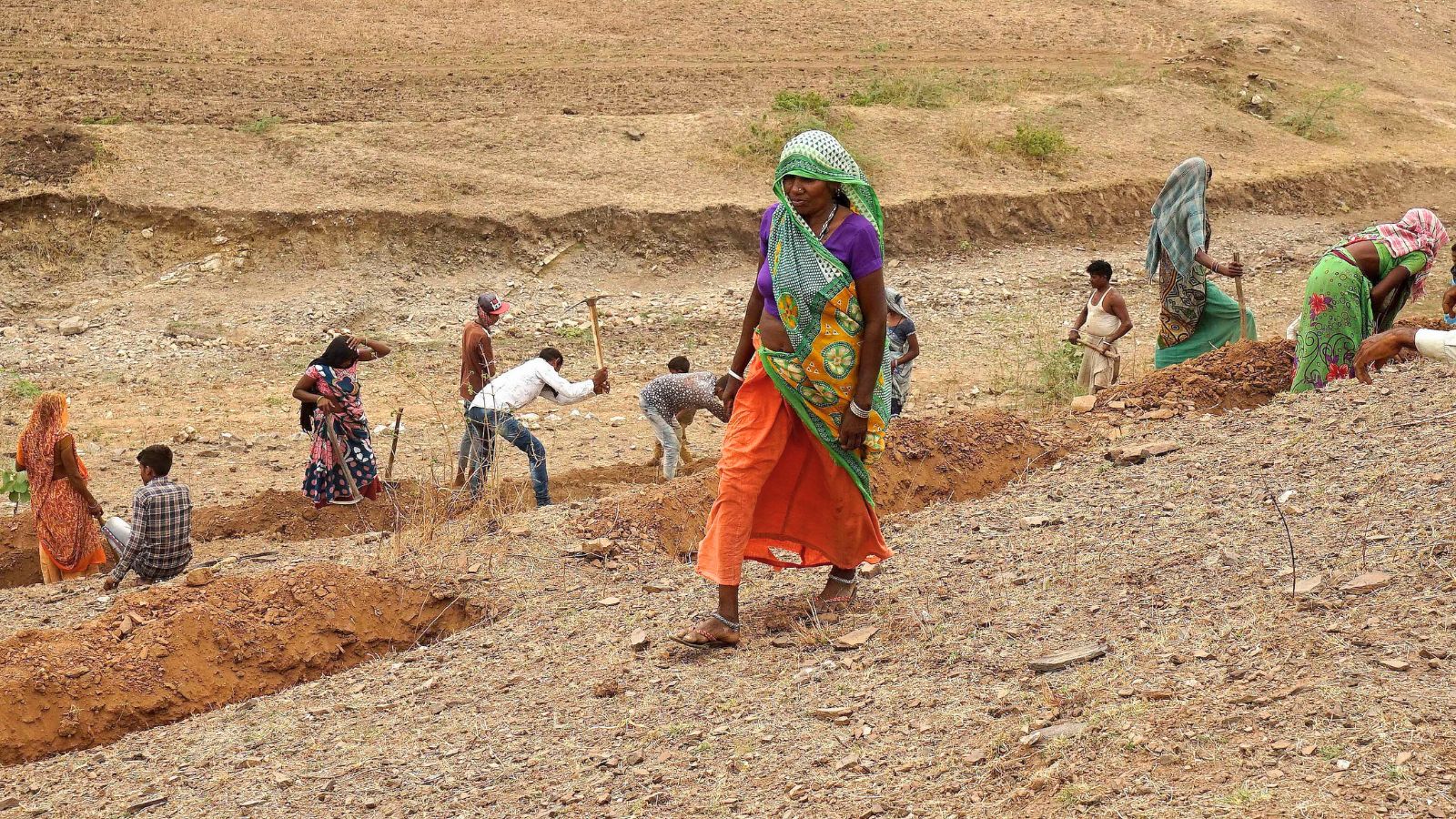 The government has faced criticism over bringing in the concept of normative allocation. Under the MGNREGS, states were provided money based on demand for unskilled work.
The Centre is set to adopt the same “objective parameters” for normative allocation of funds under the Viksit Bharat – Guarantee for Rozgar and Ajeevika Mission (Gramin) (VB–G RAM G) scheme, which will be rolled out from July 1 this year, bringing down the curtain on the two-decade-old Mahatma Gandhi National Rural Employment Guarantee Scheme (MGNREGS).
The Ministry of Rural Development on Friday released the draft of Objective Parameters for Normative Allocation Rules, 2026, seeking public comments within 30 days. As per the draft rules, “The Central Government shall, for each financial year, determine the normative allocation of the funds for every State based on the objective parameters specified in these rules.”
“For the purpose of determining normative allocation for each financial year, the Central Government shall adopt the objective parameters used for horizontal devolution among States as recommended by the Sixteenth Finance Commission and accepted by the Government of India,” states the sub-rule 4(1) of the draft rules.
According to the draft rules, from the financial year immediately after the first year of commencement of the Act, a portion of the normative allocation, as may be determined by the central government, may also be determined on the basis of the following performance criteria — timely payment of wages; compliance with social audit requirements; the percentage of completion of works in a financial year; such other performance-related indicators as may be specified by the central government from time to time.
Explained
Cost-sharing formula
Departing from MGNREGA, the VB–G RAM G Act proposes a higher share of states in the funding of the rural job programme. As per the Section 22(1) of the VB-G Ram-G Act, the fund-sharing pattern between the Centre and states shall be 90:10 for the 11 states, while it will be 60:40 for all other states. Under the MGNREGA, the Centre paid the entire wage bill and shared 75% of material and administrative cost of the scheme.
Allocation for UTs
In respect of Union Territories for which horizontal devolution is not applicable, the central government shall determine the normative allocation on the basis of the performance criteria specified in sub-rule (3) of rule 4 and such other criteria as may be considered appropriate by the central government, states the draft rules.
The government has faced criticism over bringing in the concept of normative allocation. Under the MGNREGS, states were provided money based on demand for unskilled work.
Story continues below this ad
The formula for horizontal devolution recommended by the 16th Finance Commission is based on 6 parametres — population (2011 Census), with a weight of 17.5%, demographic performance (10% weight), area (10%), forest (10%) per capita Gross State Domestic Product Distance (42.5%) and contribution to GDP (10%).
The ministry also released draft rules for Transitional Provisions under the VB-G RAM G Act, 2025; Administrative Expenses Rules, 2026; and Grievance Redressal Rules, 2026.
In December last year, the government enacted the VB-G RAM G Act, 2025, which is aimed at replacing the MGNREGS Act, 2005 enacted by the then UPA government.
The VB G RAM G is aimed at providing a statutory guarantee of 125 days of wage employment in every financial year to every rural household whose adult members volunteer to undertake unskilled manual work.
Story continues below this ad
Unlike MGNREGS, where the Centre paid 100% of the wage bill, the VB G RAM G is a Centrally Sponsored Scheme with the fund sharing ratio of 60-40 between the Centre and States for all states and 90-10 for northeastern region states, Himalayan states and UTs with legislature and 100% central share for Union Territories (UT) without legislature.
The Opposition has criticised the government over VB–G RAM G Act provisions such as fund-sharing pattern (Section 22), normative allocation (Sub-section 5 of Section 4) and the pause in employment guarantee during peak agriculture season (Section 6). These provisions will also have a fiscal implication for states which are already facing challenges.

Harikishan Sharma, Senior Assistant Editor at The Indian Express' National Bureau, specializes in reporting on governance, policy, and data. He covers the Prime Minister’s Office and pivotal central ministries, such as the Ministry of Agriculture & Farmers’ Welfare, Ministry of Cooperation, Ministry of Consumer Affairs, Food and Public Distribution, Ministry of Rural Development, and Ministry of Jal Shakti. His work primarily revolves around reporting and policy analysis. In addition to this, he authors a weekly column titled "STATE-ISTICALLY SPEAKING," which is prominently featured on The Indian Express website. In this column, he immerses readers in narratives deeply rooted in socio-economic, political, and electoral data, providing insightful perspectives on these critical aspects of governance and society. ... Read More
Stay updated with the latest - Click here to follow us on Instagram
© The Indian Express Pvt Ltd





 English (US) ·