

 59 minutes ago
4
59 minutes ago
4

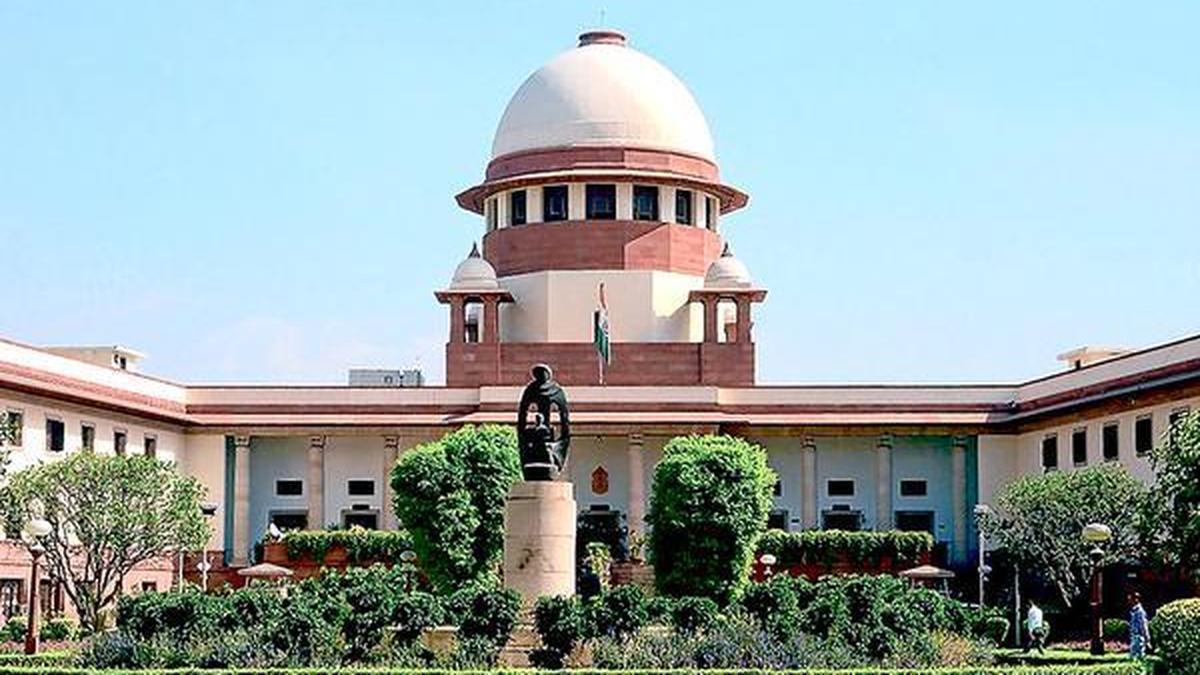
The Supreme Court has constituted a committee headed by the Union Home Secretary and comprising Chief Secretaries of all the States and Union Territories through which the River Yamuna flows, and given them eight weeks to come up with a comprehensive plan to clean up the river, which is considered a lifeline to over 57 million people in the national capital.
A Bench of Justices Manoj Misra and Manmohan issued the direction to the committee to prepare a Yamuna Action Plan while conveying a profound grief over the reduction of the river into “little more than a sewage canal”.
Holy river, toxic passage: The Yamuna through Delhi
“This court has repeatedly emphasised the absence of a single, comprehensive action plan for rejuvenation of Yamuna. A river is greater than the sum of its parts. Its revival requires a long-term, integrated strategy akin to the Namami Gange Programme,” the apex court observed.
The court said the action plan for Yamuna must clearly state its objectives, implementation strategy, roles and responsibilities of each agency, budgetary allocations, and timelines. Coordination and monitoring must be entrusted to a single authority.
The Union government had previously suggested that the Union Home Secretary could act as nodal officer to coordinate efforts between States, Union Territories and the Centre.
Also Read | How the Yamuna appeared relatively ‘cleaner’ during Chhath Puja in Delhi last year
The court’s amicus curiae, senior advocate K. Parameshwar, had recommended that the action plan must contain details of cities and towns discharging effluents into the river, the kinds of industries polluting its waters, geo-tagging of sewage treatment plants, drains, etc on its banks; uploading of the river water quality data, and other measures.
“Rivers are the lifeblood of civilisation. They provide fresh drinking water, sustain ecosystems and drive economic growth through agriculture, fisheries, and tourism. It is no coincidence that ancient civilisations flourished along rivers such as the Nile, Indus, and Mississippi,” the court said in a recent order.
It detailed the manner in which rampant encroachments have marred the fragile Yamuna riverbed along with indiscriminate discharge of toxic effluents from illegal industries, untreated sewage from unauthorised colonies and mixing of sewage with rainwater drains.
Also Read | Untreated sewage, missing effluent plants key reasons for Yamuna’s pollution: Govt
The Bench said multiple agencies work in silos to achieve nothing. Instead of curbing pollution, they have aggravated it, the court said.
“They have left drainage, sewage, stormwater, drinking water and effluent treatment systems either non-functional or operating below capacity. Agencies often work at cross purposes, even failing to maintain basic gradients while laying drains within their jurisdiction,” the court said. Time has come for “hard decisions”, the Bench said.
Also Read | Rejuvenation of Yamuna among non-negotiable priorites, says Delhi L-G
“The removal of encroachments, closure of illegal industries and relocation of unauthorised colonies are unavoidable. Such measures can only succeed if the Union of India, States, and Union Territories act in concert,” the Bench recorded in the order.
The court listed the case next on August 8, 2026.




 English (US) ·