

 1 hour ago
3
1 hour ago
3
ARTICLE AD BOX
5 min readFeb 8, 2026 06:08 PM IST
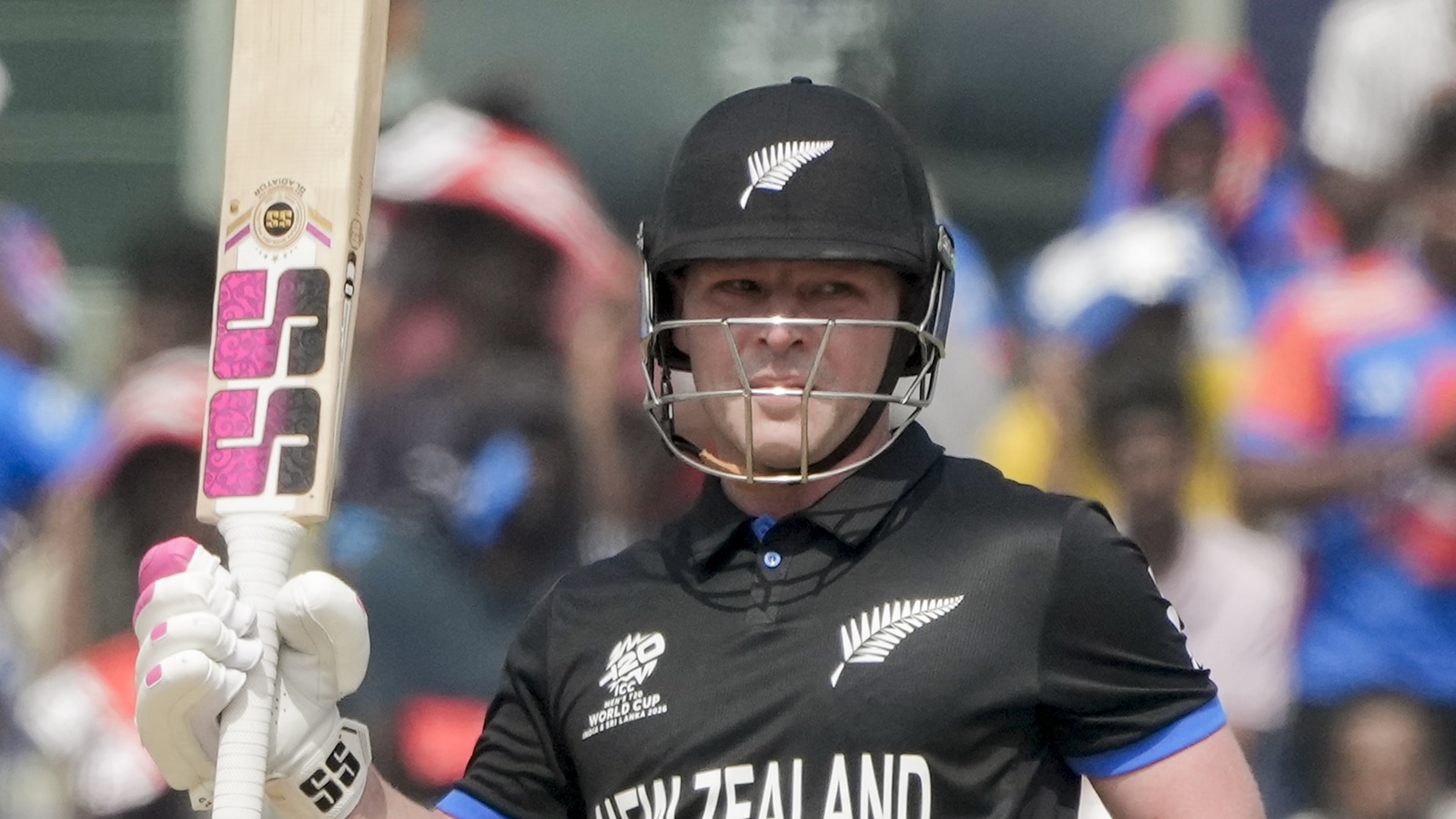 Seifert's fireworks reduced a treacherous chase into a casual stroll with his 65 off 42 as New Zealand swamped Afghanistan's total of 182 for 6 in 17.5 overs with five wickets in hand. (PTI Photo)
The Olympics or the World Cup? It’s a question that Tim Seifert had asked himself a thousand times. In college, his numbers glowed in both hockey and cricket. He racked up goals with as much ease as he ferried the leather ball into the distant corners of a cricket ground. After several rounds of deliberations, he chose cricket, the decision influenced as much by his father Marty as by his sporting idol Brendon McCullum.
The wicketkeeper-batsman was not to rue the decision, as he soon became one of the most sought-after names in the franchise-cricket circuit. In Chennai, his fireworks reduced a treacherous chase into a casual stroll with his 65 off 42 as New Zealand swamped Afghanistan’s total of 182 for 6 in 17.5 overs with five wickets in hand. The win gives breathing space for the Black Caps in the perceived group of death, with South Africa in the mix, alongwith Canada and UAE.
Watching McCullum’s batting videos is his biggest stress-buster before games. When asked to open the innings for the first time, against India in Wellington in 2019, he grew tense. But he immediately Youtubed McCullum’s videos. He cracked 84 off only 43 deliveries the next day. “Yeah, obviously. I’d be lying if I said Baz wasn’t one of my heroes growing up,” Seifert later said, at his post-match press conference. “Obviously you try to be yourself out there, but I definitely have looked at Baz throughout my childhood.”
He is not quite a McCullum clone, but similarities exist. He is similar in build, a compact slab of iron muscles. He has strong, square shoulders and heavy forearms. He injects incredible power into his strokes, most of them travel flat rather than high. He charges down the track and brutalises fast bowlers. He is strong down the ground as well as square off the field. For someone who condemns pacers with power, he deals spinners with sophistry. That he bludgeoned the Afghanistan seamers was little surprise, but how he nullified their guileful spinners not only instructed about his craft but also reduced the match into a canter.
His decisions were definite. He either committed fully to the front foot and powered them down the ground, or hung back and swept them powerfully. A swipe down the ground later off Rashid captured his approach against spin. He stepped aside, put half a stride to reach the ball’s pitch and then lashed him down the ground. He is equally nimble behind the stumps, and frighteningly quick. He runs so fast that when Rahmanullah Gurbaz top-edged Matt Henry, he reached under the ball faster than the fine-leg fielder.
When New Zealand lost wickets in as many balls, in the second over of the chase, off Mujeeb-ur-Rahman, he and Glenn Phillips did not sequester into a shell of conservatism. It’s tempting to accumulate through a crisis when the batting is deep. Instead, they launched a blistering counterattack. Phillips dealt the blows to the spinners; he smoked Rashid for a six and four in his first over, dishevelling his lengths. The Afghanistan talisman endured a rare bad day. Four overs cost 36. Seifert had to be content with punishing the seamers. He did it admirably. In the first 12 overs, he faced only eight balls from spinners. But after Phillips departed, posting a march-defining third-wicket stand of 74, he latched onto the spinners. He welcomed the 41-year-old Mohammed Nabi with a pair of sixes and a four. He held out in the deep, cursing himself for mistiming a pull that he would have ferried over the fence with eyes blindfolded. But the match, by then, was rolling into an inevitable conclusion.
He is reputed to possess a 360-degree range, but he seeks more conservative channels these days. None of his fours owed to his knack of improvising. He later explained the gist of his knock and the adjustments he made. “(At the start) we thought pace was going to be easier than spin. Then I thought sometimes the spin actually came a little bit easier than the seam. So it went my way,” he told the broadcasters.
Story continues below this ad
He is not an all-brawn hitter, but assaults with calculated precision. There was a phase in the middle of the innings where he shut out the boundaries and dealt in singles. It was not the turbocharged knock he rattled out against India in Thiruvananthapuram. In that game, New Zealand were hunting 271. Here, the total was nearly a century of runs fewer, thanks to stifling power-play spells from New Zealand’s pace trio of Matt Henry, Lockie Ferguson and Jacob Duffy. Afghanistan mustered only 44 runs in their powerplay. From the base, it was difficult to post an imposing total on the featherbed surface.
If inconsistency had stalled various junctures of his career, he has cracked it since the tour of Pakistan in 2024. Since then, he has hammered 779 runs at an average of 45 in 22 games. The strike rate is an intimidating 162.97. He might not exude McCullum’s persona or appeal, but he makes powerplays a nightmare for new-ball bowlers. The World Cup or Olympics? The dilemma no longer piques him.







 English (US) ·