

 1 hour ago
4
1 hour ago
4
ARTICLE AD BOX
6 min readChennaiUpdated: Feb 7, 2026 05:33 PM IST
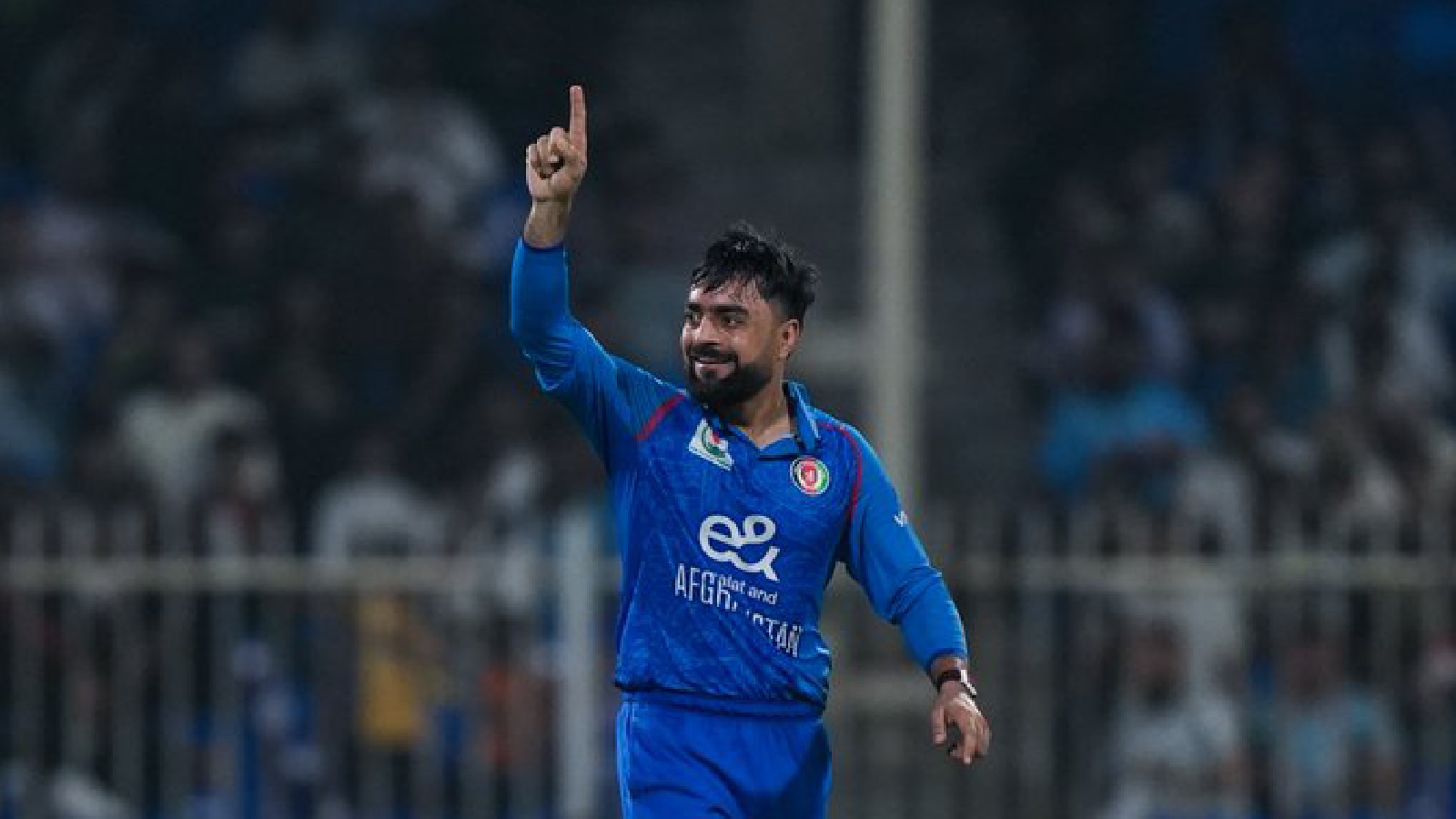 Afghanistan skipper Rashid Khan in action. (Afghanistan cricket board)
Rashid Khan has two dreams. One, he says, more in jest than in seriousness, is that he wants to pick 7000 wickets. “There are a lot of youngsters, so you need to keep pushing. That’s why I told you I need to pick 7,000 wickets,” says Rashid, his T20 wickets tally on 696, chuckling. The other is a more serious dream. “I want Afghanistan to play at home, in front of their home fans. “That,” he says, “is a bigger dream than playing in the World Cup.”
He goes on: “We have got a huge amount of support and haven’t felt like being away from Afghanistan. But when you play in your own country, it’s a kind of different feeling. The world will see Afghanistan as well, and (see), how beautiful it is.” Rashid has featured in 111 T20Is, 117 ODIs and six Tests, played in every corner of the world, from Bulawayo to Brisbane, Chennai to Lord’s. Yet, given the sustained political tensions in his country, Afghanistan has never hosted a cricket game, even though it is the most popular sport in the country and one where Afghanistan have reaped success.
Days spent in Afghanistan are scant too. The globe-trotting frenzy – he is on the rolls of at least half a dozen franchises in the world and has turned up for a staggering 26 different teams – is such that he is rarely at home. From 2017 to 2021, he spent only 25 days at home, he said in an interview. He is more or less based in Dubai, where he has bought a sprawling bungalow. He drops home once in a while, but recently explained the difficulties. “I can’t walk in the street in Afghanistan. I have a bulletproof car,” Rashid told Kevin Pietersen in an interview. “It’s for safety, not luxury. You don’t want to be in the wrong place at the wrong time. It’s normal in Afghanistan. Everyone has it,” he said. Dubai means more access to the world around him too.
INTERACTIVE: Meet India’s U19 World Cup winners
He has called unfamiliar places home, from Greater Noida and Sharjah, to Dehradun and Abu Dhabi, to nearly every city his franchise bases itself out. Two months in India for the last nine years has acquainted him with Indian culture, food and movies. He speaks sparkling (almost) Hindi, watches Hindi movies (in a recent Instagram post, he says he promises to watch Border 2), seen the blockbuster Telugu movie Baahubali five times and sprinkled a few Tamil words during his press conference before the New Zealand game. Asked how he feels about nearing the 700-wicket milestone, he says in Tamil, “Nalla!” It means good. He must have heard it a hundred times in the last two days he has spent in Chennai. After the press conference, he turned towards the local media manager and asked him: “Polama?” The informal one word for “Shall we leave?”
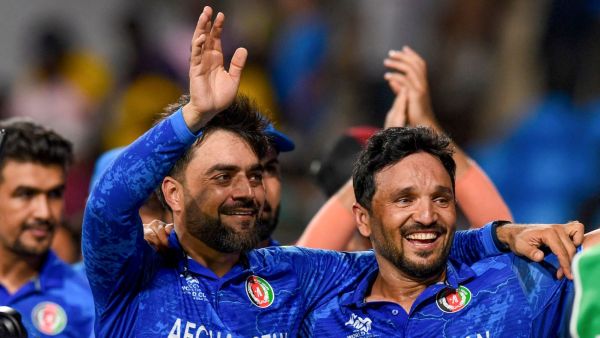 Afghanistan’s captain Rashid Khan with teammate Gulbadin Naib acknowledges fans winning the ICC Men’s T20 World Cup match vs Bangladesh. (PTI Photo)
Hopping from one city to another has been the recurrent theme of his life. He spent his childhood in Bati Kot, a district in the east of Nangarhar Province. He wanted to be a doctor, before civil strife simmered and his large family (10 siblings alone), escaped to Peshawar in clandestinity. There, in the refugee camps, he learned cricket. He wanted to be a fast bowler. But fate had a better future in store. That of a leg-spinner, the most in-demand fingers in the shortest format, his country’s sporting talisman, role model, and “arguably the second most famous person of his country,” as he once joked. In reality, he could be the most famous, at least in cricket-playing countries.
ALSO READ | India win U-19 World Cup: Meet the teen champions
But growing up, he was always the outsider. In Pakistan’s Peshawar, he was called mujahir, the colloquial term for immigrant. When he returned home, he was called condescendingly Peshawari (the one from Peshawar). But wherever he travelled, he won hearts, not just with his rare and insuperable gifts, but for his genial nature. At the Chepauk, he was the most sought-after face among both teams. Groundsmen shyly asked him for selfies and autographs, and he merrily obliged. Cameras feverishly soaked every frame of his. His demeanour is the single biggest reason Afghanistan have become the neutral’s favourite.
Story continues below this ad
Role model
He has turned the hearts of a generation of young Afghans to cricket. A raft of young spinners have burst forth from the country, where one would think is more fertile to the nourishing of fast bowlers. He wears the role model honour with a quiet pride. He doesn’t wield the aura of a superstar. When asked about the spin bowling inspirations of his country, he never talks in the singular, but always drags younger colleagues Mujeeb-ur-Rahman and Noor Ahmad into the mix.
When baited into questions with political undertones, he neither shrinks away from them nor whips up controversy. When asked about women playing for his country, he replied: “ICC, the Afghanistan Cricket Board, they have the better idea, but we love to see anyone representing Afghanistan on any stage.” He seldom speaks a word in anger. He is among the most loved cricketers around.
But the paradox in the script of his life is heartbreaking: He can call every place he plays a home, he says he feels at home in India, yet he cannot play an international game in his real home.





 English (US) ·