

 2 hours ago
4
2 hours ago
4
ARTICLE AD BOX
5 min readChennaiFeb 8, 2026 05:07 PM IST
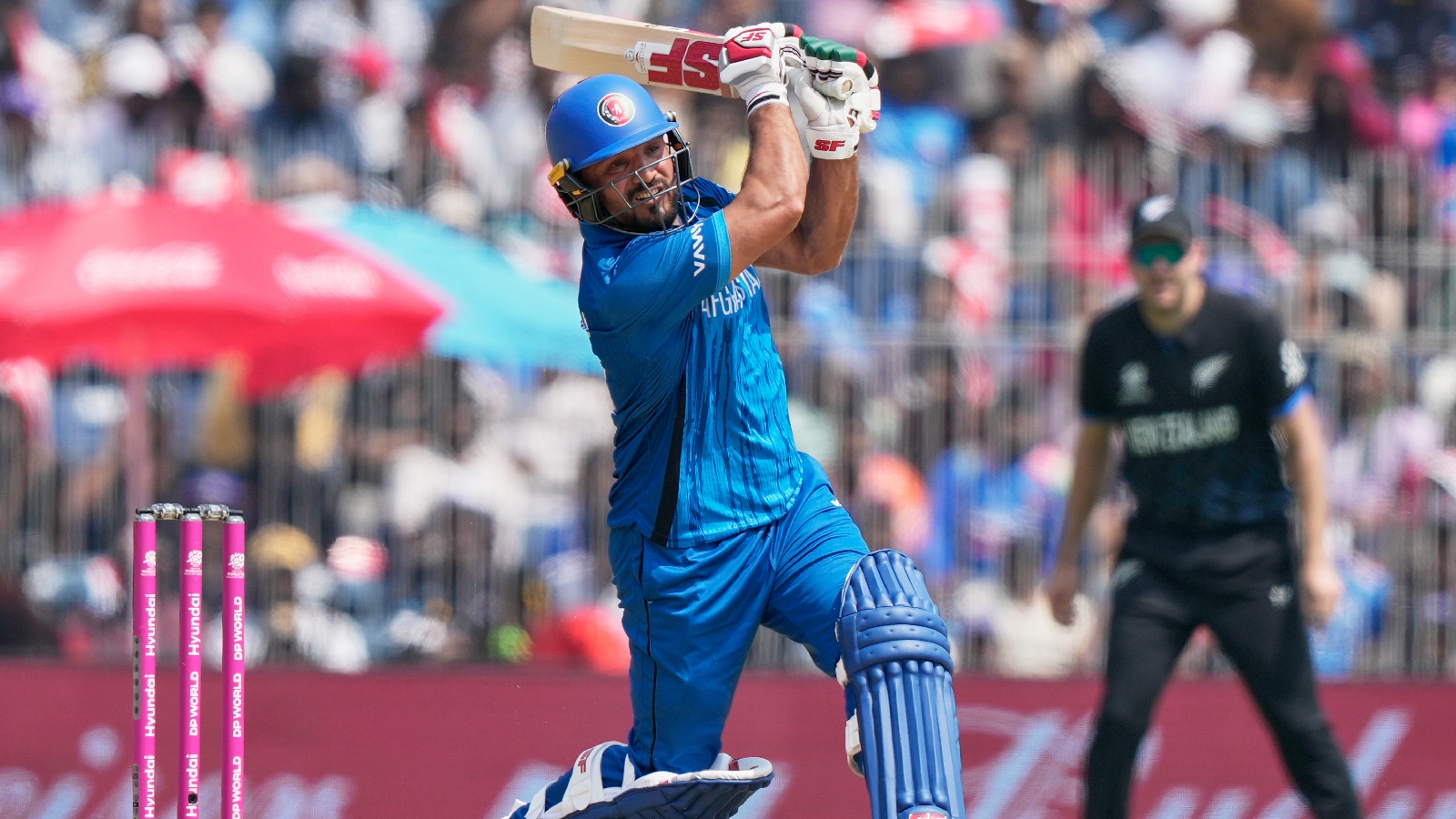 Afghanistan's Gulbadin Naib plays a shot during the T20 World Cup cricket match between Afghanistan and New Zealand in Chennai, India, Sunday, Feb. 8, 2026. (AP Photo/Mahesh Kumar A.)
A teenager with scattered stubble is flexing his biceps in every frame. He wears a gruff expression. The eyes are cold, but the gaze is piercing. This was Gulbadin Naib in Tim Albone’s documentary ‘Out of the Ashes’, on the rise of Afghanistan cricket. Naib was then an aspiring cricketer, raised in the crammed refugee camps in Peshawar, where he and his family fought for basic needs, but where he also picked up the sport. By then, he had returned to his hometown Puli Alam, in the Logar province, where his father set up a fruit stall.
Sixteen years later, through a career of grit and granite, the bicep-flex image defines him. It is so popular that when he completed his half-century against New Zealand, pulling his side out of a defensive hole, some in the stands rolled up their sleeves and swirled their biceps. In this instance, Naib did not. He raised both his arms towards the dressing room and waved at the applauding crowd. He had flexed his bicep and every possible muscle of his sculpted frame to provide his team a fighting 182/6, which, although, wasn’t enough in the end against New Zealand.
When he strode to the middle, Afghanistan had put on only 35 runs in 5.1 overs, amidst New Zealand’s probing, full-length onslaught. The over ended with another wicket. His team stared at a first-game freeze in the perceived group of death. But adversities of this scale don’t frazzle him. Harsher, everyday realities had shaped him. He was too young to remember the sound of bullets and drones at home. But in the refugee camp, he remembers the struggle for food. “There used to be a shortage of food and we often survived on just one meal a day, sometimes. Power would go off for days, and the water used to be black in colour at times,” he had recollected in an ICC podcast. He did not even know that he was from Afghanistan, or where his country was, until he learned from textbooks.
The crisis on the field, at least, did not put his life in danger, or make him fight for basic human essentials. He calmly punched the first ball, all neat and precise movements, for three runs. On the field too, after 15 years turning up for his country, he knows how to wade through troubled times. He was one of the architects of Afghanistan’s journey to their maiden T20 World Cup appearance in 2010, when he was a teenager. He conceptualised his country’s finest moment in the tournament – their coup over Australia in the previous edition. He captained the troops at a troubled time for Afghanistan cricket; he felt the wild hack of the axe and was dropped from the squad. As recently as August, he was dropped from the team, forcing him to take refuge in the Hong Kong sixes league. He is 34, an age some of the players would have contemplated to quit. But he fought on; he fights on. He crunched 63 off 35 balls to propel Afghanistan to a competitive total.
On his return, he was installed at No 3, because the coach, Jonathan Trott, said he looked in “decent touch”. He looked in sinister touch. Jimmy Neesham had just erred on the fuller side when he lofted him over mid-off, flat and fierce. He bided some more time to unleash his full fury. With a thumped six off Glenn Phillips over mid-wicket, all bottom-handed power, a sweep and slog off Neesham, he single-handedly kept his team in the game.
From the other end, Sediqullah Atal looked on with awe. “He has incredible power, I don’t have it,” Atal later said. Young batsmen like him look up to Naib. “Before the match, he always chats with us, tells us to relax. As a senior player, and one of the best batsmen Afghanistan has produced, we look up to him,” he said.
Naib is not a superstar like Rashid Khan, or a pioneer like Mohammed Nabi. Franchises don’t enter into a bitter bidding war on the auction table. He has featured in a lone IPL season, in 2024 with Delhi Capitals, played only two games. BBL and SAT20 have remained elusive shores. But it gives him ample time to spend at home. He travels around the country, like a common man, visits academies and drops by to play in the streets with children. The country is still troubled, but he remains home whenever he can. And on the ground, he flexes his biceps, carrying his team’s batting like the mythical Hercules in crisis.




 English (US) ·