

 1 hour ago
5
1 hour ago
5
ARTICLE AD BOX
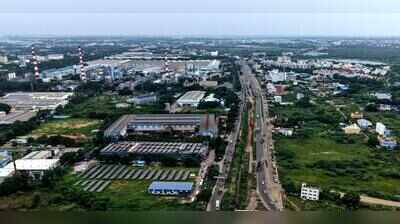
SIPCOT Industrial Park at Sriperumbudur
Ramanathan SIn his opening address during the first session of the 17th Tamil Nadu Assembly, governor R V Arlekar said the govt will frame a new industrial policy. For a state that has long led India in industry, the expectations are high.
Let’s start with what the state holds. Tamil Nadu did not freeze its 2021 industrial policy, it kept building on it. Since then it has issued separate policies for research and development, electric vehicles, semiconductors and advanced electronics, space, toys, textiles, shipbuilding and the circular economy. The new govt inherits a dense stack of policies and momentum, therefore, its first task is not invention but coherence.What the state needs is a canopy that harmonises this thicket, so that a firm which is at once an electronics maker, an EV supplier and an R&D centre reads one incentive framework, not three competing ones. The same applies to institutions: Guidance TN, FAME TN and StartupTN should operate as one coordinated system, not silos. Cohesiveness is the precondition for this ambition.The most important aspect of this ambition is to understand that what investors need from TN are not sops disguised as incentives, but reliable policies.
Ambition also lies in the foundations. The decisive lesson from China’s rise was never cheap labour, it was building hard infrastructure ahead of demand — power, ports and roads laid before investors asked — so that reliability, not cash, became the real subsidy. TN’s competitive lever is to guarantee basic industrial infrastructure before its tenants arrive and a credible industrial policy which investors can trust.Energy is where this begins. The price of industrial power and lack of efficiency in the grid could soon become a barrier, as the state sits on one of the country’s greatest clean-energy endowments. TN’s coastline holds a large share of India’s roughly 70GW of offshore wind potential, along with massive onshore and nearshore wind potential which has been partially tapped, and a solar power potential far from fully achieved.
Making TN an “electro-state”, with cheap green power and offshore wind pursued as a named mission, would do more for competitiveness than any cash incentive. It would also answer the climate-versus-growth tension, by turning clean energy into a cost advantage rather than a compliance burden.TN’s renewables base is a genuine asset, and positioning green manufacturing as an engine of the next phase — rather than as a corporate-responsibility gesture — is the forward-looking move.
Water belongs in the same conversation. Dedicated desalination, like the new 400-million-litre Perur plant, should be ring-fenced for industrial corridors, with zero-liquid-discharge and treated-wastewater reuse made the norm.
Cheap green power makes desalination affordable, so energy and water security reinforce each other.Land is the other foundation, and here too China is instructive. Rather than sell expensive freeholds, its local govts built parks with private capital and leased low-cost, “plug-and-play” factory sheds, even constructing units to a tenant’s specification and leasing them back.
TN should do the same, lowering entry cost, and keeping land in long-lease public structures so prices are not driven by speculation.A push is needed in industrialise smaller towns with cluster-grade infrastructure, sheds and local credit. Success should then be judged by whether per-capita income rises in each district. The new policy must also focus on deepening supplier ecosystems around the anchors in areas such as Hosur and Sriperumbudur.The knowledge economy needs special attention. Chennai’s floor space index, capped at about 2 against Hyderabad’s minimum of 6, throttles the Grade-A real estate that design, research and global offices require. TN should create high-FSI knowledge zones and treat liveability — social infrastructure, housing and a more modern hospitality regime — as part of industrial strategy that woos mobile talent and expatriate leadership.
TN’s risk is remaining an assembler while value migrates upstream to design, components and intellectual property.Global capability centres are the clearest near-term prize. As artificial intelligence turns them from back offices into enterprise nerve centres, and as tighter immigration abroad pushes high-value work to India, TN needs a new GCC policy which competes with Karnataka, NCR and Hyderabad. The fix is partly institutional.
Investment promotion for IT services, GCCs and fintech falls awkwardly between the IT and industries departments.
The IT department should be given a guidance-style agency, with a budget to travel and court these firms.The frontier sectors deserve the same patience. Andhra Pradesh is racing ahead in quantum computing, anchoring India’s first quantum valley. TN has the institutions to respond, and should place deliberate bets — in quantum, space and defence technology, but also in semiconductors — held steady across budget cycles rather than started and stopped.
The incentives too should evolve. For instance, the state could create a guided-investment fund that takes equity in frontier sectors and draws in private capital — patient money rather than grants.
The TIDCO Startup Fund which recently invested in Raptee and Agnikul is a fantastic example and needs to be embedded into the industrial policy for frontier sectors.Skilling must be wired into all of this directly. TN’s engineering colleges are strong, but a middle-skill gap remains.
Co-locating ITIs and polytechnics inside industrial clusters, with fluid curricula shaped by the firms that hire from them, produces workers quickly, as China’s demand-led vocational system did.None of this works without honest metrics. Tamil Nadu should commit to measured results: provident-fund-linked formal jobs created and output growth in each sector and rising per-capita income in each district.TN does not need a new dream, it just needs to wire the foundations beneath the one it has. Industrial policy is about managing tensions that have no clean resolution: between labour and investors, distributive industrial growth and concentration for efficiency, creating jobs and embracing automation, green ambition and industrial growth. The real test of the next policy will be how it navigates these trade-offs.(The writer is a communications consultant who was associated with TN govt between 2023 and 2026)








 English (US) ·