

 1 hour ago
5
1 hour ago
5
ARTICLE AD BOX
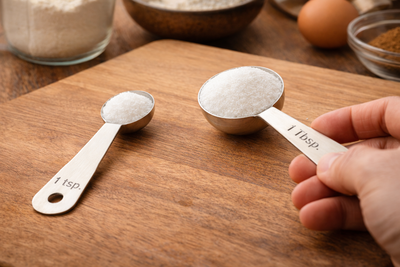
If you cook even occasionally, you’ve likely run into recipes that casually switch between teaspoons and tablespoons, two spoons that look similar but behave very differently in practice.
Mixing them up is one of the quickest ways to turn a carefully balanced dish too salty, too sweet, or oddly bland. These measurements are not interchangeable, and understanding the gap between them is part of kitchen literacy, not culinary trivia. Before getting to professional tips on measuring more accurately, it helps to slow down and look at what tsp and tbsp actually represent, how they’re used across recipes, and why that small-looking difference can have a big impact on flavour, texture, and consistency.
Scroll down to read more.
What a teaspoon and tablespoon really look like
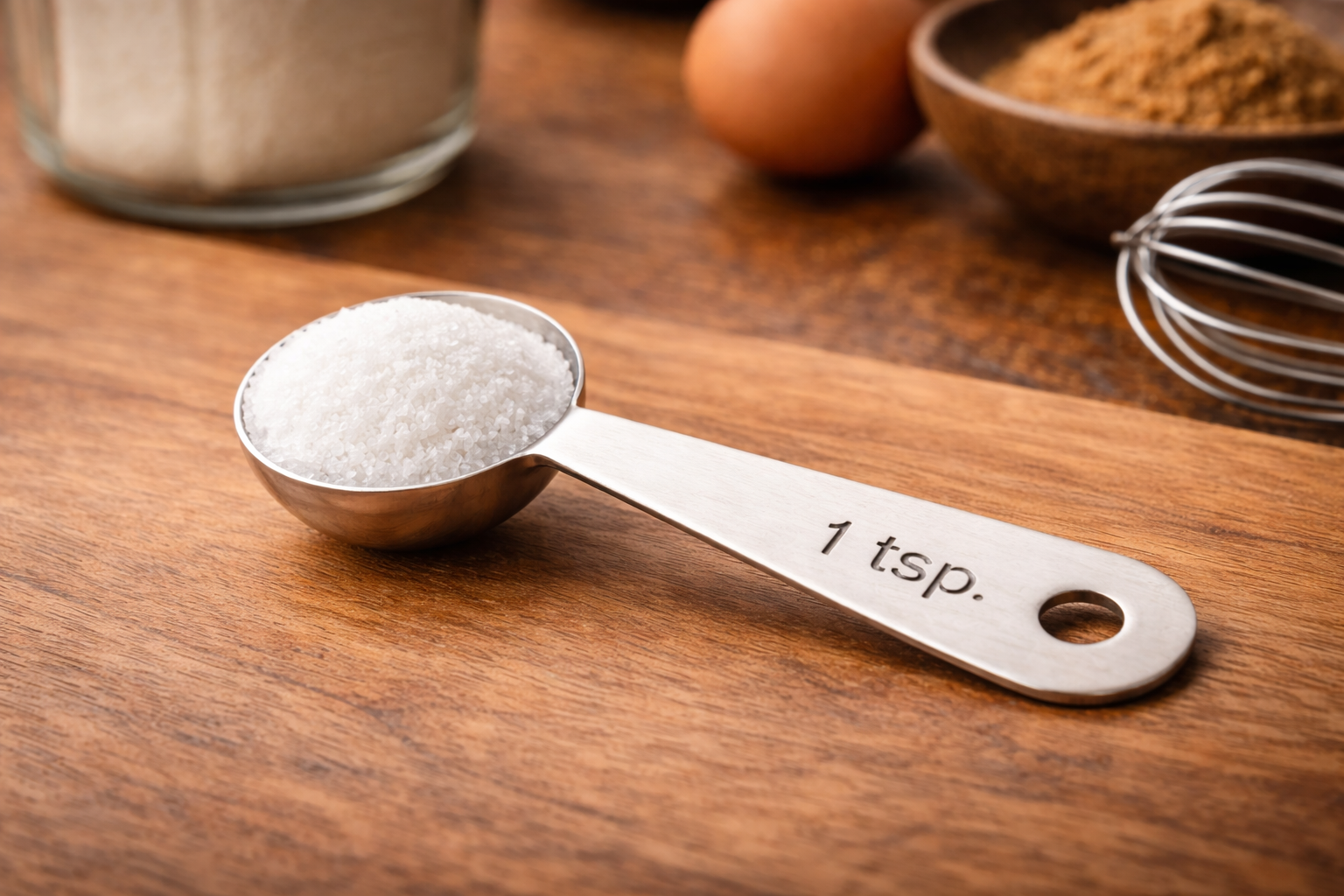
At first glance, the two spoons may seem nearly identical. In cooking, however, they perform very different jobs and swapping one for the other can quietly throw an entire recipe off balance.• 1 teaspoon (tsp) = about 5 millilitres• 1 tablespoon (tbsp) = about 15 millilitres
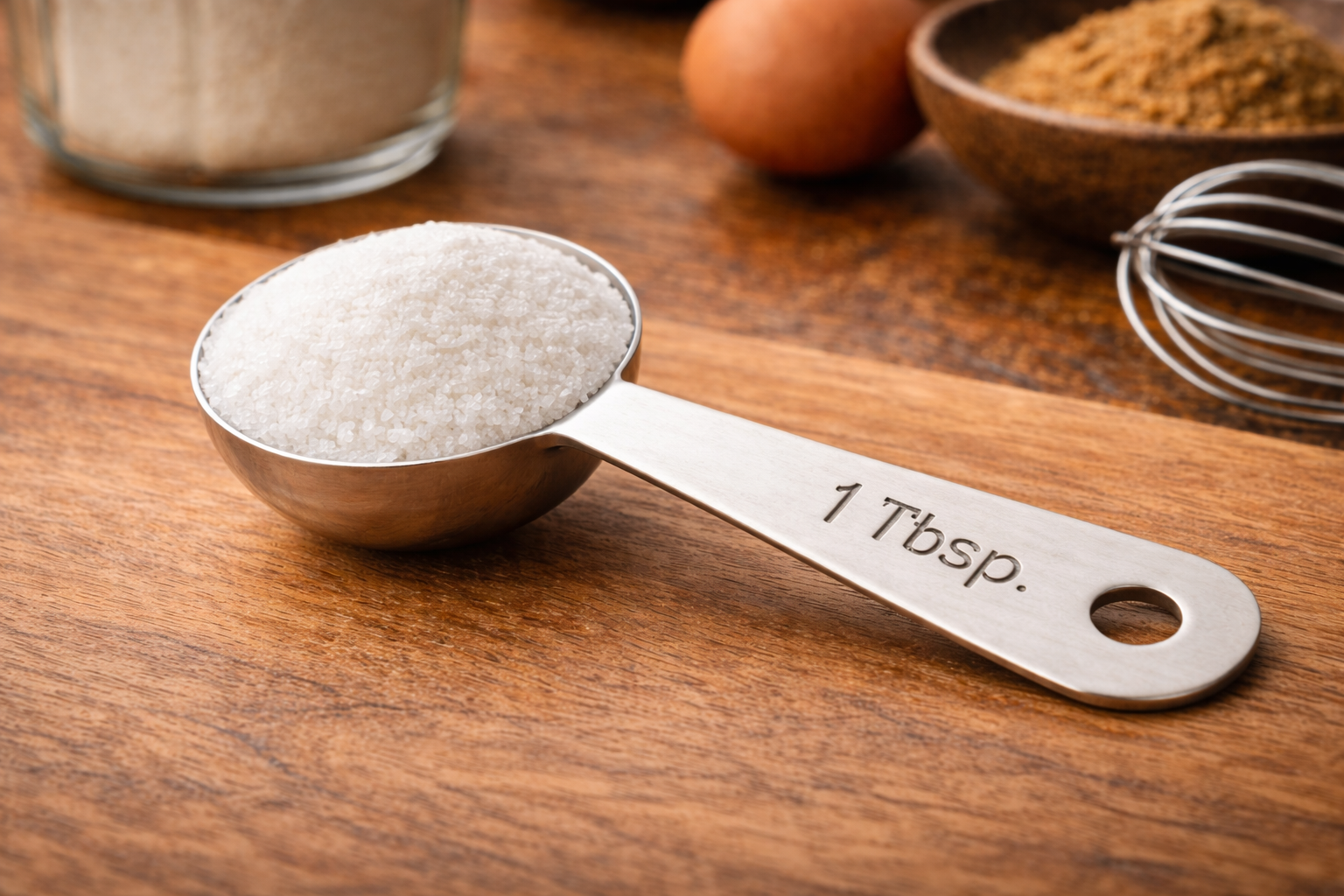
That means: 1 tablespoon = 3 teaspoonsSo if a recipe calls for one tablespoon of chilli powder and only a teaspoon goes in, the dish will turn out far milder than intended.
Flip that error the other way, and the heat level can quickly spiral into something no glass of water will fix.
Why precise measurements matter in cooking
Professional kitchens care deeply about consistency; the same curry should taste identical whether it’s cooked today or a week from now. That’s why standardised measurements exist at all. Teaspoons, in particular, are typically reserved for:• Spices and herbs• Baking powder or baking soda• Vanilla essence• Salt in small quantitiesTablespoons come into play for:• Oil or butter• Sugar or honey• Sauces and condiments• Peanut butter or tahini
In baking, especially, swapping tsp and tbsp can wreck the chemistry. Too much baking powder, for example, can make cakes collapse or taste bitter. Too little, and they stay dense. In savoury cooking, the impact is more about flavour balance, saltiness, heat, sweetness, or acidity swinging wildly in one direction.
Why the spoon in your drawer isn’t reliable
This is where many home cooks slip up: reaching for everyday cutlery instead of proper measuring tools.
The teaspoons and tablespoons used at the table aren’t standardised, some are deeper, some wider, and others surprisingly shallow. Depending on the shape, a so-called “tablespoon” from the drawer could hold anywhere from 10 ml to 20 ml, which is a big swing in a recipe that relies on balance.That’s why cookbook authors and chefs always mean measuring spoons, not eating spoons. Measuring sets are designed so that:• Every tsp is exactly the same volume• Every tbsp is exactly three times that• Results stay consistent no matter who cooks the dishIf precision matters, especially in baking, using a proper set of measuring spoons is one of the easiest and most worthwhile upgrades for any kitchen.
Level vs heaped: Another quiet troublemaker
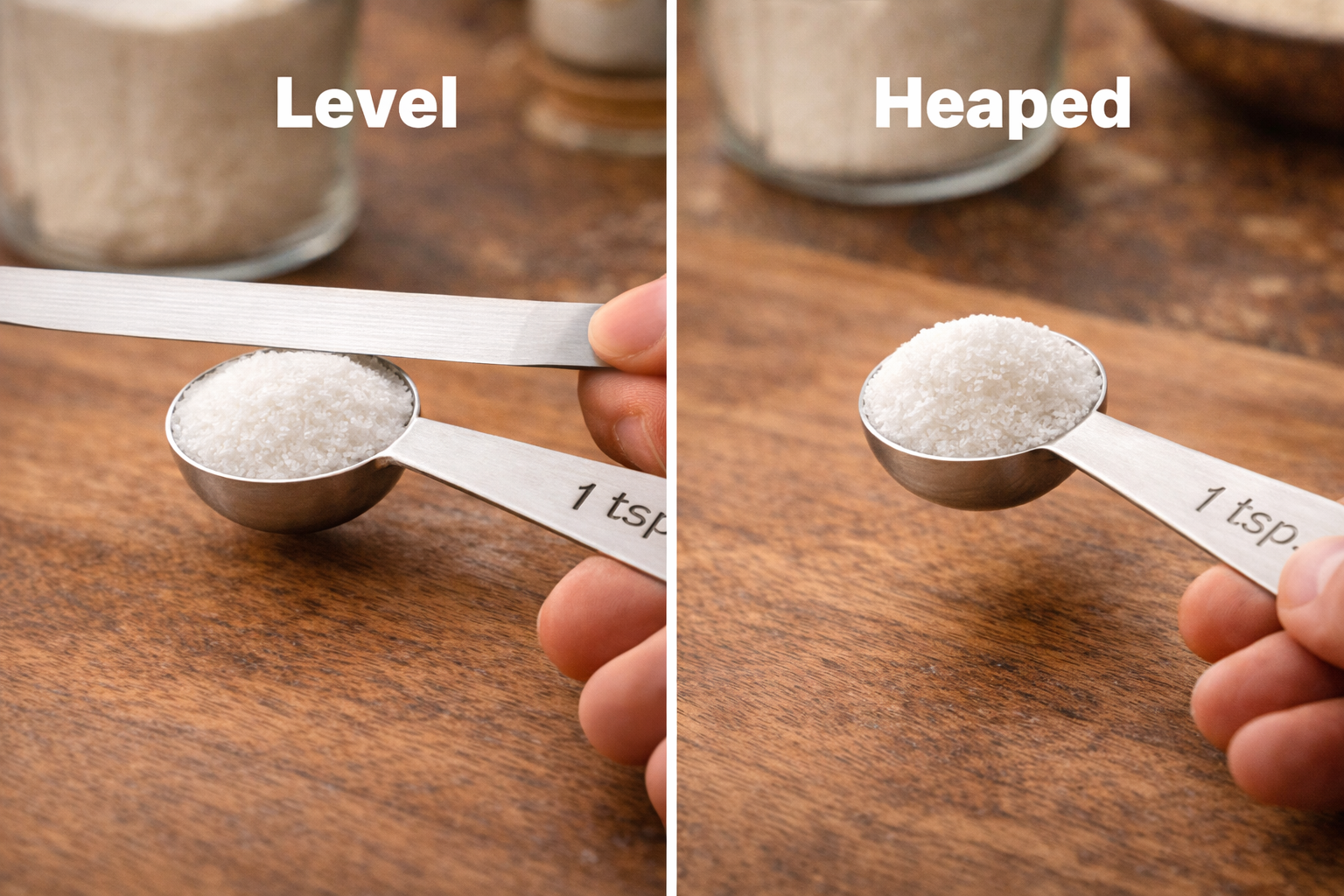
Even with the correct spoon, technique still matters. In most recipes, a “teaspoon” or “tablespoon” means a level measure, filled, then scraped flat across the top.A heaped spoon, where the ingredient rises like a small mound, can quietly add 30-50% more than intended, especially with flour, cocoa powder, sugar, or ground spices. Liquids are simpler: pour right up to the rim without overflowing. Dry ingredients need that quick swipe with the back of a knife or a fingertip to even things out and keep proportions on track.
Metric vs international recipes
One more thing worth knowing: while teaspoon and tablespoon sizes are broadly standardized today, older cookbooks or international recipes sometimes vary slightly. For example:• In most modern metric systems: tbsp = 15 ml• Some older regional standards once used slightly different volumesIt rarely ruins a dish, but in precise baking, small differences add up. When in doubt, a digital kitchen scale (for grams and millilitres) removes all guesswork.
What chefs insist you get right about measuring
According to Chef Gautam Kumar, “Measurement is extremely important and in certain dishes totally unavoidable. One should always keep in mind the following.1. Do not keep changing your measuring spoons; this creates an imbalance and might impact the dish.2. Never use substitutes in baking. A tablespoon can never be substituted for 2 teaspoons.3. Avoid plastic spoons if possible and invest in good-quality measuring spoons.









 English (US) ·