

 56 minutes ago
3
56 minutes ago
3
ARTICLE AD BOX
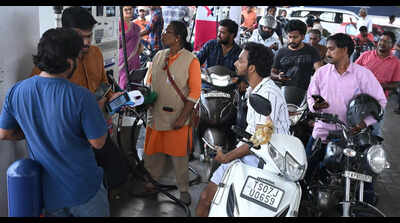
Data shows that several states have shifted towards “hybrid” taxation models to protect revenues even when global crude prices fluctuate
Hyderabad: Fuel prices in Telangana remain among the highest in India largely because of the state’s steep ad valorem Value Added Tax (VAT) structure on petrol and diesel. Unlike fixed taxes, an ad valorem system means states levy tax as a percentage of the fuel’s value.
As crude oil prices or dealer prices increase, state revenues also rise automatically. Most Indian states currently follow either a pure ad valorem structure or a hybrid system combining percentage VAT with fixed cess per litre.Data shows that Telangana imposes a 35.2% VAT on petrol and 27% VAT on diesel, placing it among the highest fuel-taxing states in the country.According to the Petroleum Planning and Analysis Cell, neighboring Andhra Pradesh has an even more layered structure, charging 31% VAT on petrol along with an additional ₹4 per litre VAT and ₹1 road development cess.
Diesel attracts 22.25% VAT plus the same additional levies. Among southern states, Karnataka levies 29.84% sales tax on petrol and 21.17% on diesel, while Kerala imposes 30.08% sales tax on petrol along with additional social security cess and surcharge components.The latest figures indicate that several states have shifted towards “hybrid” taxation models that combine ad valorem tax with fixed per-litre charges to protect revenues even when global crude prices fluctuate.
States such as Andhra Pradesh, Tamil Nadu, Maharashtra and Punjab now impose additional cess or infrastructure levies over and above VAT.In contrast, states such as Delhi and Uttar Pradesh levy comparatively lower VAT rates. Delhi charges 19.4% VAT on petrol, while Uttar Pradesh levies 19.36% or ₹14.85 per litre, whichever is higher.Marri Amarender Reddy, president of Telangana Petrol Dealers’ Association, said the solution lies in following a uniform VAT structure across the country.
“Consumers can get some relief if the states follow a single VAT instead of collecting varied percentages. The Centre should also give clarity on imposing various types of cess on consumers,” he said.Earlier, the Centre had stated that several states had reduced VAT following excise duty cuts, while Telangana, Andhra Pradesh, Kerala, Rajasthan and some other states had retained higher tax structures at the time.Although there have been suggestions for the state to reduce the VAT percentage to make petrol more affordable, it is unlikely, according to official sources. For many states, a substantial portion of their fiscal resources comes from a share of the GST, which they receive alongside a 41% allocation of all central taxes—whether from the central GST, income tax, or customs duties. “Yet, there’s lingering frustration among state governments regarding the cesses and surcharges implemented by the central government, as these funds remain under central control, leaving states to grapple with tight budgets and limited financial flexibility,” sources said





 English (US) ·