

 6 days ago
7
6 days ago
7
ARTICLE AD BOX
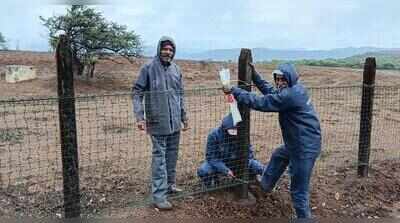
The Kas Plateau Executive Committee and the Forest Department commenced work to install temporary fencing at the Kas Plateau, a UNESCO World Natural Heritage Site in Satara district, ahead of the flowering season starting from July. This year, the forest department plans to start the Flower Festival over the Kas plateau from July 15 onwards, more than one month earlier than its normal time of the last week of August.
Kolhapur: The forest department and the Kas Plateau Executive Committee have begun installing temporary fencing at the Kas Plateau—a UNESCO World Natural Heritage Site—ahead of the flowering season, which is expected to begin earlier than usual this July.Typically commencing in the last week of August, the flower festival at Kas is slated to start on July 15 this year. To prepare for the influx of visitors, officials are moving quickly to safeguard the fragile ecosystem.Forest officials said fencing is a necessary response to “rowdy and over-enthusiastic” tourists who, despite prohibitions, frequently drive vehicles onto the plateau, trampling rare plants and flower buds.
The temporary net fencing is designed to prevent vehicular entry and will remain in place until the peak of the season in Oct.Range forest officer Sandeep Jopale said, “Our staff and the committee members are working round-the-clock to ensure the plateau remains protected. We will soon launch the ‘Kas Darshan’ facility for visitors. We urge tourists to cooperate with the administration and enjoy nature responsibly while respecting its beauty.”
In addition to the perimeter, protective netting is being installed on both sides of the main road. This aims to prevent visitors from stepping into the flower beds to take selfies and photographs.Pradeep Kadam, former vice-president of the Kas Plateau Committee, noted that early rains have already transformed the landscape. “The recent monsoon spells have left the plateau lush and foggy. We are already seeing an increase in tourist numbers, and some tubers and orchids have already begun to bloom,” he said.The decision to use temporary netting comes after a controversial history with permanent fencing. In 2014, the entire area was enclosed in wire fencing to protect the biodiversity. However, this led to an unintended ecological decline. For nearly eight years, lack of movement by wild and domestic animals resulted in a lower flower count.Environmental experts and botanists previously told TOI that the permanent fence caused an ecological imbalance.
They argued that grazing by cattle and wild animals is essential to the plateau’s health, as it keeps invasive shrubs and grass under control. Further, animal dung acts as natural manure, and the movement of animals aids in seed dispersion and pollination. Following a public outcry, the permanent fence was removed in 2022.Environmental researcher Umakant Chavan emphasised that while protecting flowers from human trampling is vital, the ecological needs of the site must not be ignored. “While we must prevent people from damaging the flora, grazing should be allowed to resume to conserve these specific species. The number of flower beds is currently shrinking due to invasive species. The forest department must prioritise conservation—even if it means a temporary halt to tourism if necessary,” Chavan said.









 English (US) ·