

 1 hour ago
3
1 hour ago
3
ARTICLE AD BOX
If choreography and spectacle form the visible architecture of Tesseract – The Geometry of Truth, its intellectual spine lies in the script that attempts to grapple with one of humanity’s oldest questions: What is truth, and who gets to define it? Explaining the concept of this grand production, brought to audiences by The Times of India, Harshvardhan Zaveri, scriptwriter and COO – Tesseract, tells us, “Tesseract is a personification on stage of humanity’s undying quest for truth.
Across generations, humans have this compulsive desire to know the truth. But what is my generation’s truth is different from the truth of my parents’ generation. None of that means their truth is better than mine or mine is better than theirs. Across time, all these various truths coexist and form one macro truth.”‘Truth is something that has to be renewed generation after generation’For Zaveri, that instinct to question and search is fundamental to the human condition. “Humans search for the truth because we’re curious.
We have an itch to know. But now in the AI age, we’re starting to lose that itch and that curiosity. We’re not thinking for ourselves anymore. Artificial intelligence today is an agent that acts on your command. Soon, it will become an independent agent acting on its own command. And at that point, if humans lose their agency, we will stop searching for the truth,” he explains.
Zaveri says, “Human agency is the decision to wake up in the morning and have a glass of water — no one can stop you from doing it.
That is agency. If we lose that, and we stop searching for the truth, then a superior form of intelligence will win. That’s the natural order of things — survival of the fittest.”Ultimately, Zaveri sees Tesseract as a call to action rather than a cautionary tale. “Truth is not something you can read on a page in a headline. Truth is something that has to be renewed generation after generation. It has to be rewritten. To sum up, Tesseract is a call to action for audiences to reclaim their own truth and write their own truth,” he says.
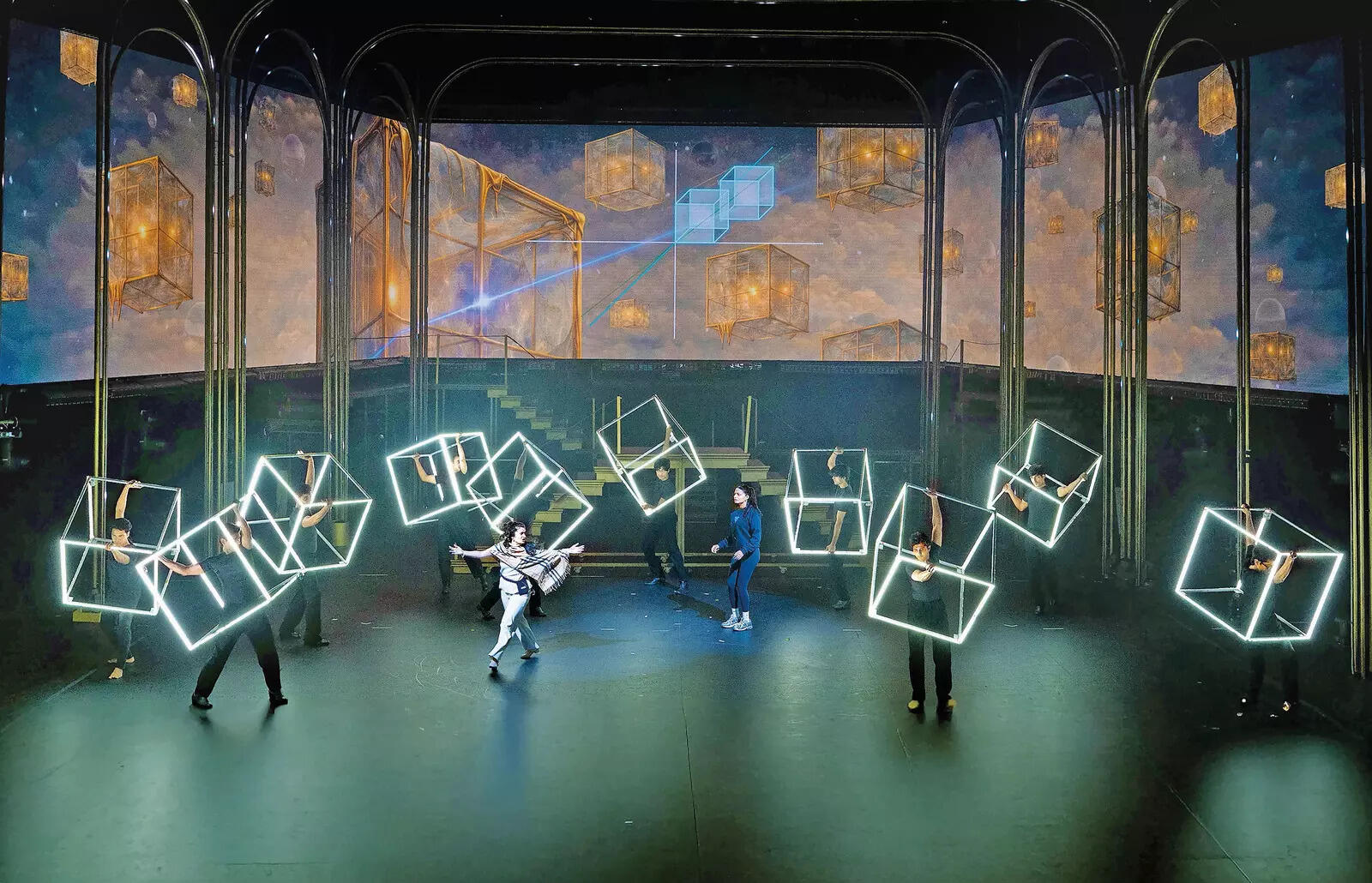
‘Our approach was to look at macro themes that an audience can relate to’The creative brief itself was ambitious. “Our approach was to look at macro themes that an audience can relate to. The vibe was Dan Brown meets Interstellar. The executive team we have are perfectionists. We didn’t settle for anything less than perfect. Our goal was to bring together the best of India and the best of Western talent,” he states.While he doesn’t go into the details of the budget, he says, “I’m not going to tell you how much it cost to make this, but I can say it could put some movies to shame.
We’re doing spatial augmented reality, we have light, sound, set designers and illusionists who have flown in from the West. We have incredible actors and a brilliant group of 100 dancers from the Shiamak Davar Dance Company,” he concludes. Illusion in motionJohn Bulleid, Illusion Designer, was flown in from the United Kingdom for Tesseract. He says, “Illusion in theatre is always about storytelling for me. The effects are designed to create the cleanest moment of connection with the audience.
Often the audience doesn’t realise what has been set up until the moment happens. In a piece like Tesseract, illusion becomes a way of expressing shifts in reality. Magic, in its simplest form, shows the audience a different reality.
In this show, we are constantly shifting expectations and showing different dimensions. Dance and movement actually become part of the illusion design. A performer’s movement can become the misdirection that allows something to appear or disappear.
I love hiding these moments in plain sight so the audience has no idea how they happened.”Building a world beyond dimensions
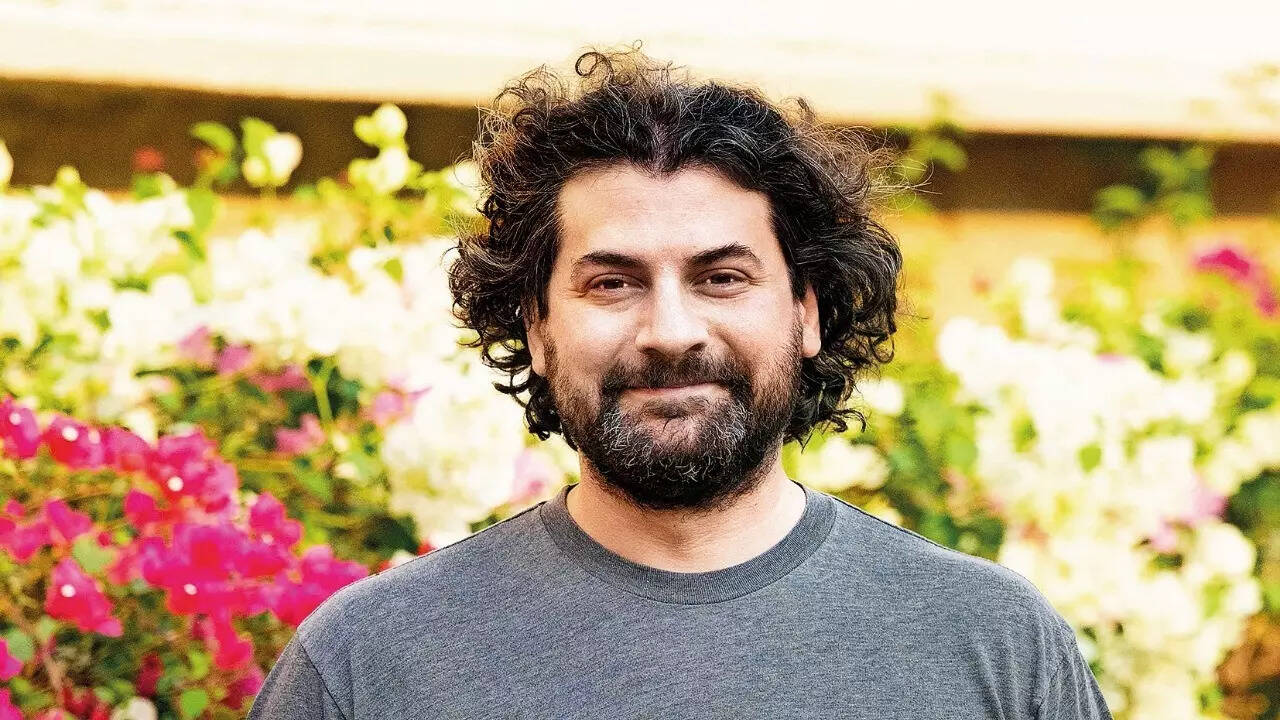
Josh Zangen, set designer from Zangen:Studio, flew from New York for Tesseract. He explains, “As humans, we connect to physical spaces first — they are our earliest link to the tangible world. But within that world, the strongest connections we form are emotional and intellectual. My approach to design is to plant the seed of a feeling through physical space and then allow the other sensory layers to build that journey for the audience.
For Tesseract, the stage became a vessel where the Tesseract exists momentarily across time and space, with other elements passing through and around it. We created a physical manifestation of that vessel and layered digital elements to extend the world beyond the boundaries of the stage. In a production like this, balance is everything. The set has to coexist with projections, choreography, lighting and illusion without overpowering them.
The idea was to keep performance at the centre, while the design expands the universe around it.”Sculpting space with light

Jason Lyons, Lighting Designer from New York, shares, “In Tesseract, light functions almost like the architecture of the piece. Because the physical environment is intentionally minimal, lighting becomes the primary way we define space. We create planes, corridors and frames that guide the audience’s focus. Sometimes the stage feels expansive, and sometimes it compresses into very precise pockets of light around the performers.
Since the story explores shifting dimensions and perspectives, the lighting is always evolving.”








 English (US) ·